Willow Hybrids


What are they?
Willows are woody members of the Salicaceae - a family that includes willows and poplars. Willows range from stately trees growing over 30m in height to creeping plants not much above knee height (in the high Arctic and on mountains tops elsewhere, there are species that hug the ground like a carpet). These are wind-pollinated plants with male and female flowers carried in catkins on separate plants, so each plant will be either male or female. Taller species tend to have elongate catkins while the shrubby sallows often have more rounded catkins which are known as 'pussy willow' - a name that is ascribed loosely to several species.
Where are they found?
Most species of willow favour wet ground and naturally grow along water courses and in river floodplains. Ornamental species may be planted in a range of municipal plantings in parks, along roadsides and in hedgerows.
Identification
Some willows are distinct and readily identifiable at all times, but many of the hybrids and their parents can be difficult to tell apart without several visits to gather details of buds, flowers and leaves. For most willows, identification is reached by a combination of features. Leaves are very important in their overall length and shape, presence or absence of hairs and details of the leaf margin such as presence or absence of teeth and whether the margin is rolled under. Small (often tiny), leafy outgrowths at the base of the leaf stalk called stipules can be important on young growths, though they sometimes fall off quite early in the season so are only useful when present. If flowering, the number of stamens can be useful on male plants. Reference is made below to 'striae' under the bark. These are short, raised lines or ridges which can be found on the inner wood by peeling back a small section of bark on two-year-old wood.
As if willow identification wasn't hard enough already, a number of species will readily hybridise with each other and the possibility that you have found a hybrid should always be considered, especially if a plant is proving particularly difficult to identify. Frequent hybrid combinations of willows are detailed on this page, while willow species can be found by clicking here.
Shiny-leaved Willow Salix x hermaphroditica(Salix x meyeriana) The hybrid between Bay and Hybrid Crack Willows. Rare with a handful of records of planted specimens. Flowers April to May. A large shrub or small tree to 14m with a spreading crown. Winter twigs glossy, hairless, blackish- to reddish-brown. Leaves 5-14cm in length, glossy dark green above, paler below, rounded at the base and with a long acuminate apex; leaf stalk with small glands. Leaf stipules small but broadly rounded.
 |
 |
 |
| |
|
|
Sharp-stipuled Willow Salix x mollissima
Hybrid between Almond Willow and Common Osier. Rare with a handful of old records, but more recently planted in a few areas in the west of the region. Flowers April to May. A spindly shrub to 6m. Leaves 5-12cm in length, very similar to those of Almond Willow but more elongate at the tip and with slightly down-rolled margins. Leaf stipules persistent and with a slender, drawn out tip. Twigs greenish to olive-brown. Bark smooth but often with a few flaking patches.
 |
 |
 |
 |
| |
|
|
|
 |
 |
 |
 |
| |
|
|
|
Fine Osier Salix x forbyana
(Salix cinerea x S. purpurea x S. viminalis) A three-way hybrid which may always be the product of cultivation, having been used commercially as an osier in the fens in the past. Flowers April to May. A well-branched shrub to 5m. Leaves 3-12cm in length, rather similar to those of Almond Willow but with slightly down-rolled margins; at first with some downt hairs, but these soon lost. Leaf margins typically smooth or with just a few, irregular teeth. Leaf stipules mostly absent. Branches at first slightly downy, but soon completely smooth, rounded and yellow in colour.
 |
|
 |
 |
| |
|
|
|
 |
|||
| |
Silky-leaved Osier Salix x holosericea
Hybrid between Common Osier and Grey Willow. Occurs naturally but also widely planted. Scattered records have been made from wetland habitats throughout the region. Flowers March to April. A shrub or small tree to 9m. Winter twigs reddish-brown with a few striae under the bark (see Grey Willow). Leaves 6-11cm in length, green above, silky hairy beneath with slightly inrolled margins. The deeply impressed veins give the plant a less smooth look than many of the willows. Leaf stipules relatively broad, ear-shaped. Catkins relatively short and stout, each male flower with 2 stamens. Bark greyish-brown, developing fissures on older plants. Note: in older books, this hybrid was known as Salix x smithiana, a name now applied to Broad-leaved Osier.
 |
|
 |
 |
| |
|
|
|
 |
 |
 |
|
| |
|
|
Broad-leaved Osier Salix x smithiana
Hybrid between Common Osier and Goat Willow. Occurs naturally but also widely planted. Scattered records have been made from wetland habitats throughout the region. Flowers March to April. A shrub or small tree to 9m. Winter twigs yellowish- or reddish-brown with no striae under the bark (see Grey Willow). Leaves 6-12cm in length, green above, silky hairy beneath with slightly inrolled margins. Leaf stipules narrowly ear-shaped. Catkins relatively short and stout, each male flower with 2 stamens. Bark greyish-brown, developing fissures on older plants. Compared with Silky-leaved Osier, this species averages slightly larger leaves with less impressed veins and a greater covering of longer, silky hairs on the underside. Note: in older books, this hybrid was known as Salix x sericans.
 |
 |
 |
 |
| |
|
|
|
| |
 |
 |
|
| |
|
|
Reichardt's Willow Salix x reichardtii
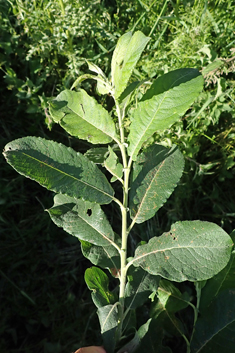
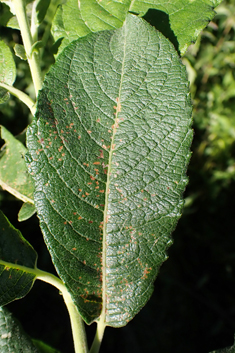
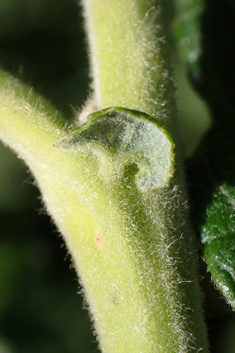
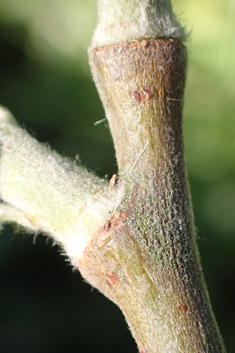
(Salix caprea x S. cinerea) Native. Widespread and probably common but under-recorded. Could be expected anywhere that both parents occur together. Flowers March to April. Typically a large shrub or a multistemmed tree. Shows a combination of features from both parents, typically having the shortly hairy, dark reddish-brown twigs of Grey Willow, together with the broader, wavy-margined leaves with felted undersides of Goat Willow. Stems beneath the bark show varying degrees of raised 'striae', but typically these are shorter and/or less clear than those of Goat Willow.
 |
 |
 |
|
| |
|
|
|
 |
 |
 |
 |
| |
|
|
|
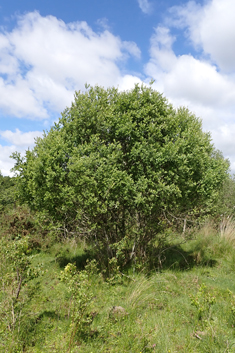
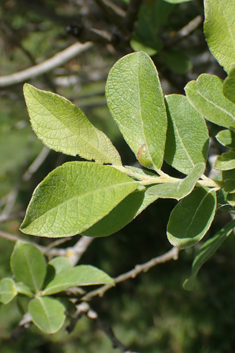
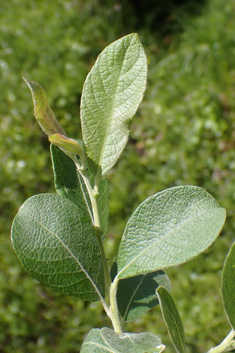
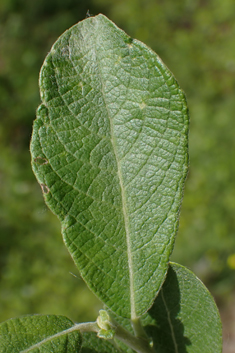
Grey x Eared Willow Salix x multinervis
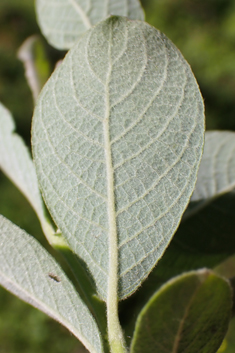
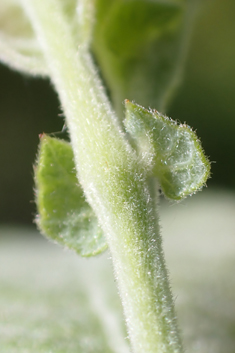
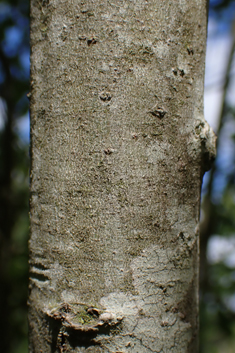
(Salix cinerea x S. aurita) Native. Frequent where both species occur together. A variable shrub, forming a mixture of appearances between the two parent species. Leaves a little broader than those of Grey Willow, with more persistent stipules and with persistent hairs, especially on the undersides of the leaves. The leave typically have somewhat wavy margins, like those of Eared Willow, but the stems are stouter, like those of Grey Willow.
 |
 |
 |
 |
| |
|
|
|
 |
 |
 |
|
| |
|
|
Grey x Creeping Willow Salix x subsericea
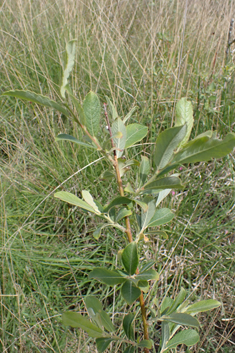
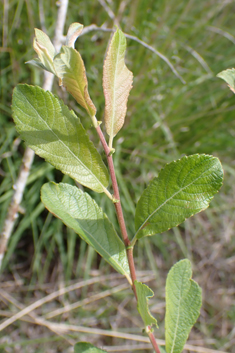
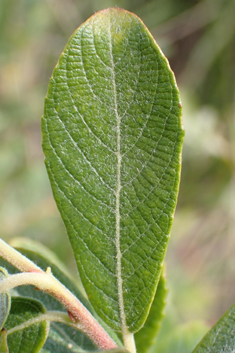
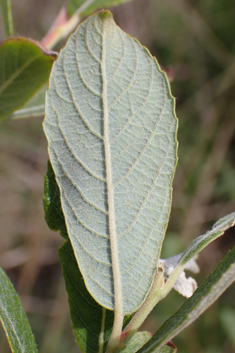
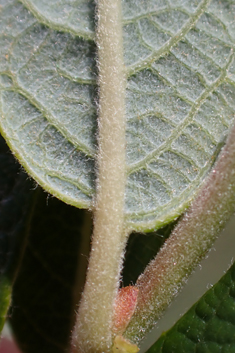
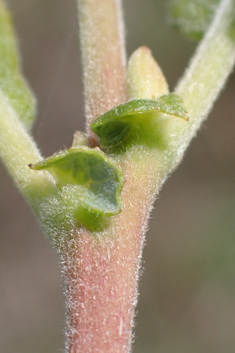
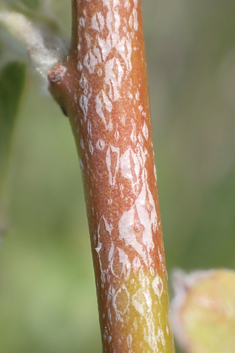
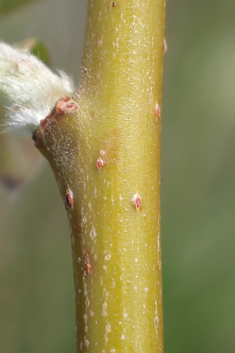
(Salix cinerea x S. repens) Native. A rather uncommon hybrid and difficult to identify as it can closely resemble small plants of Grey Willow that have been stunted by exposed growing conditions, especially in coastal dunes. Leaf petioles short, rarely more than 5mm in length, leaf stipules small and not persisting for long. Leaves variably hairy, typically 2-4.5cm in length. Twigs soon hairless, typically qith a reddish-purple colour, but can be olive-green on the shaded side.
 |
 |
 |
 |
| |
|
|
|
 |
 |
 |
 |
| |
|
|
|
Grey x Dark-leaved Willow Salix x strepida
(Salix cinerea x S. myrsinifolia) Native. Since Dark-leaved Willow is a rare species in our region, this hybrid is also rare, but has been identified from the well-studied Chippenham Fen in Cambridgeshire. As with most hybrid willows, it is intermediate in its appearance between the two parents; compared with Grey Willow, it has darker leaves, less hairy twigs and leaves that are more distinctly dentate towards the tip. It differs from Dark-leaved Willow in having striae under the bark and the leaves narrower with revolute margins.
 |
 |
 |
 |
| |
|
|
|
 |
|||
| |