Periwinkles
What are they?
Creeping plants that are distantly related to the milkweeds. Popular as groundcover in gardens, periwinkles have spread to the wider countryside mostly through the dumping of garden waste. The plants spread by long, trailing stems that root at the nodes where they touch the ground, eventually forming extensive patches.
Where are they found?
Found on waste ground, grassy places and roadsides. Most often in lightly shaded areas.
Identification
The three species on this page are rather similar, but are easily told apart by details of the leaves.
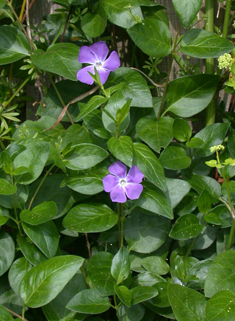
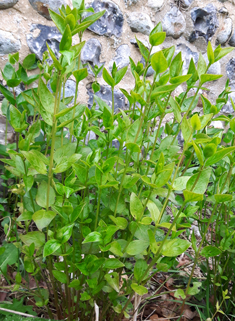
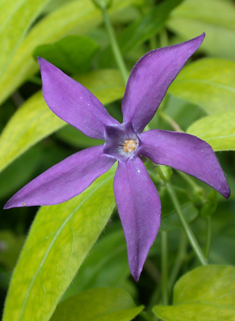
Greater Periwinkle Vinca major
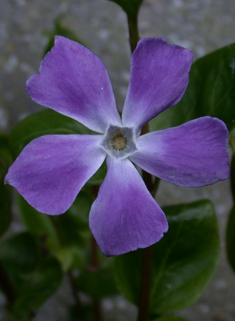
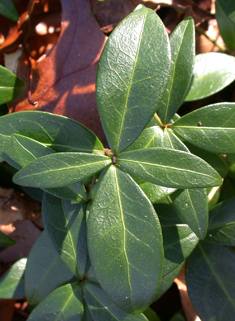
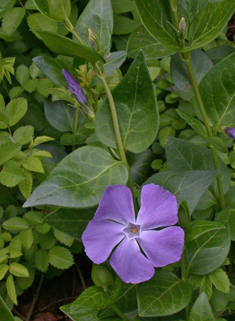
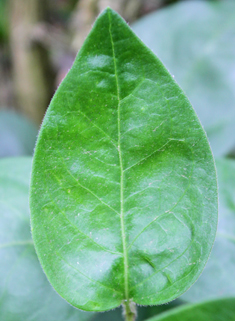
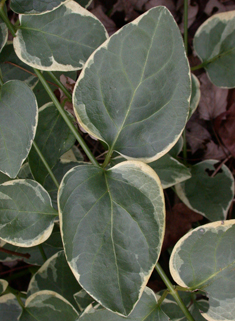
Introduced as a garden plant but now widespread on the inhabited islands. Flowers April to May. Usually a low, creeping plant, but occasionally scrambles up through hedges to a metre or more in height. Forms with variegated leaves or narrow petals are often found. Leaves are opposite, simple and broad at the base.
 |
 |
|
 |
| |
|
|
|
| |
 |
 |
| |
|
|
Lesser Periwinkle Vinca minor
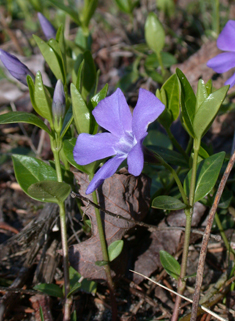
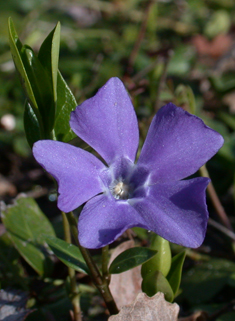
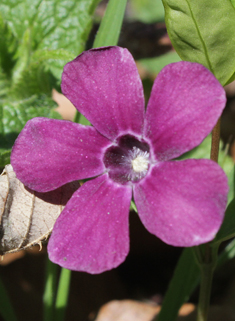
Introduced as a garden plant. Recorded from Tresco and St Mary's (but see note below). Flowers March to May. A low, creeping plant, often forming quite extensive patches. Leaves are opposite, simple and narrowed at the base.
Recorded from near Longstone, St Mary's but the photo in the New Flora is clearly of Intermediate Periwinkle, a species that has been more recently confirmed at this location. The Tresco record should be checked as this species may not now have been reliably recorded from the islands.
 |
 |
 |
|
| |
|
|
|
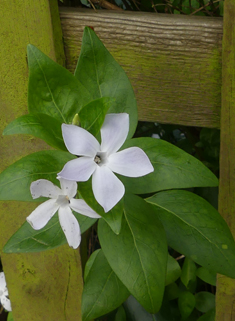
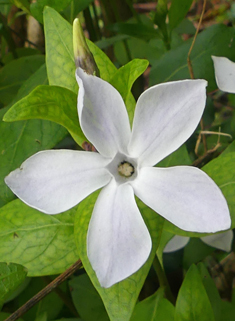
Intermediate Periwinkle Vinca difformis
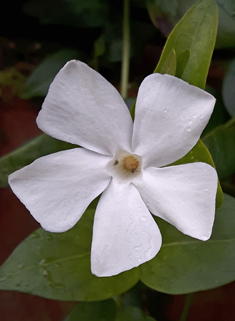
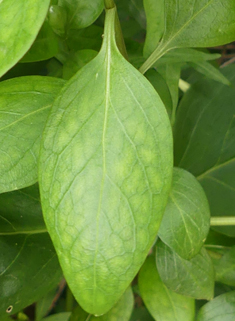
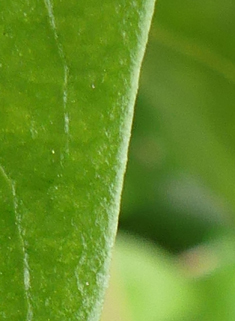
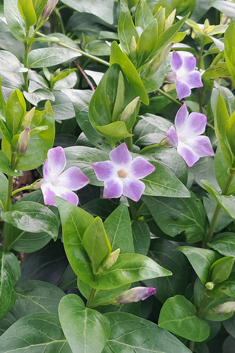
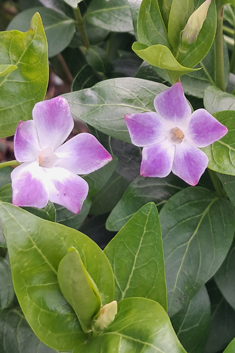
Introduced as a garden plant and recorded recently from Longstone, St Mary's. Flowers March to May. Typically a little more upright in its growth than the other periwinkles and with pale blue or almost white petals. Leaves narrowly ovate, usually with hairless or only minutely hairy margins. The cultivated variety 'Jenny Pym' has light purple flowers with a paler centre.
 |
 |
 |
 |
| |
|
|
|
 |
 |
||
| |
|