Peas and Vetches
What are they?
A group of short annuals or low-growing perennials in the pea family. This family is one of our largest and contains a wide array of species, but all with the 'classic' pea flower. Most species on this page are named vetches and have pinnate leaves, that is to say leaves that are made up of a series of opposite pairs of leaflets. The leaves often terminate in a twining tip known as a tendril, which may be simple or forked.
Where are they found?
This is a diverse assemblage of species but most are to be found in grassy habitats such as roadsides, grassy meadows and heaths and grassy banks.
Identification
Leaf structure and overall flower features will get you into the right area to start with - especially whether the flowers are solitary or in clusters. If they are present, it is also worth noting details of the seed pods.
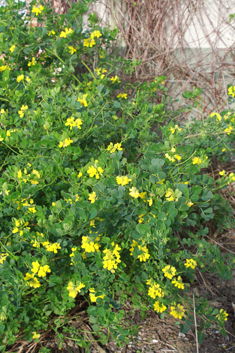
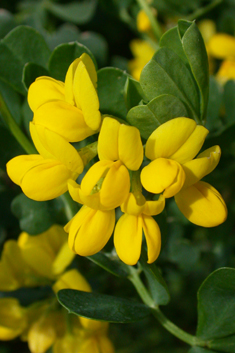
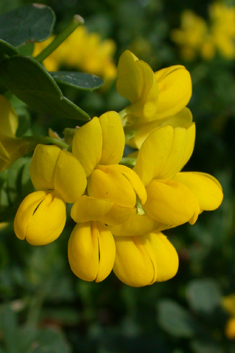
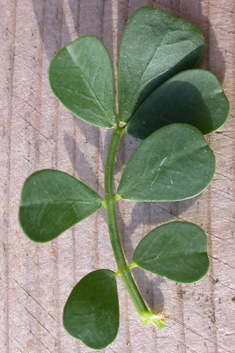
Shrubby Scorpion-vetch Coronilla valentina
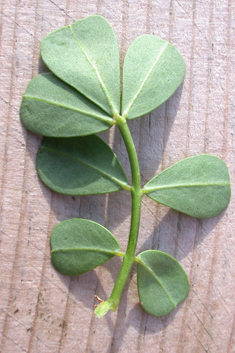
Introduced from southern Europe as a garden ornamental and recorded twice from Tresco. Flowers March to May. A sprawling shrub to one metre in height. Leaves 1-2cm long with five or seven leaflets. Inflorescence with 4-8 flowers, each 7-12mm long.
 |
 |
 |
| |
|
|
 |
 |
|
| |
|
Bird's-foot Ornithopus perpusillus
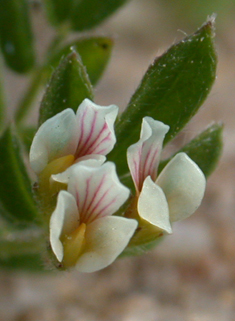
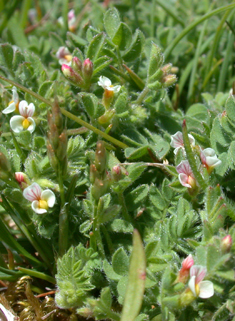
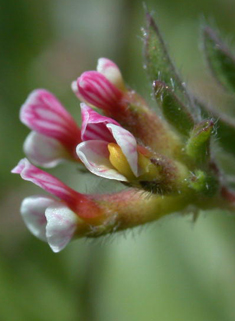
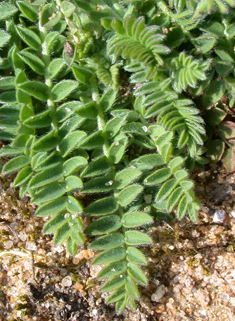
Native. A common annual of dry, sandy soils. Flowers April to August. A tiny annual, easily overlooked due to its small size amongst other vegetation, but often growing on open, well-trodden places such as tracks and gravel car parks. Flowers just 3-5mm long, tricoloured in white, pink and yellow.
 |
|
 |
 |
| |
|
|
|
 |
|||
| |
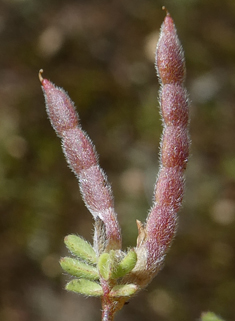
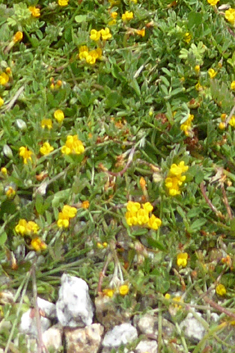
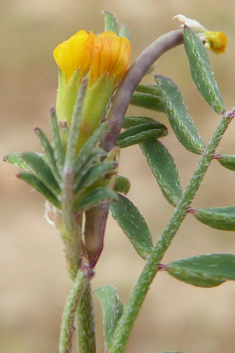
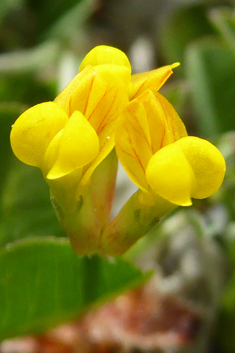
Orange Bird's-foot Ornithopus pinnatus
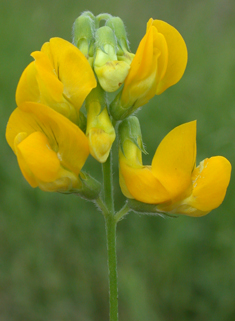
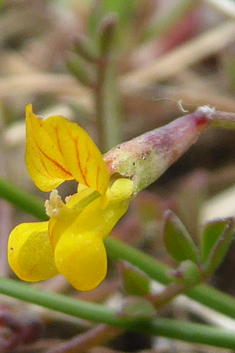
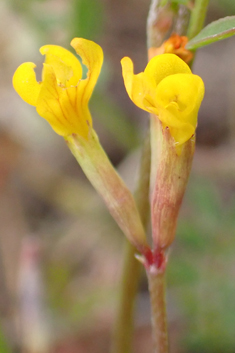
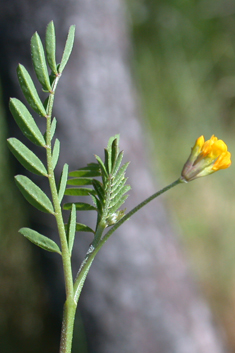
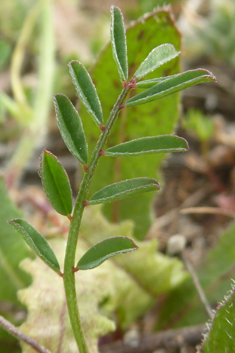
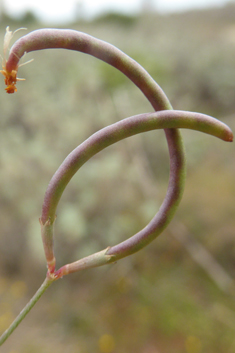
The Isles of Scilly are the only place in the UK (apart from the extralimital Channel Islands) where this species occurs as a native. Patchily distributed on the inhabited islands, though obnly occurring recently as an introduction on St Mary's. Flowers May to August. A tiny annual, easily overlooked when not in flower. Flowers 6-8mm long, deep yellow with orange veins. Seed pods long and curved.
 |
 |
 |
 |
| |
|
|
|
 |
 |
 |
 |
| |
|
|
|
Hairy Tare Ervilia hirsuta
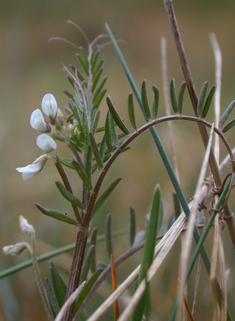
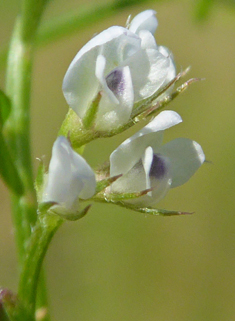
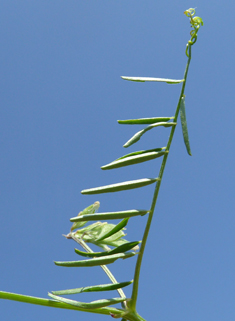
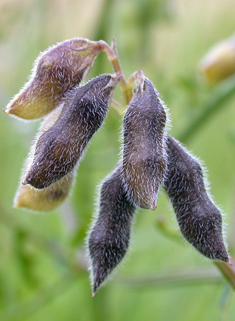
Native. A common plant in all kinds of grassy places; also as a weed of cultivated ground. Flowers May to September. A delicate, fine-leaved annual, scrambling to 80cm by means of leaf tendrils. Flowers very pale lilac, but appearing white from a distance, usually 2-9 in a cluster; tiny - 3-5mm long. Leaflets very narrow like other tares. Seed pods covered in fine hairs.
 |
 |
 |
 |
| |
|
|
|
Smooth Tare Vicia tetrasperma
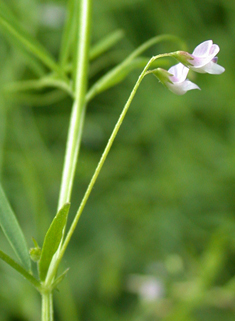
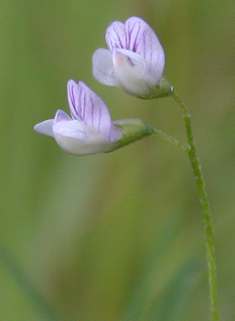
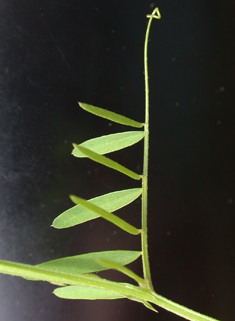
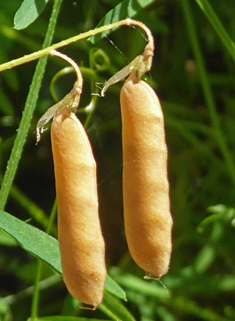
Native. Local in grassy places on St Mary's, St Agnes and Bryher. Flowers May to August. A delicate, fine-leaved annual, scrambling to 80cm by means of leaf tendrils, the leaves bearing 3-6 pairs of leaflets. Flowers very pale lilac with darker veins, but appearing white from a distance, usually 1-4 (most typically 2) in a cluster; tiny - 4-8mm long. Leaflets very narrow like other tares. Seed pods hairless, with 3-5 (usually 4) seeds and an elongate hilum (the point of attachment to the pod) more than twice as long as wide.
 |
 |
 |
 |
| |
|
|
|
Tufted Vetch Vicia cracca
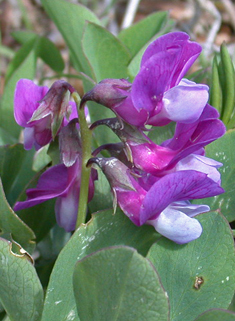
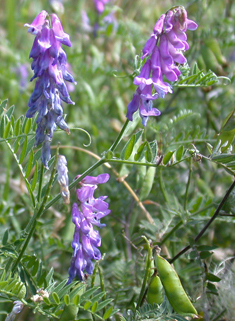
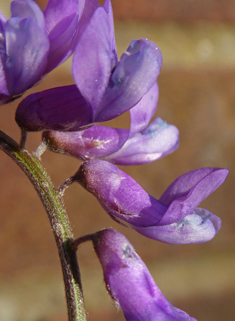
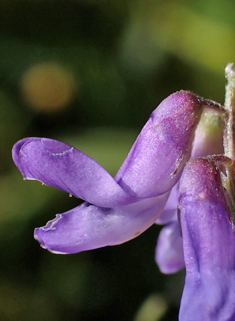
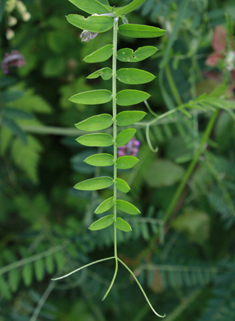
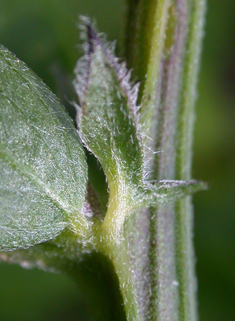
Native. Frequent on most of the larger islands. Flowers June to August. A strong climbing or straggling plant with stems to two metres or more in length. Flowers deep purple, usually 10-40 in an elongated, more or less one-sided spike. Leaves with 5-12 pairs of leaflets and a forked tendril. Looking at the flowers from side on, the upper half of the calyx (at the base of the flower) is only a little more rounded than the basal half.
 |
 |
 |
| |
|
|
 |
 |
|
| |
|
Bush Vetch Vicia sepium
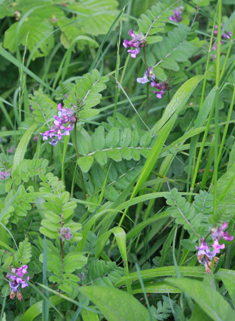
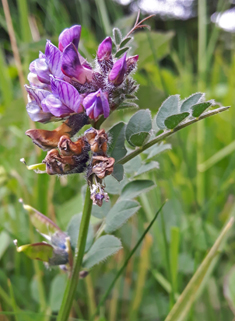
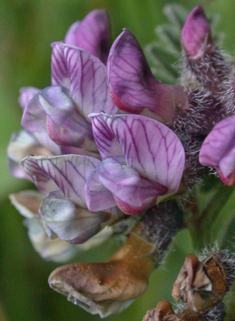
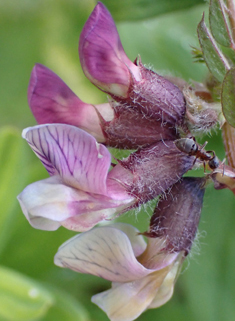
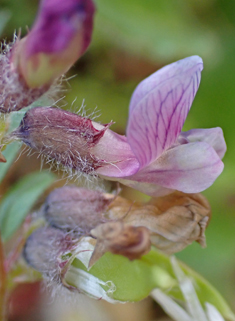
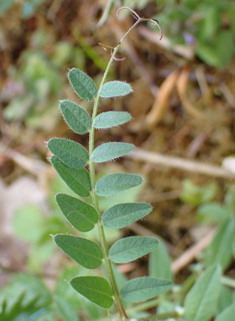
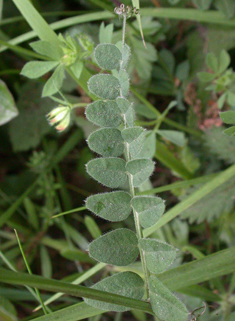
Probably native, though the species is absent from older species lists for the islands. Thinly scattered on the inhabited islands. Flowers May to August. A strong climbing or straggling plant with stems to two metres or more in length. Flowers dull pinkish-purple with darker veins, usually 2-10 in a cluster. Leaves with 5-9 pairs of leaflets and a forked tendril. Leaflets shorter and broader than those of Tufted Vetch.
 |
 |
 |
 |
| |
|
|
|
 |
 |
 |
|
| |
|
|
Narrow-leaved Vetch Vicia sativa ssp. nigra
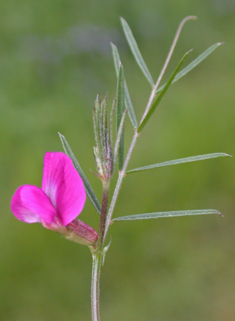
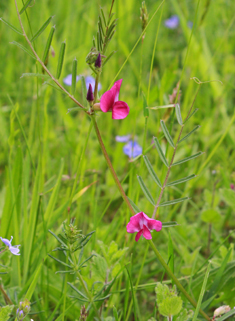
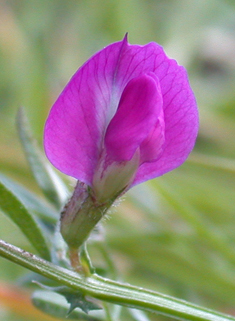
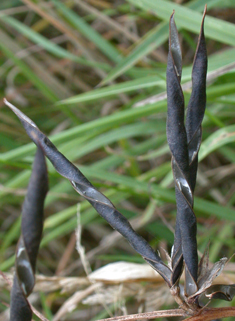
Native. Widespread but typically found on unimproved grasslands on lighter, sandy soils. Flowers May to September. A scrambling perennial plant to 50cm. Flowers single or occasionally two together in the leaf axils, the standard petal the same rich pink as the two wings. Upper leaves with leaflets much narrower than those of the lower leaves. Seed pods dark brown or black when mature.
 |
|
 |
 |
| |
|
|
|
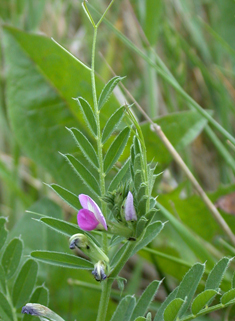
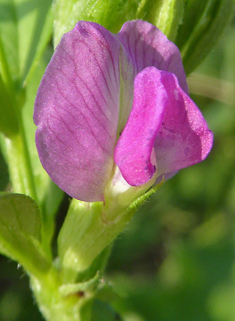
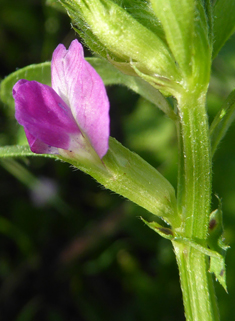
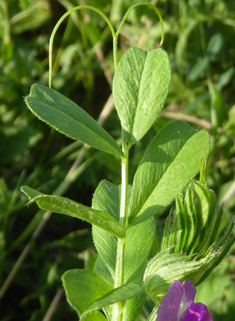
Common Vetch Vicia sativa ssp. segetalis
An ancient introduction as a fodder crop. Widespread and common in most types of grassy places, especially enriched or managed areas such as farmland, roadsides and urban areas. Flowers May to September. A scrambling perennial plant to 80cm. Flowers single or occasionally two together in the leaf axils, the standard petal clearly paler than the two wings. All leaves with leaflets of about the same size (upper leaflets not clearly much narrower). Seed pods dark brown or black when mature.
 |
 |
 |
 |
| |
|
|
|
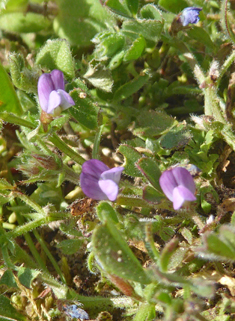
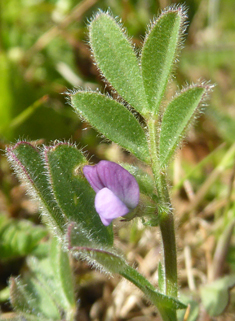
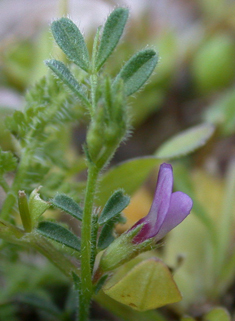
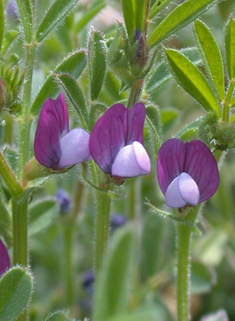
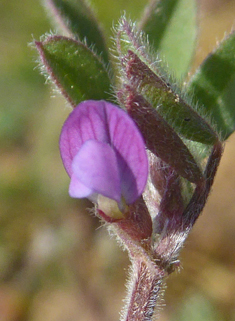
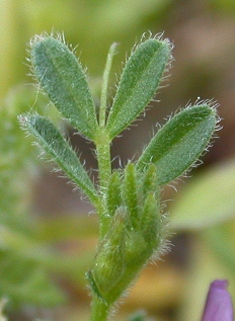
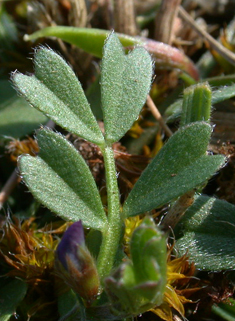
Spring Vetch Vicia lathyroides
Native. Rare, with a handful of records from Tresco and Bryher. Flowers April to June. A delicate annual to 20cm in length, which is easily overlooked due to its small size. Leaves generally with 2-4 pairs of leaflets and with an unforked tendril or the tendril absent. Flowers solitary, small, 6-9mm long, purple, usually one-coloured but sometimes bi-coloured.
 |
 |
 |
 |
| |
|
|
|
 |
 |
 |
|
| |
|
|
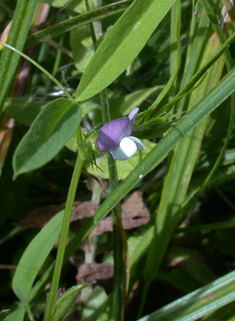
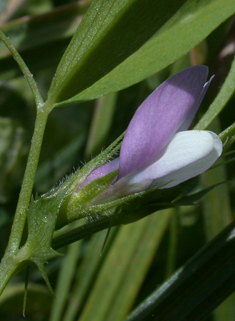
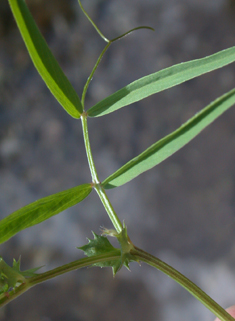
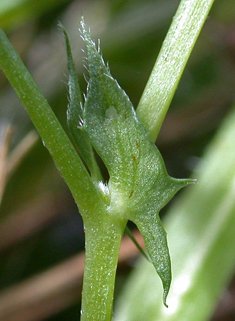
Bithynian Vetch Vicia bithynica
Introduced from mainland Europe. A rare casual, reported several times from St Mary's and once from St Martin's. Flowers May to June. An annual to 60cm, with solitary, bi-coloured flowers and strongly toothed leaf stipules. The leaves have 1-2 pairs of narrow leflets and branched tendrils.
 |
 |
 |
 |
| |
|
|
|
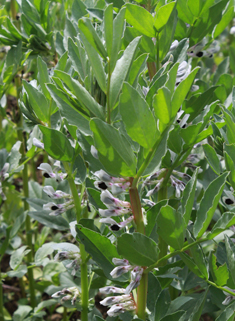
Broad Bean Vicia faba
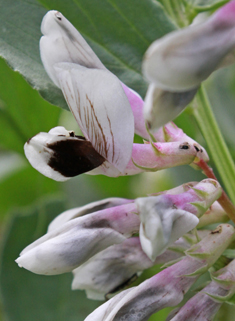
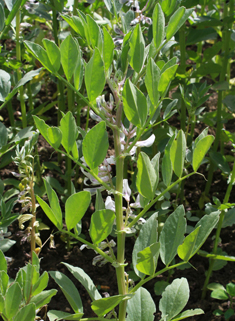
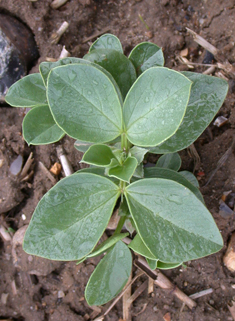
Introduced from mainland Europe as a vegetable. Recorded once as an escape from cultivation. Flowers June to July. A hairless, upright plant with broad leaflets. The white flowers have a large, black blotch on the wing petals. Seed pods are large, green and rough.
 |
 |
 |
 |
| |
|
|
|
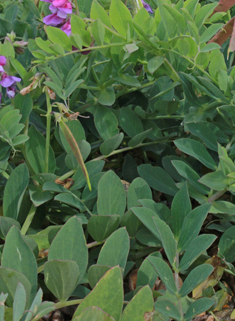
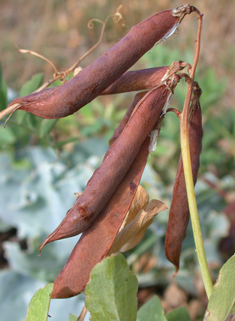
Sea Pea Lathyrus japonicus
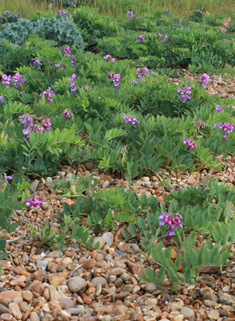
Native. A colony has persisted on a beach on St Mary's since its discovery in 2007. It's possible that occasional plants on the Isles of Scilly originate from North America. Flowers June to August. A prostrate species of shingle beaches with relatively large, showy flowers.
 |
|
 |
 |
| |
|
|
|
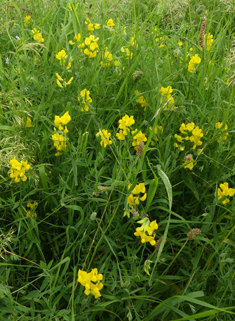
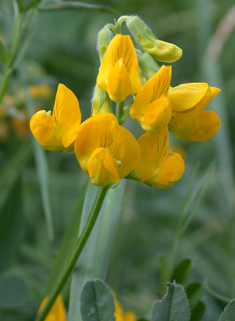
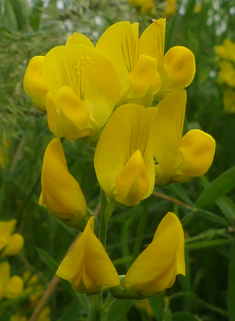
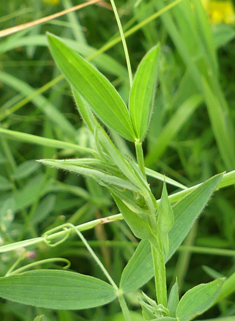
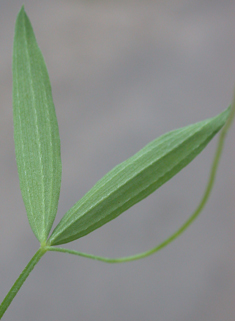
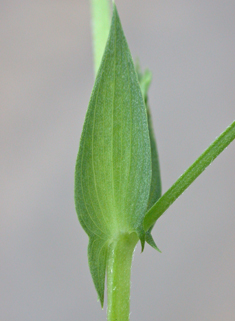
Meadow Vetchling Lathyrus pratensis
Native. Widespread in grassy places on St Mary's but uncommon. Flowers May to August. A scrambling perennial that may reach over a metre in height when climbing over shrubby vegetation. Leaves are pinnate but reduced to just a single pair of leaflets, each leaf then having extensive tendrils at the tip which are used for climbing. The leaf stipules are much enlarged and spear-shaped; they are often more obvious than the leaves themselves and create the impression of spear-shaped leaves. Fruits a narrow pea pod, becoming black when ripe.
 |
 |
|
 |
| |
|
|
|
 |
 |
 |
 |
| |
|
|
|
Broad-leaved Everlasting-pea Lathyrus latifolius
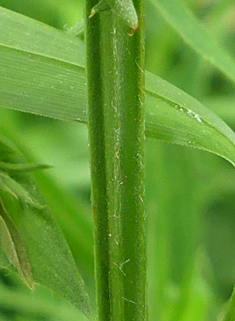
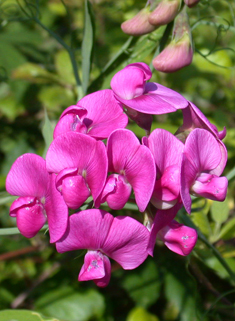
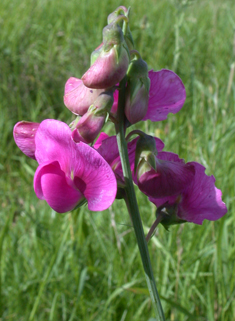
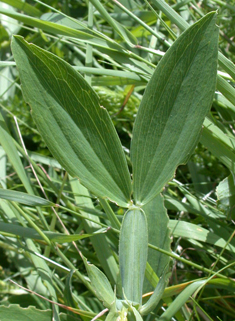
Introduced from mainland Europe and occasionally found as a garden escape. Flowers June to August. A strong-growing perennial, clambering over other vegetation with hairless stems growing to three metres or more in a season. Winged stems, leaflets and stipules all broader than those of the native, Narrow-leaved Everlasting-pea. Leaflets typically less than four times long as wide. Flowers usually bright, rich pink, but may also be white, 15-30mm long and in bunches of 3-12.
 |
 |
 |
 |
| |
|
|
|
Annual Pea Lathyrus annuus
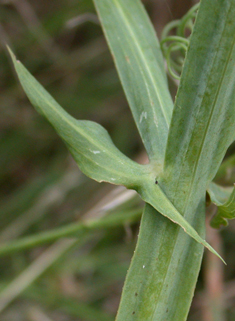
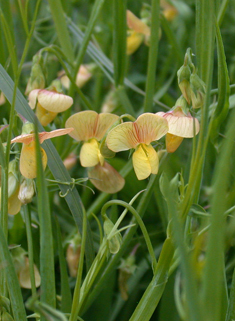
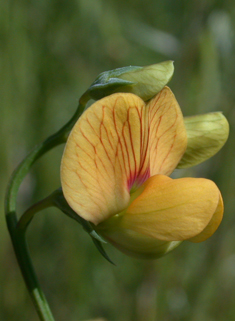
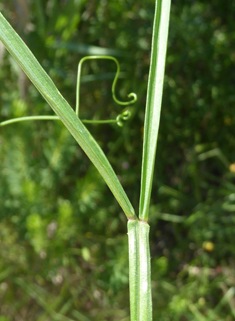
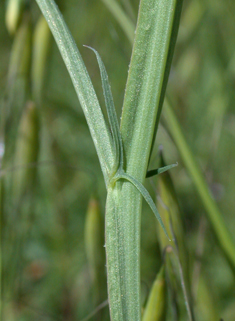
(Fodder Pea) Introduced from southern Europe. A rare casual, reported from St Mary's in 1973. Flowers June to August. A scrambling annual that may reach over a metre in height when climbing over shrubby vegetation. Leaves are pinnate but reduced to just a single pair of narrow, linear leaflets, each leaf then having extensive tendrils at the tip which are used for climbing. The leaf stipules are small with two, linear lobes. The stems are strongly flattened and winged.
 |
 |
 |
 |
| |
|
|
|
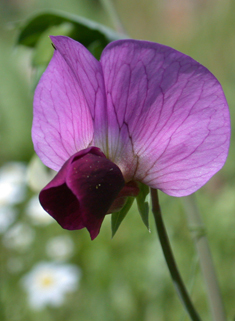
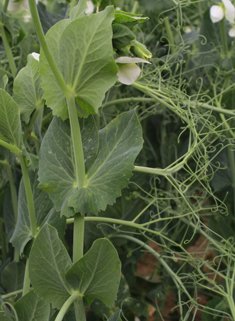
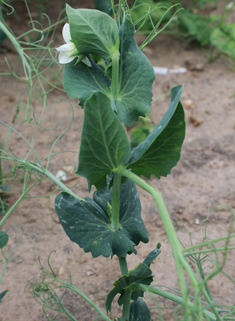
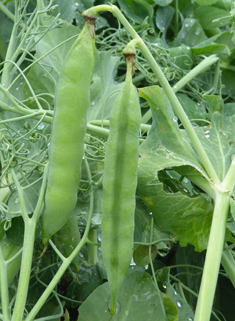
Culinary Pea Lathyrus oleraceus
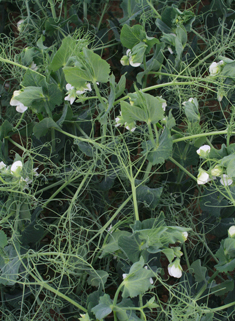
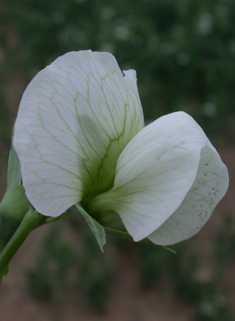
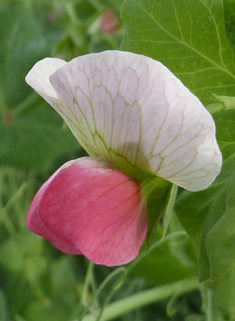
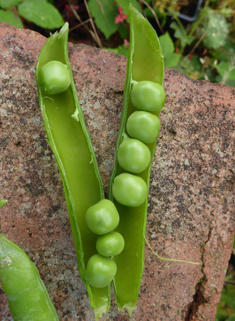
Introduced as a vegetable from mainland Europe. Occasional plants may appear on roadsides or field edges from spilt seed. Flowers July to August. An annual plant with unwinged stems and with remarkably adapted leaves. The leaf itself is reduced to merely a many-branched tendril with no blades, while the role of the leaf has been taken over by the greatly enlarged stipules that sit in pairs alongside the main stem. The flowers of cultivated plants are typically white with green veins, but flowers from wild stock are typically lilac and purple.
 |
 |
 |
 |
| |
|
|
|
 |
 |
 |
 |
| |
|
|
|