Trefoils, Medicks & Allies
What are they?
This group of (mostly) yellow-flowered plants consists of species that are short annuals or low-growing perennials. The name 'trefoil' comes from the French, meaning 'three leaves' and the word has been used rather loosely for several plant groups in the pea family, most notably members of the genera Trifolium and Lotus, but also a few others. Thus, not all 'trefoils' are necessarily closely-related, but they are all in the pea family.
Where are they found?
Trefoils are mostly plants of short-grass habitats and largely can be found on heathland, mown lawns, roadsides and similar grassy banks. Medicks are mostly found in open, disturbed habitats, such as arable margins, flower borders, gravel paths and similar places. Many of the trefoils, but especially Common Bird's-foot Trefoil and Lesser Trefoil, are widely sown as components of grass seed mixes for their nitrogen-fixing abilities, which enriches the soil and aids the young grass.
Identification
Leaf structure and overall flower features will get you into the right area to start with. When it comes to the medicks, important features include the leaf stipules (leafy extensions at the base of the leaf stalk) and details of the fruits. For the Lotus species, you will need to check leaf detail and the appearance of the calyx teeth at the base of the flower. The Trifolium species are best told apart by details of the leaves and of the fruiting heads.
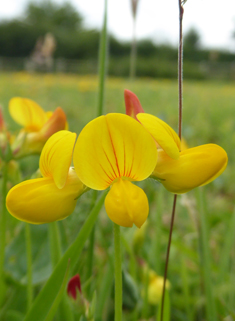
Common Bird's-foot-trefoil Lotus corniculatus
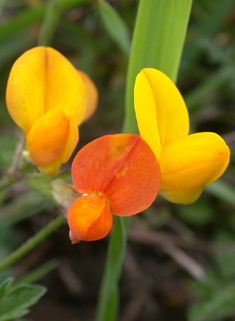
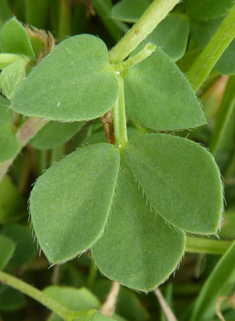
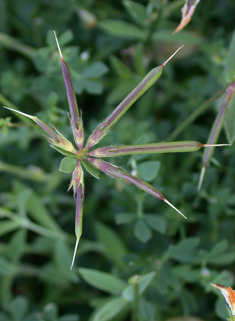
A common native in grassy habitats. Flowers June to September. A low-growing plant to 40cm - less when growing in cropped turf. Flowers may be clear yellow or tinged with red and the calyx teeth are erect in bud. The leaves are rather variable in the width of the three leaflets, but generally have broad stipules at the base that give the impression of their being five leaflets. Different subspecies from continental Europe may occur, originating from so-called 'wildflower mixes'. These plants tend to be taller (to 60cm) than native plants and often have narrower leaflets and hollow stems. Such plants hybridise with native plants and produce a range of intermediates and care should be taken to tell them apart from Greater Bird's-foot Trefoil.
| |
 |
 |
 |
| |
|
|
|
Greater Bird's-foot-trefoil Lotus pedunculatus
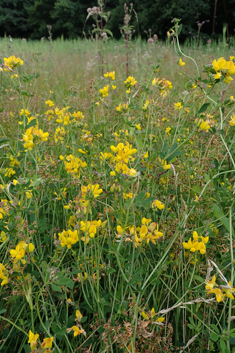
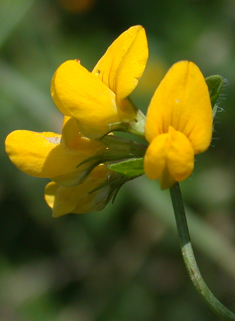
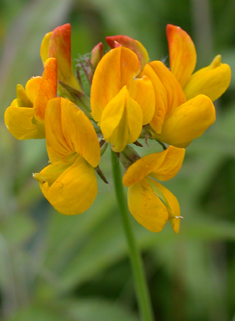
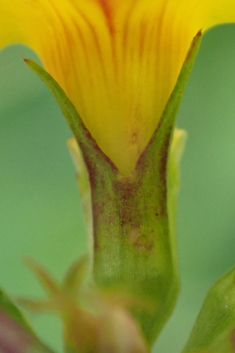
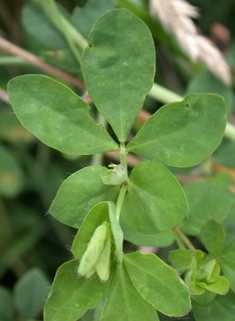
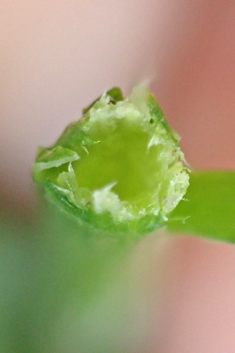
A widespread native of damp grassland, as well as drier, grassy places. Flowers June to September. A tall-growing plant to 80cm, tallest in tall-herb fen communities. Flowers usually clear yellow but occasionally tinged with red; the calyx teeth are spreading in bud. The leaves have broad leaflets and stipules and usually have a scattering of longish, white hairs. The stems are hollow (usually solid in Common Bird's-foot Trefoil but see that species description above).
 |
 |
 |
 |
| |
|
|
|
 |
 |
||
| |
|
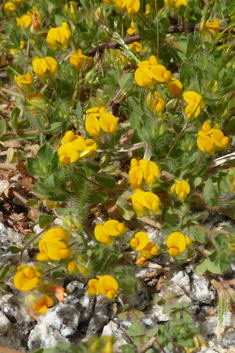
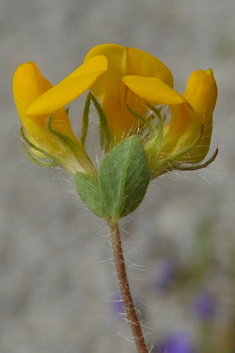
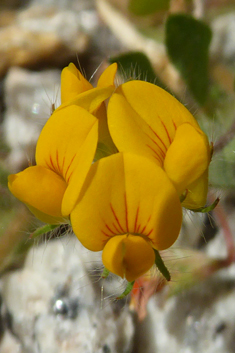
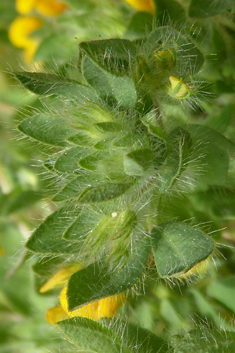
Hairy Bird's-foot-trefoil Lotus subbiflorus
A widespread native, in grassy places but also commonly as an arable or garden weed. Flowers mostly June to August. Resembles other bird's-foot trefoils but is distinctly covered in long, silky white hairs.
 |
 |
 |
 |
| |
|
|
|
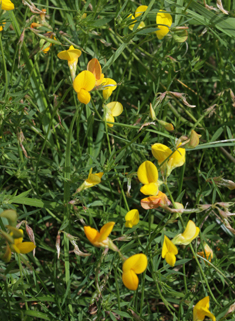
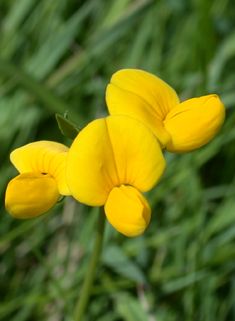
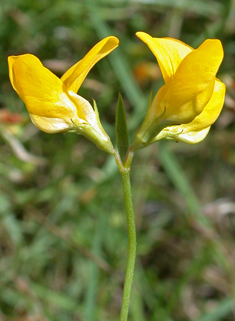
Narrow-leaved Bird's-foot-trefoil Lotus tenuis
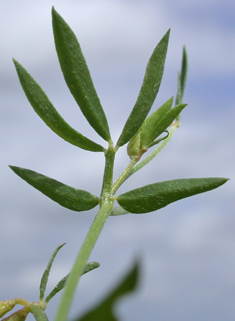
Probably native but only recorded once from St Agnes in 1970. Flowers June to August. A low-growing, patch-forming species. Flowers usually clear yellow, the upper two calyx teeth usually converging on each other. The leaves have three, very narrow leaflets and two, narrow, leaflet-like stipules.
 |
 |
 |
 |
| |
|
|
|
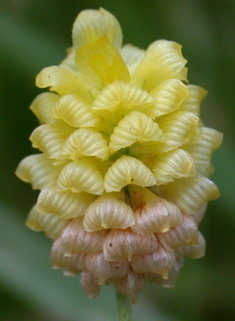
Hop Trefoil Trifolium campestre
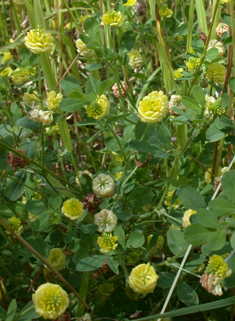
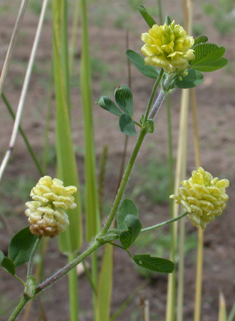
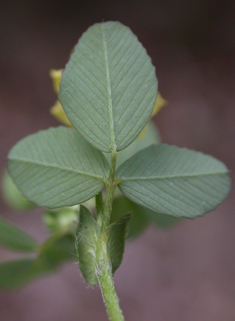
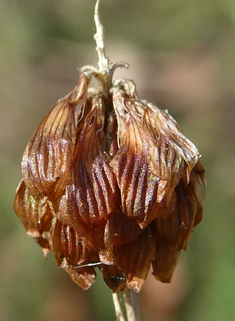
Native. Widely recorded from the inhabited islands. Flowers April to October. A low-growing annual to 30cm in height. Flowers are small, in tight heads, the standard petal much enlarged like an upturned boat and soon inflating as the flowers mature. Leaves are clover-like with the middle of the three leaflets having a stalked base. The seedheads become straw-coloured as they ripen and somewhat resemble small hops.
 |
 |
|
 |
| |
|
|
|
 |
|||
| |
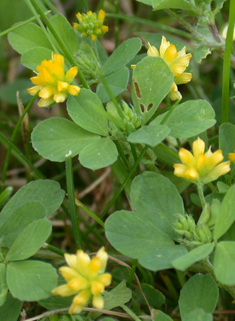
Lesser Trefoil Trifolium dubium
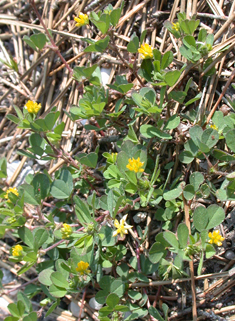
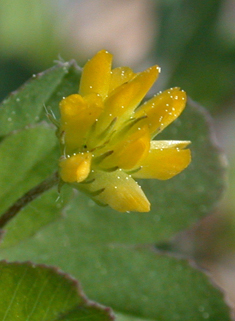
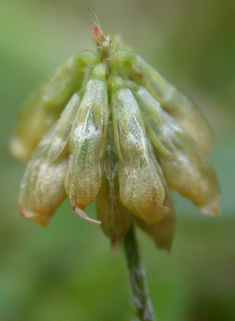
Native. Very common throughout the inhabited islands in all kinds of grassy and cultivated places. Often introduced as a component of grass seed mixes. Flowers April to October. A low-growing annual, 10-25cm in height. Flowers are small, in tight heads, the standard petal lying flat and not standing upright. Leaflets are broad and clover-like. The seedheads develop as pendant clusters and do not inflate as they mature.
 |
|
 |
 |
| |
|
|
|
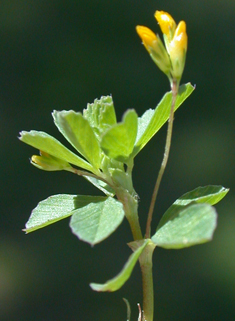
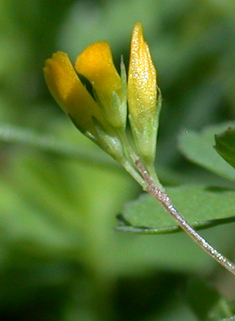
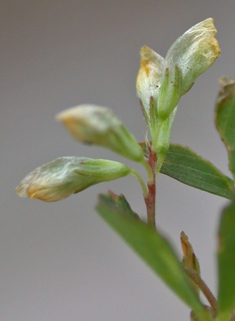
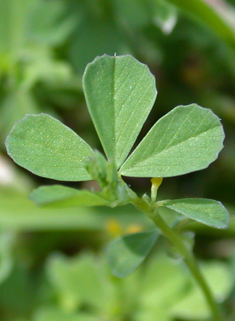
Slender Trefoil Trifolium micranthum
Native. Widespread but often rather local in short coastal grass, occasionally in garden lawns. Flowers June to August. A low-growing annual to 10cm in height. Flowers are small and narrow, in open clusters of six or less (typically more than 10 in Lesser Trefoil, but beware of small individuals of that species). Leaves are trifoliate and clover-like. The seedheads develop as pendant clusters and do not inflate as they mature.
 |
 |
 |
 |
| |
|
|
|
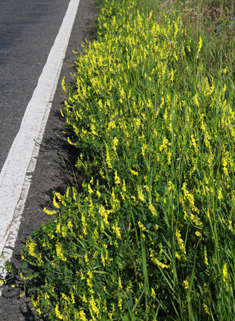
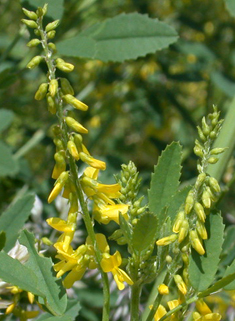
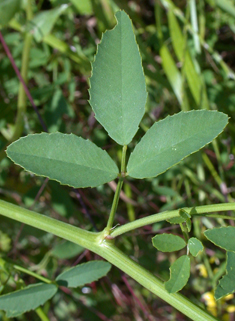
Ribbed Melilot Melilotus officinalis
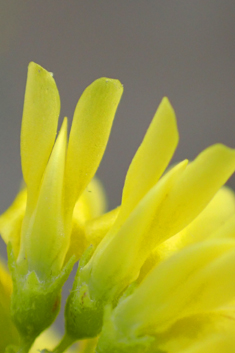
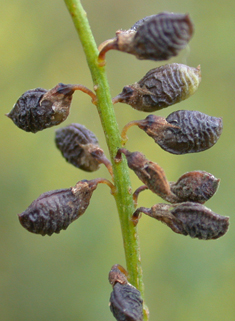
Introduced from mainland Europe. A handful of records of plants probably accidentally introduced in seed mixes. Flowers June to September. More upright and taller growing than the trefoils or medicks. The flowers have the keel noticeably shorter than the wings. The seed pods are hairless and have more or less parallel ridges runnning across them.
 |
 |
 |
| |
|
side wings |
 |
 |
|
| |
|
White Melilot Melilotus albus
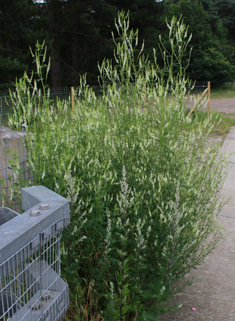
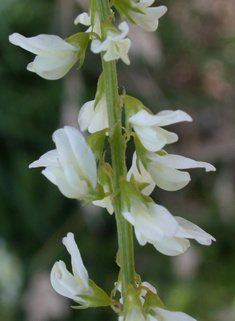
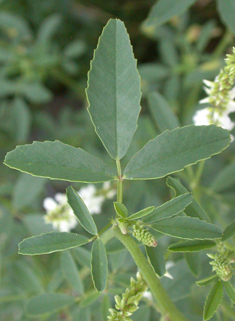
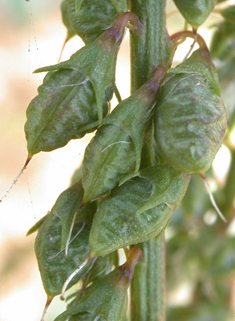
Introduced from mainland Europe. Recorded from Tresco in 2015 where probably accidentally introduced in seed mixes. Flowers June to September. A typical melilot in appearance, but for the white flowers.
 |
 |
 |
 |
| |
|
|
|
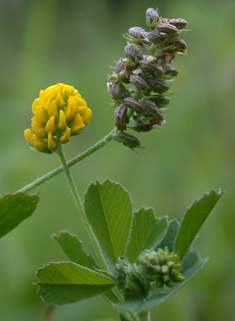
Black Medick Medicago lupulina
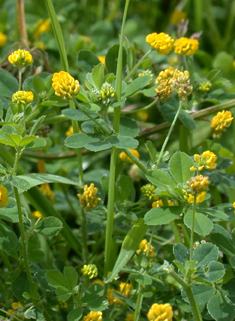
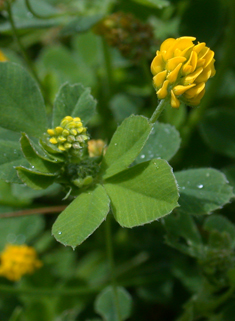
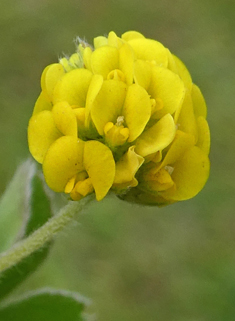
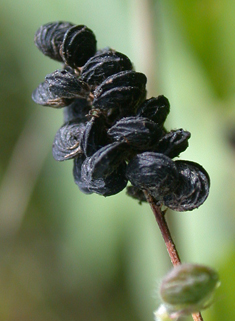
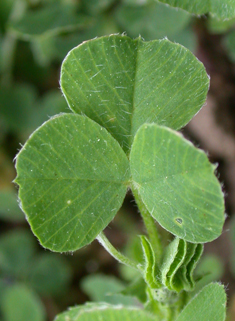
Native. Recorded from anthropic habitats on the inhabited islands. Flowers May to September. A low-growing annual or short-lived perennial which may be mat-forming on open ground or may grow to 50cm in height among taller vegetation. Pale yellow flowers are small and carried in dense clusters that form a rounded oval shape (compare with the more spiky head of Lesser Trefoil). Leaves are trifoliate and clover-like, each leaflet having a distinct point at the tip (a mucronate tip). The seedheads develop as a dense cluster of green, then black, circular seeds.
 |
 |
 |
 |
| |
|
|
|
 |
|||
| |
Common Lucerne Medicago sativa
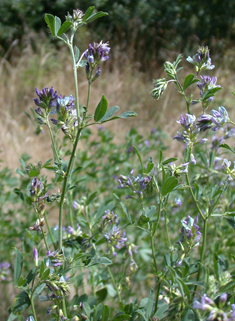
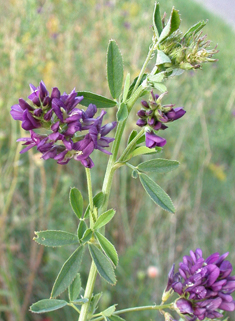
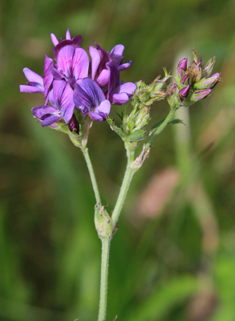
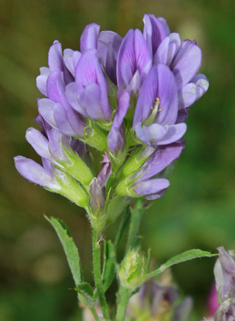
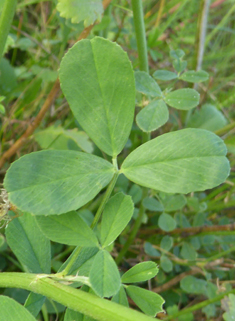
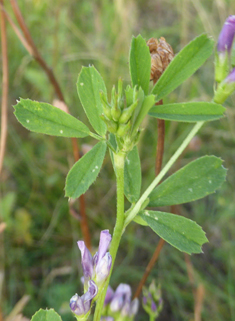
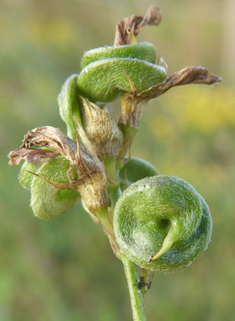
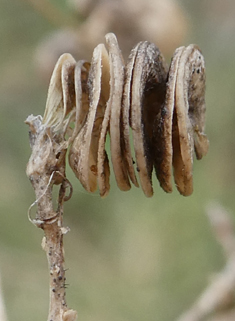
Introduced from mainland Europe. Once grown as a fodder crop for livestock (when sometimes known as 'alfalfa') but recently only recorded twice where perhaps originating from birdseed. Flowers July to September. Plants many-branched, more or less upright to around 90cm in height. The flowers vary in colour from deep bluish-purple to pale blue or even sometimes white. The seed pods curl into spirals as they develop, with ripe seeds being tightly spiralled in two or more complete turns.
 |
 |
 |
 |
| |
|
|
|
 |
 |
 |
 |
| |
|
|
|
Spotted Medick Medicago arabica
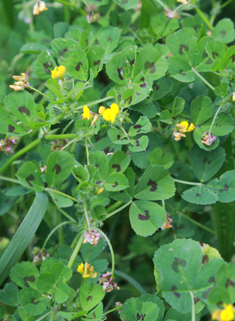
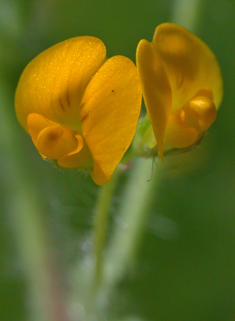
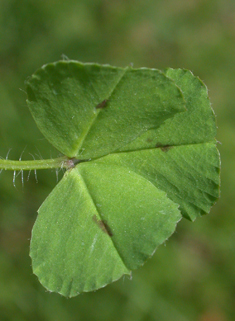
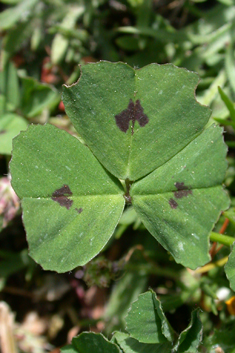
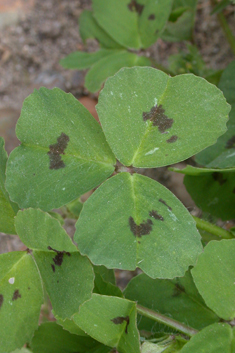
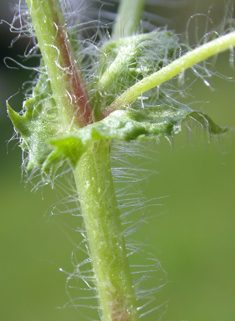
Native. Widespread and common in grassy and disturbed places. Flowers May to September. A low-growing annual which may be hairy or smooth. Bright yellow flowers are carried singly or in open clusters of up to five. Leaves are trifoliate and clover-like, each leaflet having a black spot on it, though these spots vary in intensity and may often be poorly defined. Leaf stipules are shallowly toothed. The seedheads develop as a small cluster of spiny fruits.
 |
 |
 |
| |
|
|
 |
 |
 |
| |
|
|
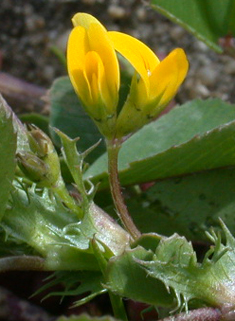
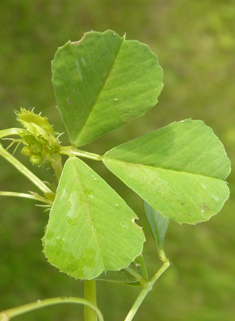
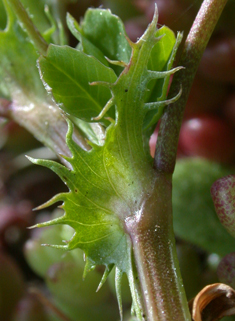
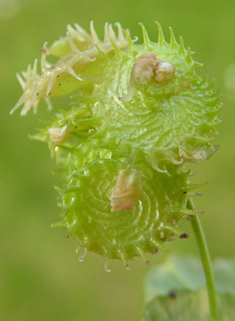
Toothed Medick Medicago polymorpha
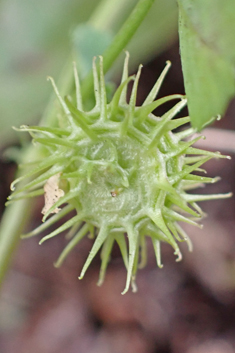
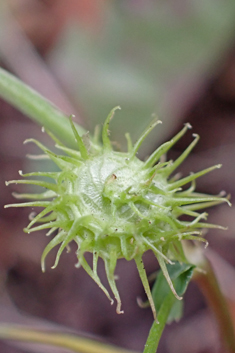
Native. Quite frequent on the inhabited islands, especially St Mary's. Flowers May to September. A prostrate, hairless annual. Small, bright yellow flowers are carried singly or in open clusters of up to eight. Leaves are trifoliate and very like those of Spotted Medick, but without the spots. Leaf stipules are deeply toothed. The seedheads develop as a small cluster of rounded, spiny fruits.
 |
 |
 |
| |
|
|
 |
 |
 |
| |
|
|
Common Restharrow Ononis spinosa subsp. procurrens
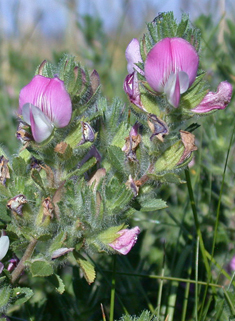
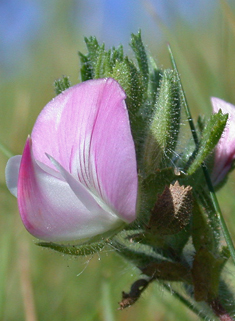
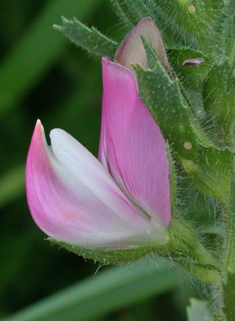
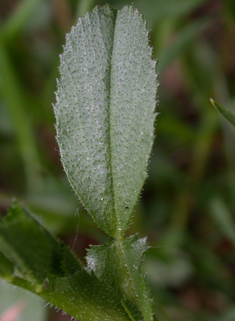
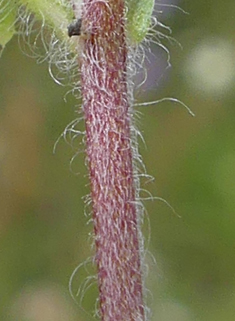
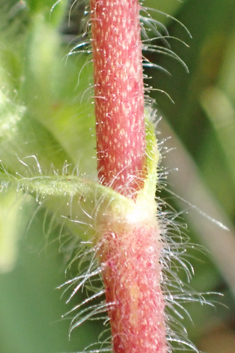
(Ononis repens) Native. Rare with records from St Martin's, Samson and St Mary's but only regularly noted from the latter. Flowers June to September. A low-growing subshrub to 60cm in height with densely glandular hairy stems, the hairs distributed all around the stems. Leaves have three leaflets but may consist of a single, simple blade on upper parts of the plant. Occasionally the stems may bear a few spines. The pink and white flowers have the wings as long as the keel.
 |
 |
 |
 |
| |
|
|
|
 |
 |
||
| |
|