Submerged Aquatics
What are they?
This page includes a group of only loosely related plants but they are all species that can be found floating beneath the surface of open water in the water column. Some are entirely free-floating, while others are rooted into the substrate below the water. Three other species of Pondweed (Broad-leaved Potamogeton natans, Perfoliate Potamogeton perfoliatus and Lesser Potamogeton pusillus) have not been recorded since the late 1800s/early 1900s and seem unlikely to occur again.
Eelgrasses - Zosteraceae
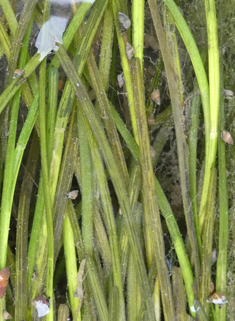
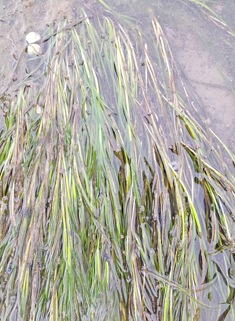
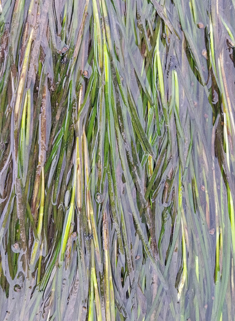
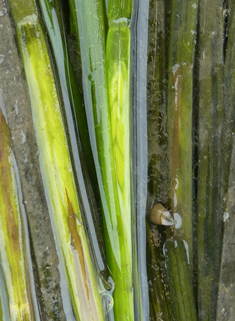
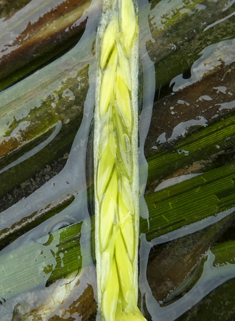
Common Eelgrass Zostera marinaNative. Common on sandy sections of the seabed between the islands. Grows in intertidal areas that are only exposed at the lowest spring tides, making discovery of this species difficult without a dedicated search. Torn leaves and stems can be found washed up on beaches after rough weather. Stems creeping through the substrate beneath the water, with leaves arising singly from each stem node and with a short shoot in each leaf axil. Leaves up to 120cm long by 1-12mm wide, typically seen lying flat at low tide. Flowering stems terminal and much branched, bearing many spathes. Flowers simple, in small, linear groups, contained within a translucent sheath.
 |
 |
|
| |
|
|
 |
 |
|
| |
|
Pondweeds - Potamogetonaceae
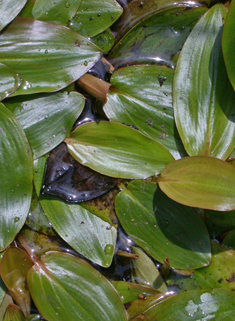
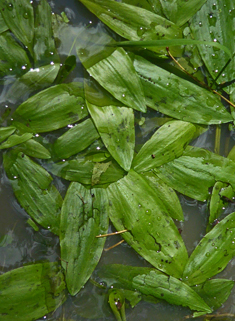
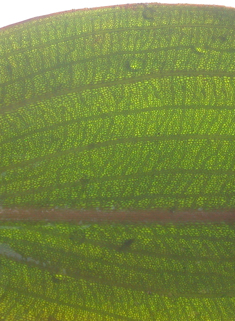
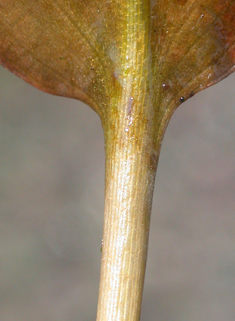
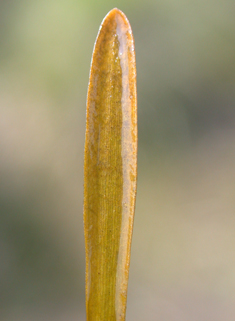
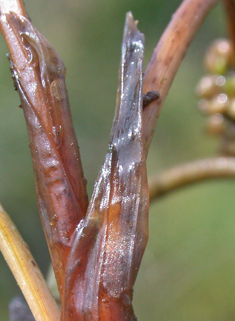
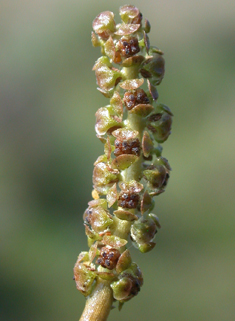
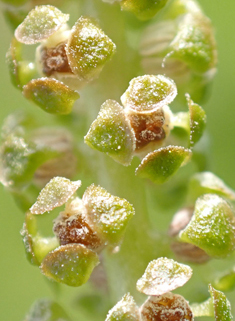
Bog Pondweed Potamogeton polygonifoliusNative. Rare, only recorded from pools on Lower Moors, St Mary's. Floating leaves opaque, typically green when fully grown, up to 10.5x7cm in size and without a hinge-like section where the petiole meets the leaf blade. Secondary veins not translucent against the light. Submerged leaves opaque, spoon-shaped or lanceolate. Fruits 1.9-2.6mm long.
 |
|
 |
 |
| |
|
|
|
 |
 |
 |
 |
| |
|
|
|
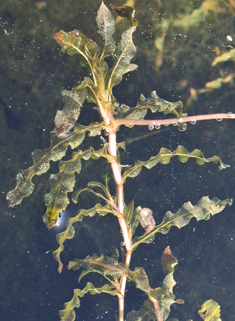
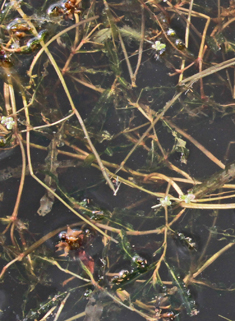
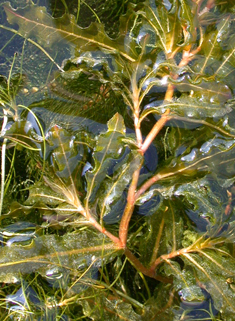
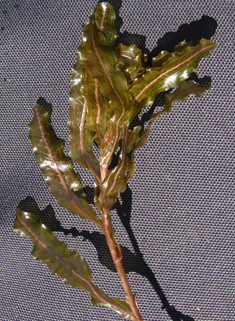
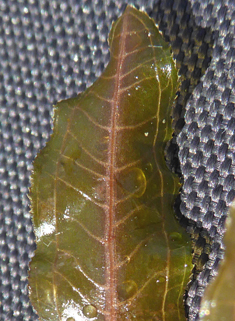
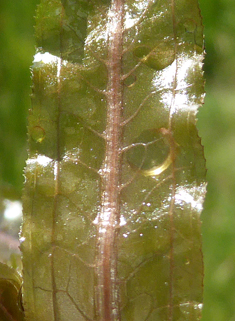
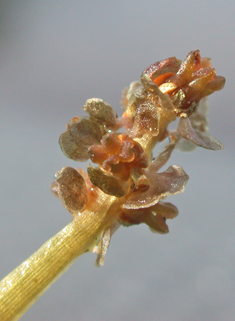
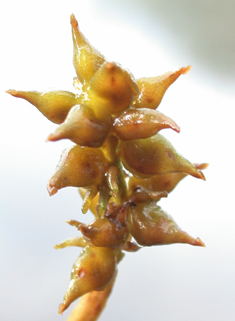
Curled Pondweed Potamogeton crispus
Native. Rare, recorded from a pool on St Martin's in 2011. Leaves all submerged, translucent and with obviously wavy and minutely toothed edges, up to 2.5-9.5x0.5-1.5cm in size and rather soft and pliant. Fruits with a longer, more curved beak than other species, 4-6.2mm long.
 |
 |
|
 |
| |
|
|
|
 |
 |
 |
 |
| |
|
|
|
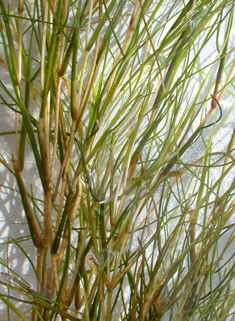
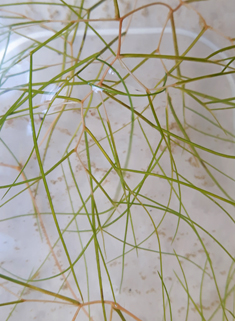
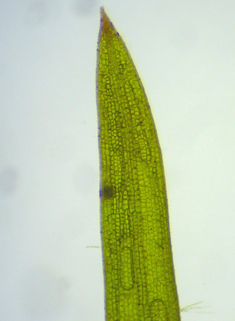
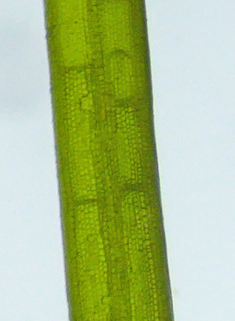
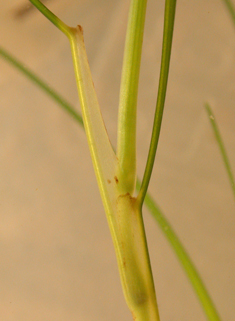
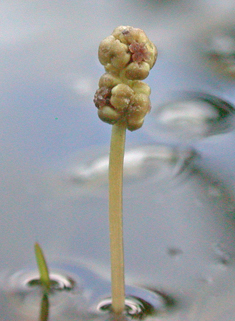
Fennel Pondweed Stuckenia pectinata
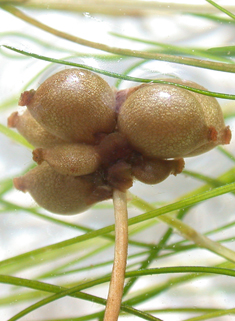
(Potamogeton pectinatus) Native. Uncommon and sporadic in pools (often brackish) on the inhabited islands. Leaves narrowly acute to slightly mucronate at the tip and 0.2-4mm wide with mostly 3-5 main veins. Stipules distinct, fused to the base of the leaf long most of their length with just the top free and forming a short, stubby leaf ligule. Fruits 3.3-4.7mm.
| |
 |
 |
 |
| |
|
|
|
 |
 |
 |
 |
| |
(top left) |
|
|
Tasselweeds - Ruppiaceae
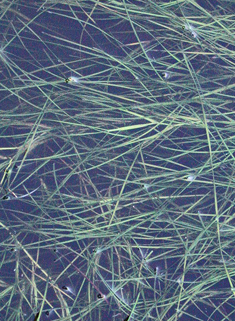
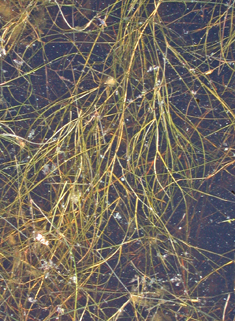
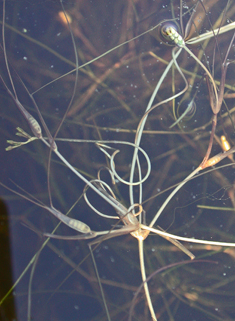
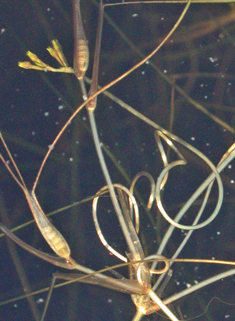
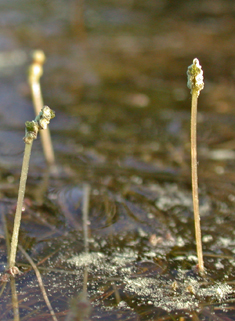
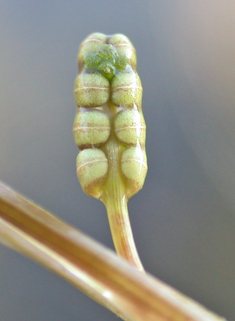
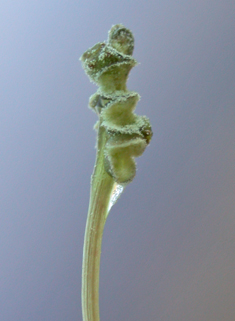
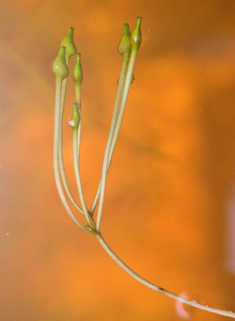
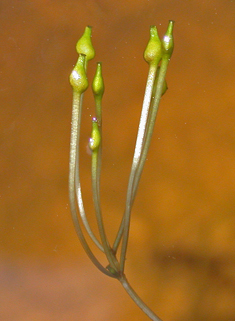
Beaked Tasselweed Ruppia maritima(Wigeongrass) Native. Uncommon in a few brackish pools on the inhabited islands. Best told from the other pondweeds by its mostly alternate lower leaves and opposite upper leaves and its small clusters of flowers that are carried close to the stem at first, but which then elongate greatly as the fruits develop. The fruits thus appear singlely at the ends of long stalks, rather than in a tight cluster. Leaves have a midrib but no side veins.
 |
 |
 |
 |
| |
|
|
|
 |
 |
 |
 |
| |
|
|
|
Water-milfoil Family - Haloragaceae
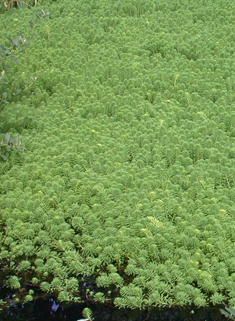
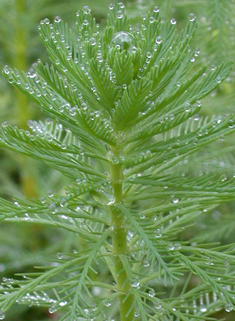
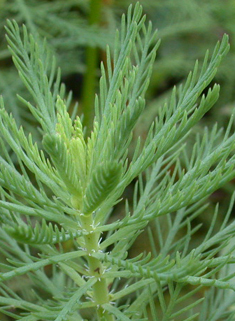
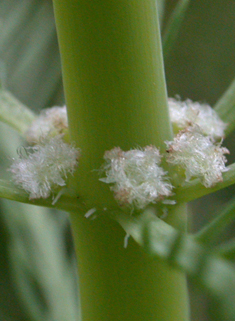
Parrot's-feather Myriophyllum aquaticumIntroduced from South America as an ornamental water plant but proving to be highly invasive. Sadly, often dumped in ponds and other waterways and potentially a serious threat to native wetland plant communities. Deliberately introduced to St Mary's and Tresco. Flowers May to August, tiny, white, in the leaf axils. Differs from native water-milfoils most obviously by its emergent shoots, clothed in waxy, finely-cut leaves.
 |
 |
 |
 |
| |
|
|
|
Other related species recorded on the Isles of Scilly
Pondweeds - PotamogetonaceaeWater-milfoil Family - Haloragaceae