Sedges
Sedge Family - Cyperaceae
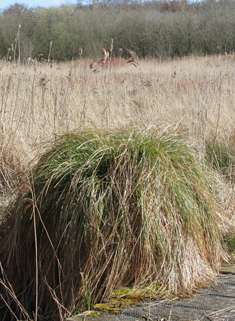
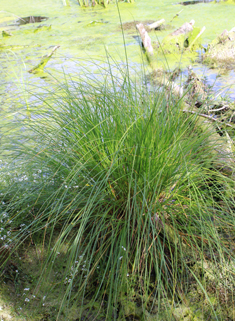
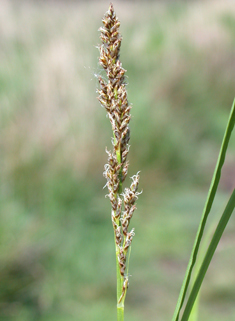
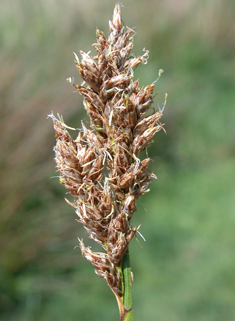
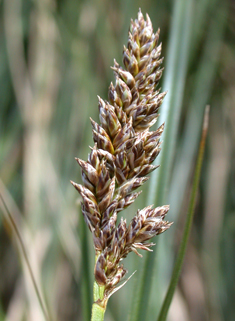
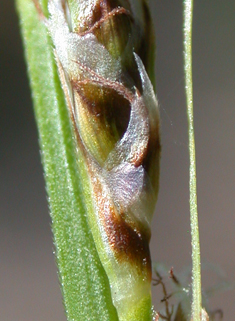
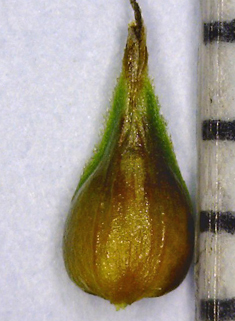
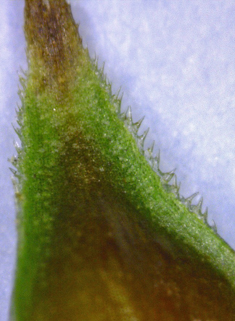
Greater Tussock Sedge Carex paniculataNative. In more or less permanent wetlands on St Mary's. Flowers May to June, fruits July. Plants form impressive tussocks of fibrous material, up to 1.5m in height and 1.0 metre across. Leaves up to 120cm long and 4-7mm wide. Flower spike rather compact, the lower spikelets with short stalks and at least some spikelets with male flowers towards their tips. Glumes with a broad, papery margin, flowers with two stigmas. Utricles 3-4mm long, ovoid, biconvex (rounded on both sides) with beak 1.0-1.5mm long and having noticeable wings in the upper half that are strongly toothed.
Older plants are easily recognisable by their sheer size, but younger plants will need more care to separate them from other species by their fruits.
 |
 |
 |
 |
| |
|
|
|
 |
 |
 |
 |
| |
|
|
|
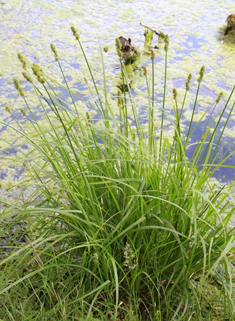
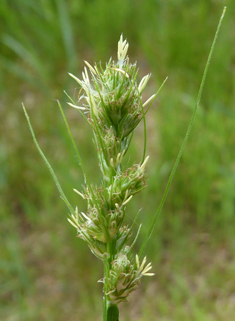
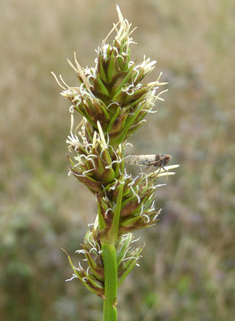
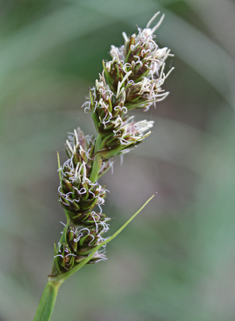
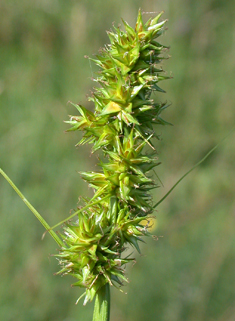
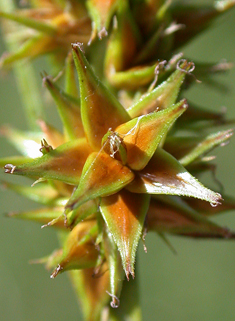
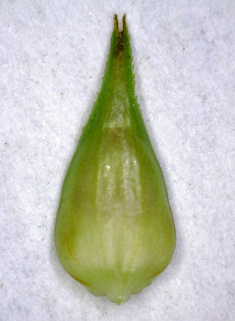
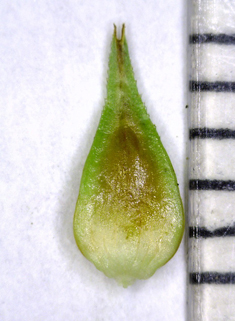
False Fox Sedge Carex otrubae
Native. Rare in wet places on St Mary's. Flowers June to July, fruits July to September. Plants densely tufted with broad, strongly keeled leaves, 4-10mm wide; leaf ligule acute and leaf sheath not wrinkled on side opposite leaf blade. Flower spike rather short and compact. Female glumes long-pointed with a green central stripe; flowers with two stigmas. Utricles 5-6mm long, broadly ovoid, planoconvex (flattened on one side); beak 1-2mm long, saw-edged but without noticeable wings.
 |
 |
 |
 |
| |
|
|
|
 |
 |
 |
 |
| |
|
|
|
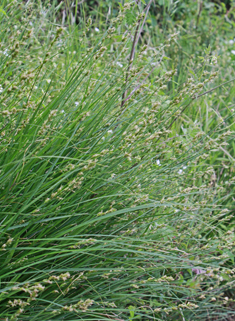
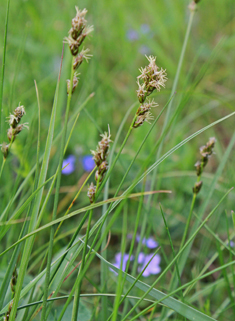
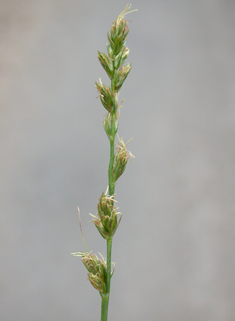
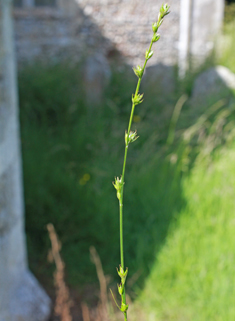
Grey Sedge Carex divulsa
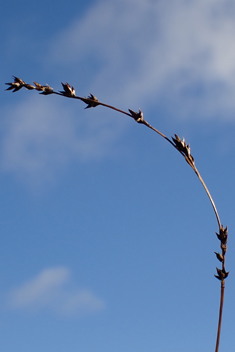
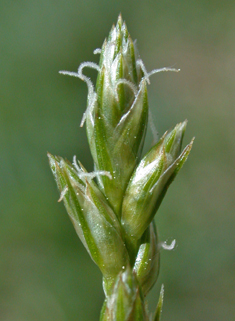
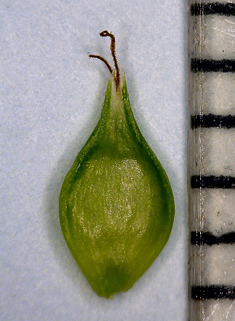
Native. More or less confined to Tresco where it is frequent, but also recorded from the north end of St Mary's. Flowers May to August, fruits July to October. Plants densely tufted with leaves 2-5mm wide. Flower spike very variable, 3-18cm long, relatively long and open, particularly towards the base. Flowers with two stigmas. Utricles 3.5-5mm long, beak about 1mm long, rough, split.
Plants with the lowest 3-4 spikelets separated from each other by a gap of more than their own length and with an inflorescence 5-10cm long are considered to be subspecies divulsa, while plants with the lowest spikelets separated from each other by a gap of no more than their own length and with an inflorescence 3-8cm long are considered to be subspecies leersii. The former is generally more frequent, with the latter seeming to favour more chalky soils but, in reality, many plants are intermediate and difficult to assign to either subpecies. Despite difficulties with the identification of some plants, the two forms are often considered separate species, with leersii becoming Many-leaved Sedge (Carex leersii).
Grey and Prickly Sedge can appear rather similar and should be compared carefully with each other to make an accurate identification.
 |
 |
 |
|
| |
|
|
|
 |
 |
 |
 |
| (subsp. divulsa) |
(subsp. divulsa) |
|
|
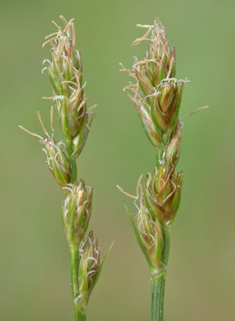
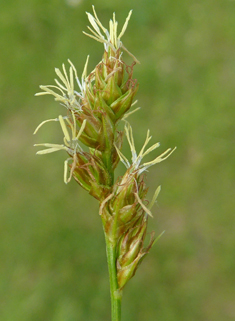
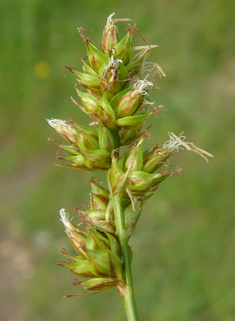
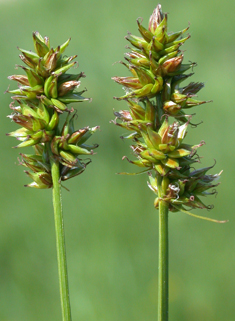
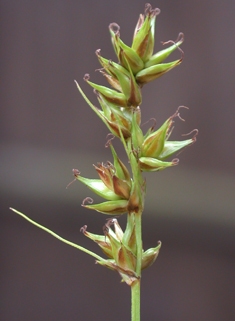
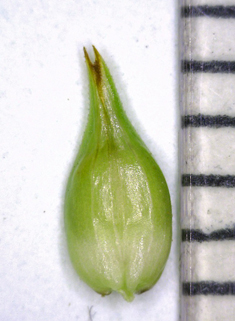
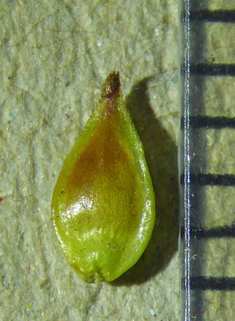
Small-fruited Prickly Sedge Carex pairae
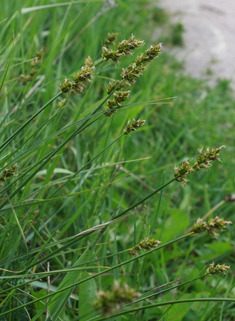
(Carex muricata subsp. pairae, C. muricata subsp. lamprocarpa) A single record from Tresco in 1975. Flowers May to July, fruits July to August. Plants densely tufted with keeled leaves, 2-4mm wide. Flower spike 1-4cm long, relatively short and compact or only shortly interrupted towards the base. Female glumes long-pointed with a green central stripe; flowers with two stigmas. Utricles 2.6-4mm long, becoming shiny and reddish-brown with age, beak minutely toothed.
For a long time, this species was considered to be a subspecies of Prickly Sedge (Carex muricata).
Spiked, Grey and Prickly Sedge can all appear rather similar and should be compared carefully with each other to make an accurate identification.
 |
 |
 |
 |
| |
|
|
|
 |
 |
 |
 |
| |
|
|
|
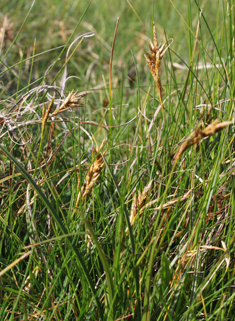
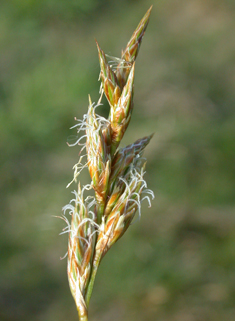
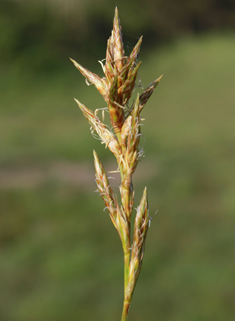
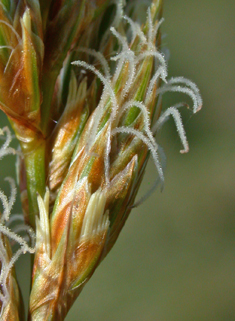
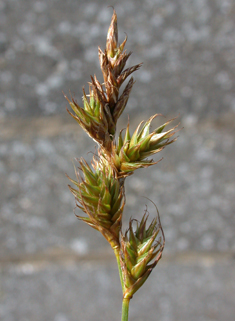
Sand Sedge Carex arenaria
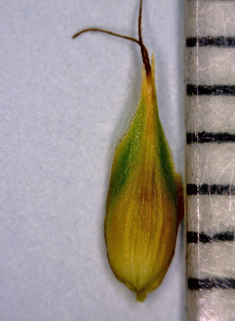
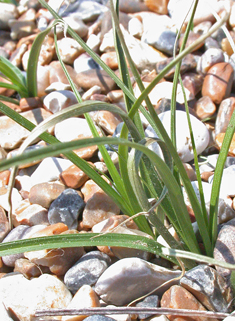
Native. Widespread and often abundant in places. One of the main sand-binding species that helps to form coastal dune systems. Flowers June to July, fruits July to August. Plants widely spreading to form extensive, single-species colonies. Leaves 1.5-3.5mm wide, rough and keeled or channelled. Flower spike up to 8cm long with 5-15 spikelets without. Flowers with two stigmas. Utricles 4-5.5mm long, ovoid, planoconvex (flattened on one side), many-ribbed; beak 1-2mm long, rough and slightly winged at the base.
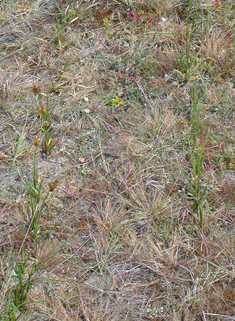
Although local in its distribution, this can be an abundant plant in coastal dunes and on sandy heaths. Plants spread by extensive rhizomes that play an important part, along with Marram, in stabilising sand dune systems. Rhizomes creep below ground and send up tufts of leaves from the nodes; these tufts make distinctive, straight lines for many meters through sandy ground. Eventually, plants infill to create solid 'lawns' of vegetation.
 |
 |
 |
 |
| |
|
|
|
 |
 |
 |
 |
| |
|
|
|
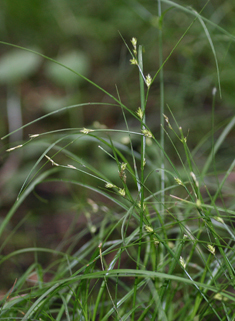
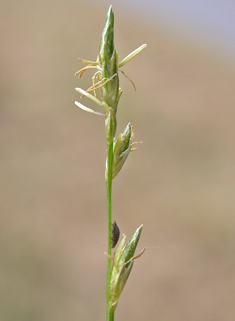
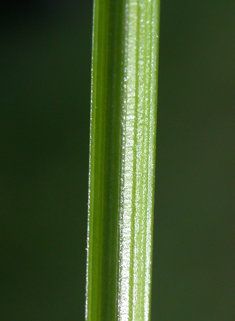
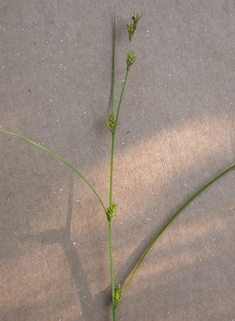
Remote Sedge Carex remota
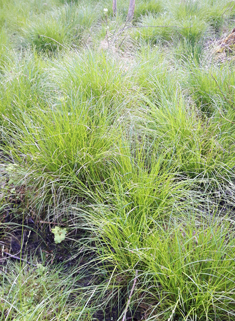
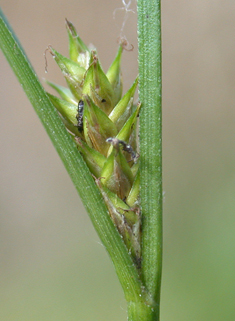
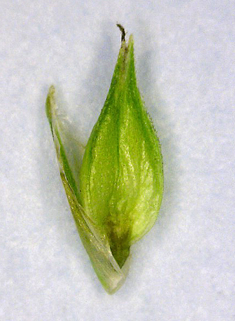
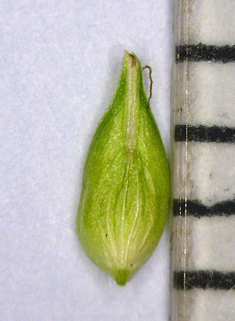
Native. Rare, occurring in two small populations on Tresco. Flowers June, fruits July. Plants densely tufted and often forming large colonies under shady alder or willow carr. Leaves channelled, not keeled (so U-shaped not V-shaped in cross-section) 1.5-2mm wide. Flower spikes elongate with 4-9 spikelets, the lower ones especially well-spaced from each other and with very long, leaf-like bracts. Flowers with two stigmas. Utricles 2.5-3.8mm long, beak 0.5-0.8mm long, split.
A highly distinctive sedge and easily recognised. The 'remoteness' of the flower spikelets from each other is what gives the species its name.
 |
 |
 |
 |
| |
|
|
|
 |
 |
 |
 |
| |
|
|
|
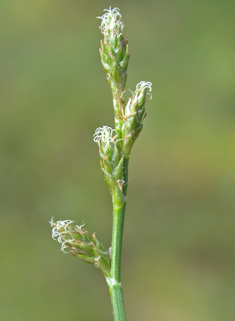
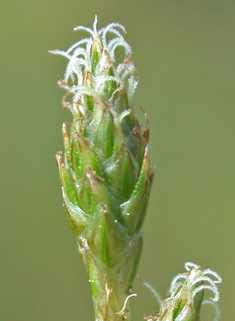
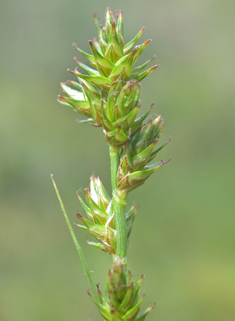
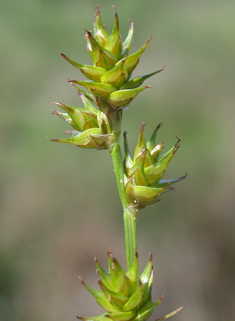
Star Sedge Carex echinata
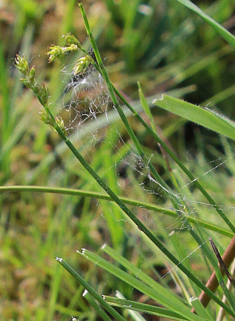
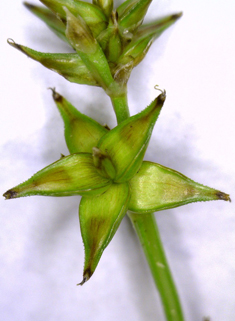
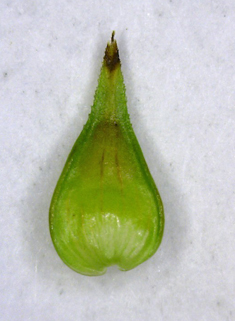
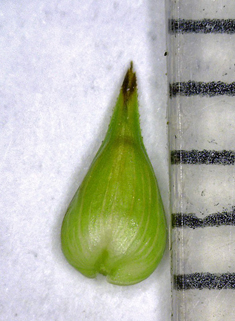
Native. A plant of peaty, acid bogs, recorded from St Mary's but not seen for many years. A very small species, so could perhaps be found with careful searching. Flowers May to June, fruits June to August. Plants tufted with stems often just 10-20cm in height; leaves keeled or becoming flat, 1-2.5mm wide. Flower spikes 1-3cm long with 2-5 spikelets, each spikelet narrow at first but becoming star-shaped as the fruits ripen. Flowers with two stigmas. Utricles 2.8-4mm long, beak 1-1.5mm long, broad and toothed at the margins.
A small species that is easily overlooked, but distinctive when fruiting.
 |
 |
 |
 |
| |
|
mature |
|
 |
 |
 |
 |
| |
|
|
|
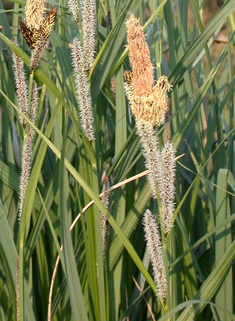
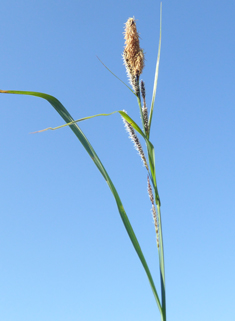
Greater Pond Sedge Carex riparia
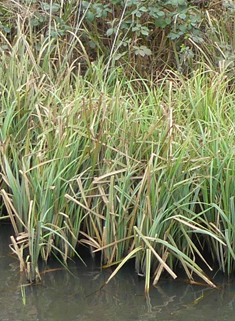
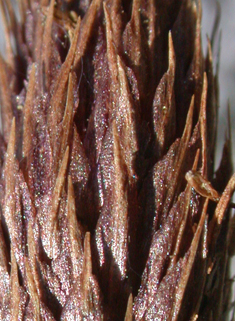
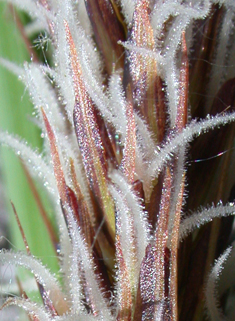
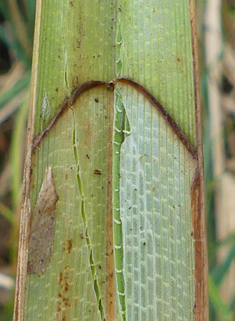
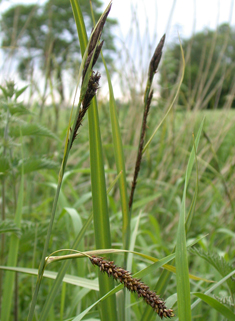
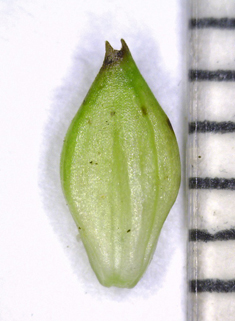
Native. Rare in wet places, formerly on Tresco but currently only on St Mary's. Flowers May to June, fruits June to September. Plants form extensive spreading colonies (sedge beds), 60-130cm in height. Leaves 6-15mm wide, with a rounded ligule. Flower spike about one third the length of the stem, with 3-6 male and 1-5 female spikelets. male and female glumes with long acuminate tips. Flowers with three stigmas. Utricles 5-8mm long, oval, slightly inflated, with beak 1-2mm long and clearly notched at the tip.
Often grows together with Lesser Pond Sedge, from which it is most easily told by the shape of the tips of the glumes (if in flower) or by the shape of the leaf ligule.
 |
 |
 |
 |
| |
|
|
|
 |
 |
 |
 |
| |
|
|
|
Cyperus Sedge Carex pseudocyperus
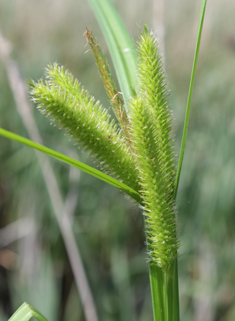
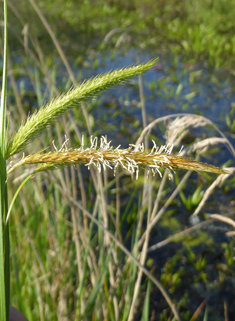
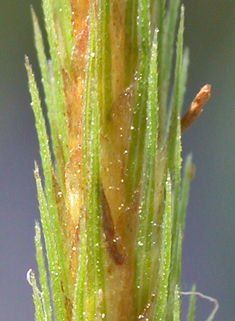
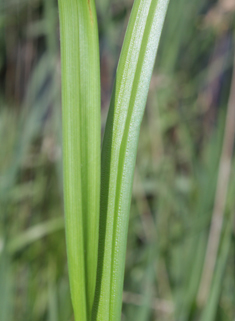
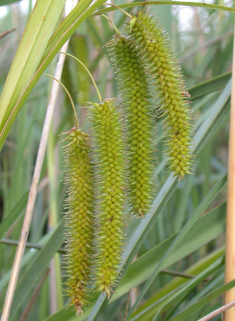
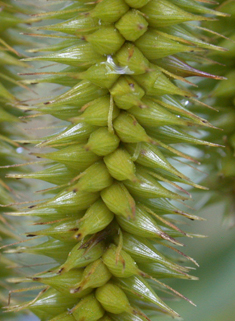
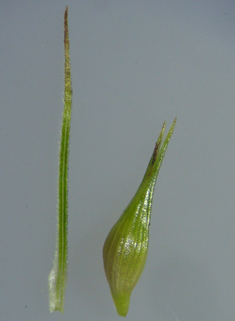
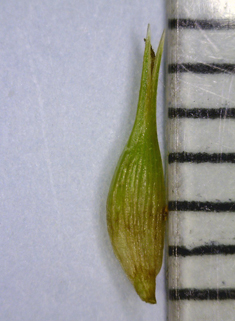
Native in the UK but on Scilly only found on Tresco, where recently planted. Flowers May to June, fruits July to August. Plants grow to 40-90cm in height. Leaves 5-12mm wide, strongly keeled and folded. Flower spike emerges upright but soon becomes pendulous, with 1 male and 3-5 female spikelets. male and female glumes very long with bristle-edged tips. Flowers with three stigmas. Utricles 4-5mm long, elliptical to oval, strongly ribbed, with a long beak 1.5-2.5mm in length and deeply notched at the tip.
A highly distinctive and ornamental species and easily recognised by its close cluster of pendulous spikelets containing distinctive utricles.
 |
 |
 |
 |
| |
mature |
|
|
 |
 |
 |
 |
| |
|
|
|
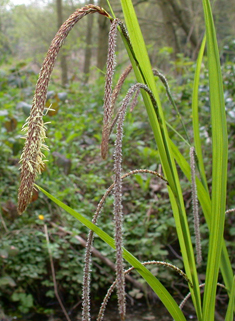
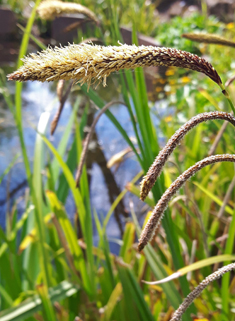
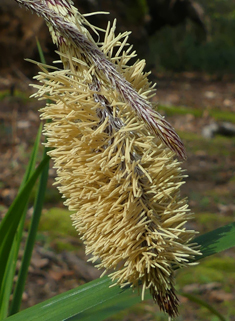
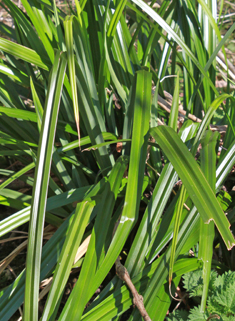
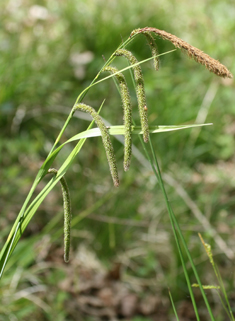
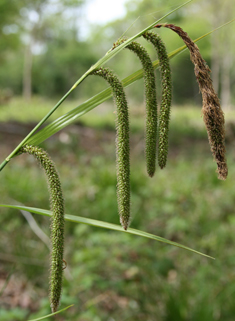
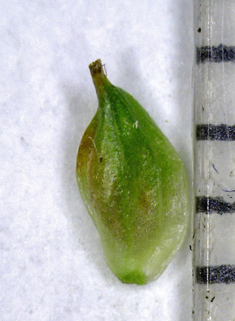
Pendulous Sedge Carex pendula
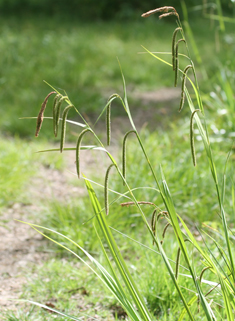
Native. Local and uncommon but more recently increasing (as elsewhere in the UK). On St Mary's, Tresco and St Martin's. Flowers May to June, fruits June to July. Plants grow to 60-180cm in height, often forming large, leafy tussocks. Leaves broad, shining green, 15-20mm wide, strongly keeled and folded. Flower spike emerges upright but soon becomes pendulous, with 1-2 male and 4-5 female spikelets. Male and female glumes acute to acuminate at the tip. Flowers with three stigmas. Utricles 3-3.5mm long, broadly oval, three-sided, with a beak 0.2-0.6mm in length.
A highly distinctive and ornamental species and easily recognised by its pendulous spikelets, well spaced along the main stem.
 |
 |
 |
 |
| |
|
mature |
|
 |
 |
 |
 |
| |
|
|
|
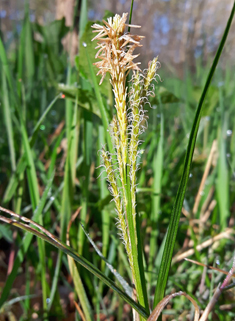
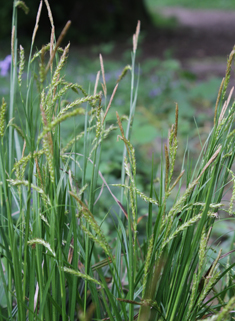
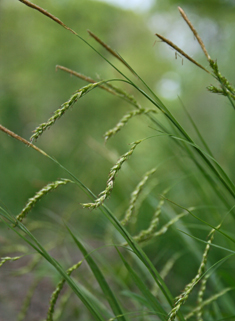
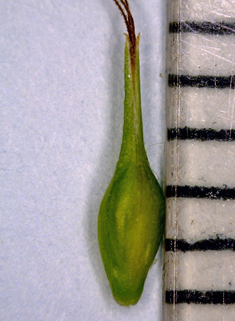
Common Wood Sedge Carex sylvatica
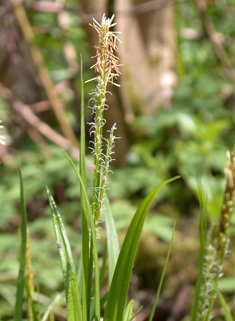
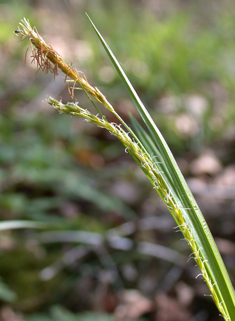
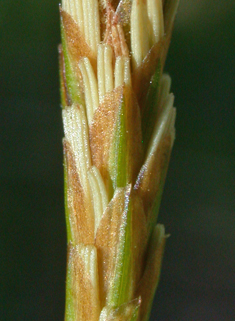
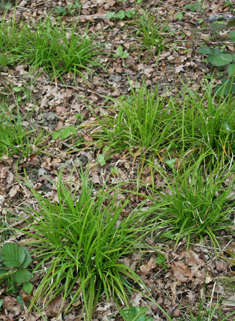
Native. A plant of shady places, recorded at single locations on St Mary's and Tresco. Flowers April to July, fruits June to September. Plants grow to 15-60cm in height, often forming distinct colonies of leafy tussocks. Leaves fairly broad, bright green, 3-10mm wide, strongly keeled and folded. Flower spike emerges upright but the female spikelets become pendulous as the fruits develop. Spikes have 1 male and 3-5 female spikelets. Utricles 3-5mm long, broadly oval, three-sided, with a long beak, 1-2.5mm in length.
 |
 |
 |
 |
| |
|
|
|
 |
 |
 |
 |
| |
|
|
|
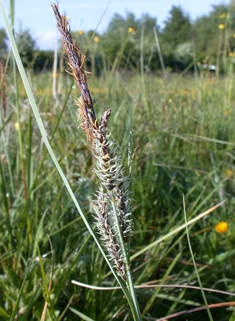
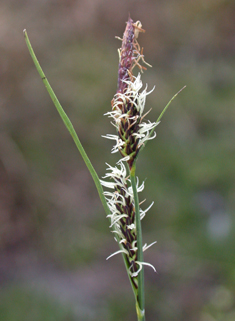
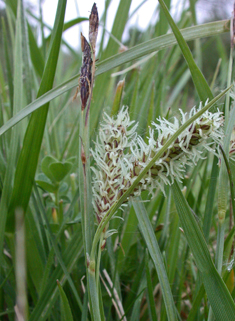
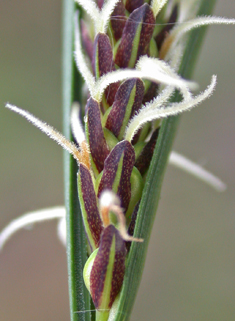
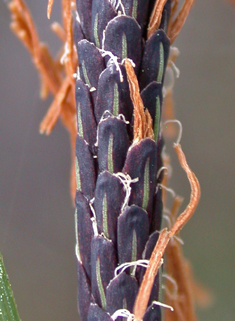
Glaucous Sedge Carex flacca
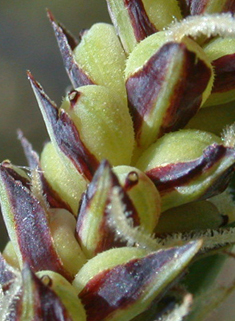
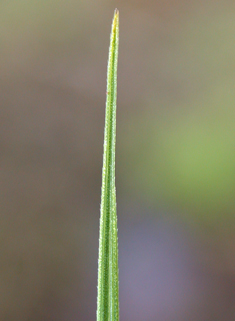
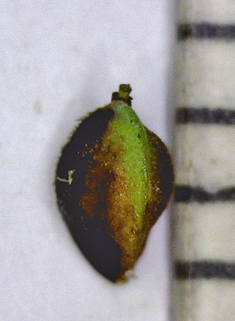
Native. Rare and now seemingly extinct, with just one record from Tresco in 1929. Flowers May to June, fruits June to September. Plants form spreading colonies of tufted shoots, 10-60cm in height. Leaves 1.5-4mm wide, dull green above, pale blue-green below with the midrib groove running all the way to the tip of the leaf. Flower spike 2-3cm long with (1)2-3 male and 1-5 female spikelets. Flowers with three stigmas. Utricles small, 2-3mm long, ellipsoid to obovoid, minutely warty with a minuscule beak, 0.2-0.3mm long.
The somewhat similar Carnation Sedge has leaves with a midrib groove that stops well short of the leaf tip.
 |
 |
 |
 |
| |
|
stigmas mature |
stigmas mature |
 |
 |
 |
 |
| |
|
|
|
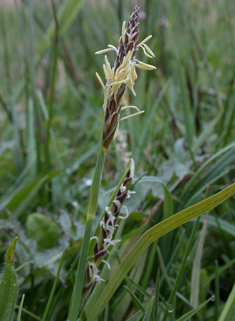
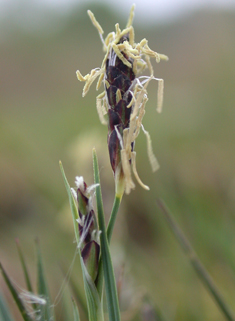
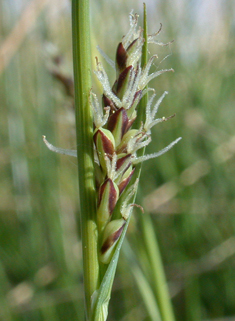
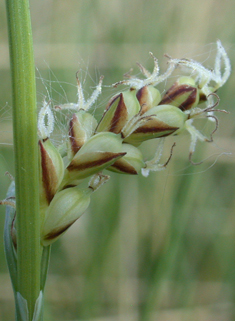
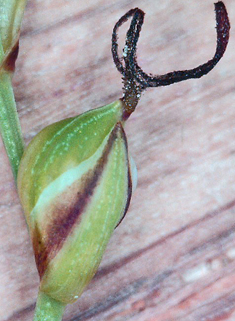
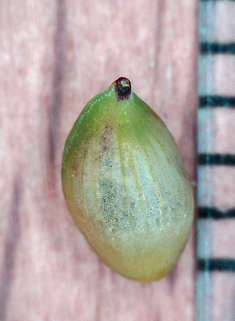
Carnation Sedge Carex panicea
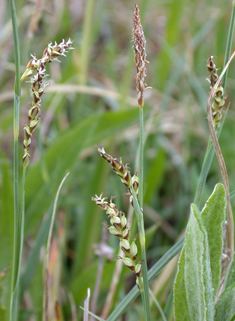
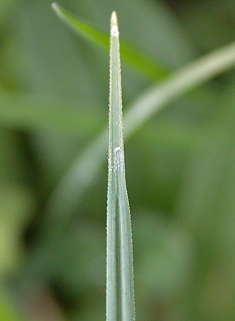
Native. Very rare with just a single record from St Mary's in the 1920s. Flowers May to June, fruits June to September. Plants form spreading colonies of tufted shoots, 10-60cm in height. Leaves 1.5-5mm wide, blue-green with the midrib groove stopping well short of the tip of the leaf. Flower spike with 1 male and 1-3 female spikelets. Flowers with three stigmas. Utricles small, 3-4mm long, broadly obovoid, smooth, with the tip angled outwards and with a minuscule beak, 0.2-0.5mm long.
Often grows with the somewhat similar Glaucous Sedge, but that species has leaves with a midrib groove that continues to the leaf tip.
 |
 |
 |
 |
| |
|
anthers mature |
|
 |
 |
 |
 |
| |
|
|
|
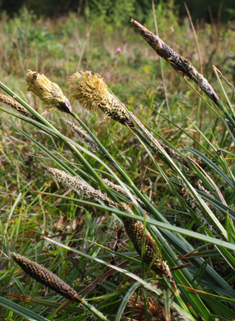
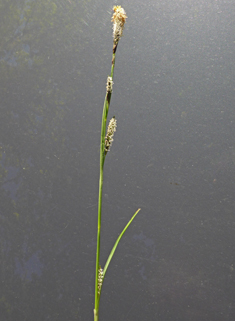
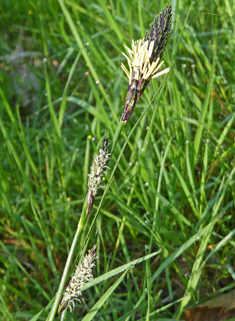
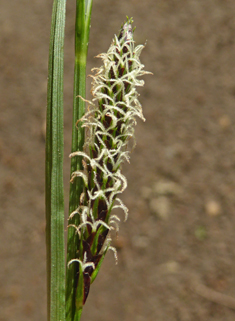
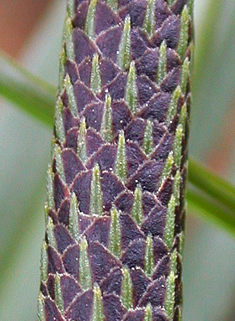
Green-ribbed Sedge Carex binervis
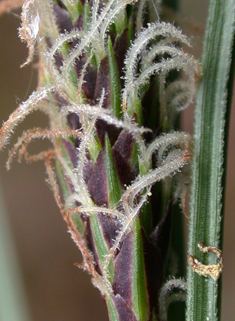
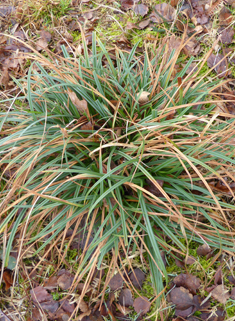
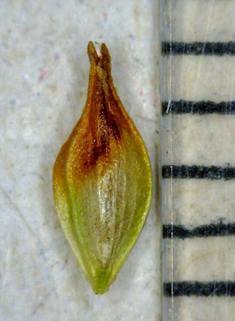
Native. Frequent in coastal grassy places on St Mary's. Flowers June, fruits June to August. Plants grow to 15-75cm in height, often forming distinct colonies of leafy tussocks. Leaves dark green, 3-6mm wide, strongly keeled and folded. Flower spike elongated with the lower female spikes being particularly widely spaced. The spike stays more or less upright but often leans strongly to one side, with only the lowermost spikelet becoming pendulous. Spikes have 1 male and 2-4 female spikelets. Utricles 3.5-4.5mm long, broadly elliptical, ripening reddish- or purplish-brown, with two, well-marked veins or ridges; beak 1-1.5mm in length.
 |
 |
 |
 |
| |
|
|
|
 |
 |
 |
 |
| |
|
|
|
Common Yellow Sedge Carex demissa
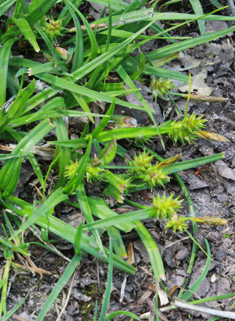
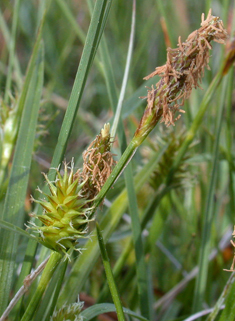
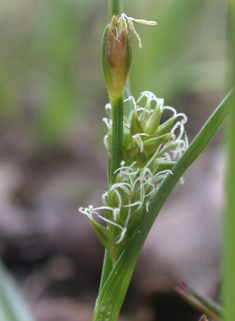
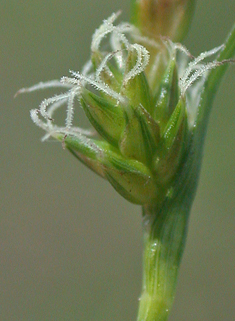
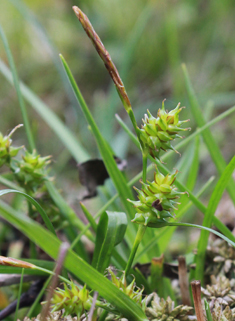
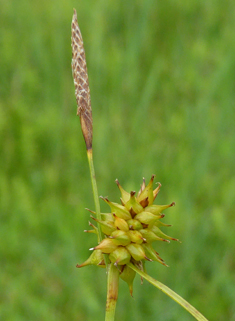
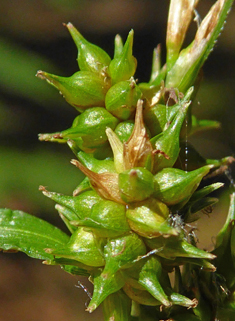
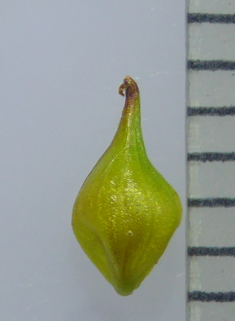
(Carex flava subsp. demissa, Carex oederi subsp. demissa) (Carex viridula subsp. oedocarpa) Native. Rare around wet flushes and recorded from St Mary's, St Agnes and Tresco. Flowers June-July, fruits July to August. Plants 5-20cm in height. Leaves green to yellowish-green, 2-5mm wide, flat. Spikes have 1 male spikelet (which is clearly stalked) and 2-5 female spikelets (the lowest always remote from the others) with leaf-like bracts, the lowermost greatly exceeding the length of the flower spike. Male glumes pale brown with a green midrib and obtuse tip; female glumes similar but with a subacute tip. Utricles 3-4mm long, oval or elliptical, green and prominently veined; beak 0.8-1.3mm in length, straight, usually less than one third of the length of the utricle.
 |
 |
 |
 |
| |
|
|
|
 |
 |
 |
 |
| |
|
|
|
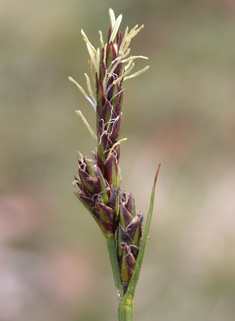
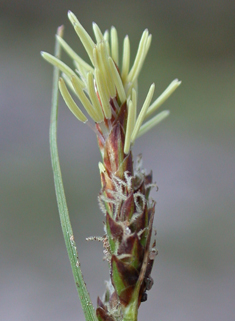
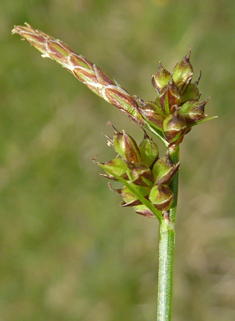
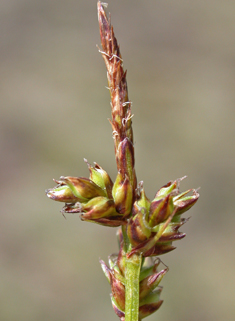
Pill Sedge Carex pilulifera
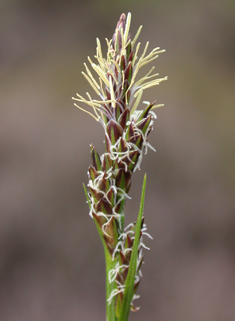
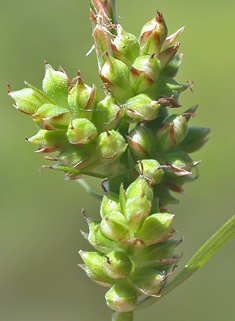
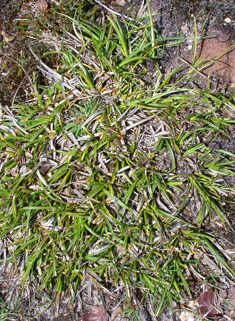
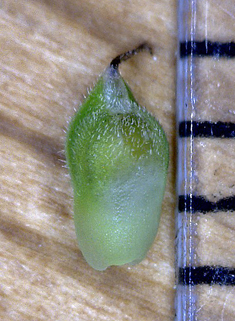
Native. Local but scattered across the larger islands in heathy places. Flowers May to June, fruits June to July. Plants form very close and dense, evergreen tussocks of leaves with flower stems rising, 10-30cm in height. Leaves 1.5-2mm wide, green in summer, becoming bronzed in winter. Flower spike 2-4cm long with one male and 2-4 female spikelets. Flowers with three stigmas. Utricles small, 2-3.5mm long, ellipsoid to pear-shaped, minutely downy with a minuscule beak, 0.3-0.5mm long.
A small but distinctive species, often growing on well-trodden paths, where the leaf rosettes become flattened to the ground rather than forming low mounds.
 |
 |
 |
 |
| |
|
|
|
 |
 |
 |
 |
| |
|
|
|
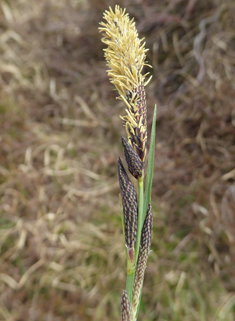
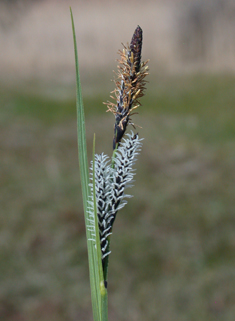
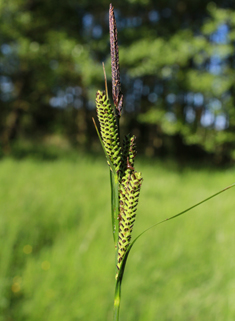
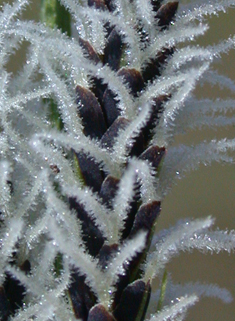
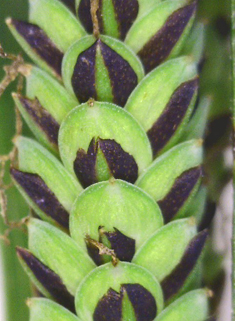
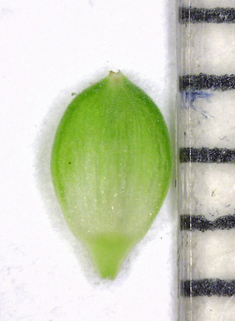
Common Sedge Carex nigra
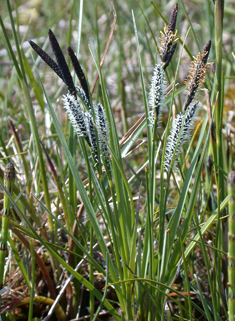
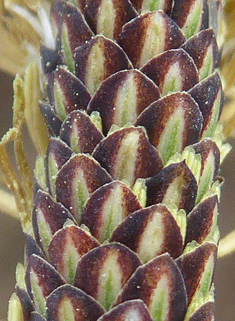
Native. Extinct. Recorded from Tresco and St Martin's in 1864. Flowers May to July, fruits June to August. Plants not forming tussocks, though stems can often be loosely tufted, to 10-70cm in height. Leaves 1-5mm wide, rolling inwards when drying. Flower spike one sixth to one quarter the length of the stem, with 1-2 male and 1-4 female spikelets. Male glumes usually purplish with a pale midrib, obtuse or subacute at the tip; female glumes usually black, obtuse to acute at tip. Flowers with two stigmas. Utricles 2.5-3.5mm long, broadly oval-elliptic, faintly ribbed, with beak to 0.2mm long and truncate at the tip.
A variable species in overall appearance, with the lowest flower bract no longer than the flower spike, utricles distinctly ribbed and stomata mostly on the upper side of the leaf.
 |
 |
 |
 |
| |
mature |
mature |
|
 |
 |
 |
 |
| |
|
|
|