The Plantain Family
What are they?
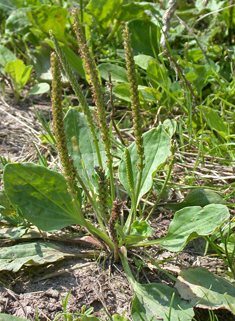
Until recently, the plantains formed a relatively small family (the Plantaginaceae) of rather uninspiring little plants, but a recent review of closely-related plants increased the size of the family greatly as many more species were moved into the Plantaginaceae. Despite this, the plantains themselves remain a rather distinctive little group of plants, with their small, green or brownish flowers being packed tightly into either oval-shaped flower spikes, or elongated into upright 'rat's-tail' spikes. The leaves have more or less parallel veins that run from the base of the leaf towards the tip. In addition, there are some other members of the plantain family included here that all have rather distinctive appearances.
Where are they found?
Several of our native species are abundant throughout the region in all kinds of grassy habitats as well as on open ground such as footpaths, tracks and other well-trodden places, where their flattened rosettes can withstand trampling well.
Identification
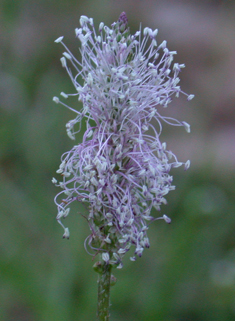
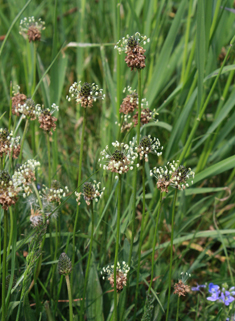
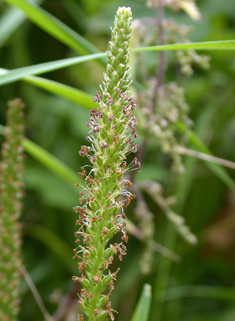
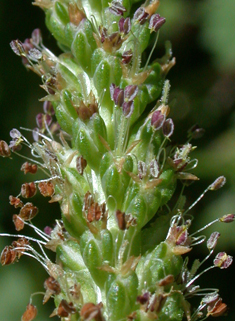
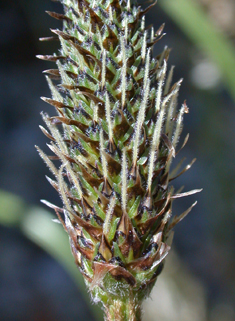
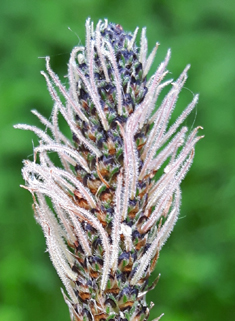
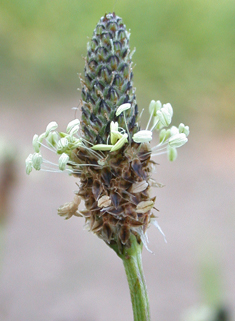
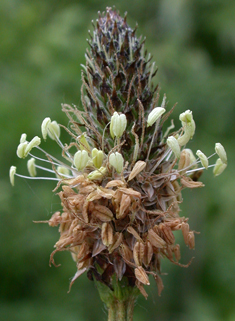
Plantains have tiny flowers, compacted into either rounded or elongated flower spikes. Their flowers have papery sepals that remain after the small, green or brownish petals have fallen. Identification features to check include the shape of the flower spike and the shape of the leaves, as well as their position (all basal, or on upright stems). Note that the flowers can appear different according to the timing of their development. The female styles mature first and protrude as single, whitish filaments from the flower centres. As the styles wither, the male anthers (four per flower) protrude and are creamy or purplish in colour.
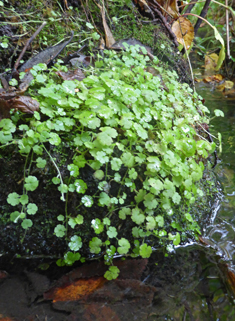
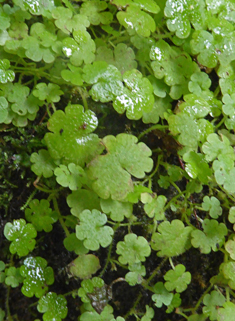
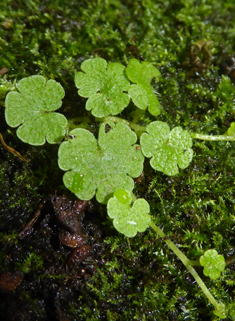
Cornish Moneywort Sibthorpia europaea
Native. Rare and declining and now known from a single site on St Mary's. Flowers July to October. Forms creeping mats, favouring damp, deeply shady places. Flowers tiny, 1.5-2.5mm across with five petals, dull cream or slightly pinkish tinged. The only species on this page with non-succulent, lightly hairy leaves but otherwise rather resembles Alternate-leaved Golden-saxifrage and would favour similar habitats.
 |
 |
 |
| |
|
|
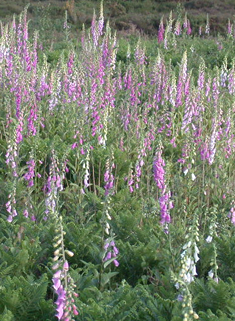
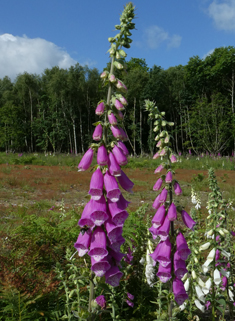
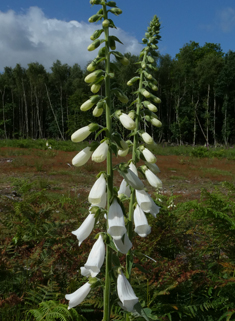
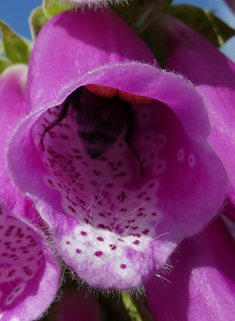
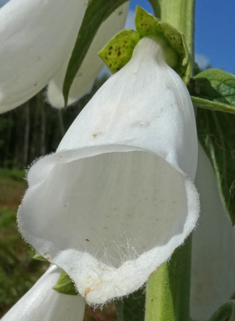
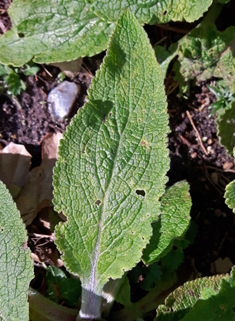
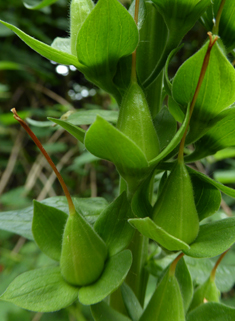
Common Foxglove Digitalis purpurea
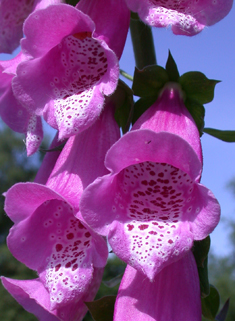
Native. Widspread and often abundant throughout the islands. Flowers June to September. A biennial plant, in the first year forming a flat rosette of thickly downy leaves, up to 30cm in length. In the second year, plants push up a flower-bearing stem which may reach two metres or more in height. Flowers are tubular and usually heavily spotted on the inside; they may be white or pinkish-purple.
 |
 |
 |
|
| |
|
|
|
 |
 |
 |
 |
| |
|
|
|
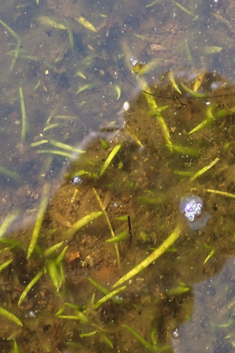
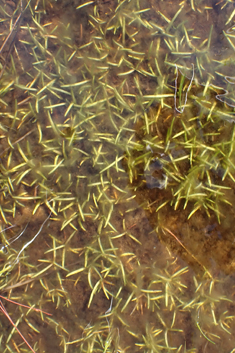
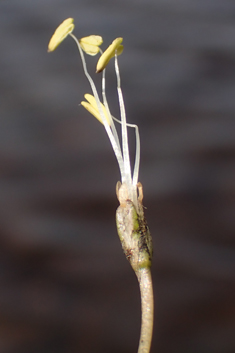
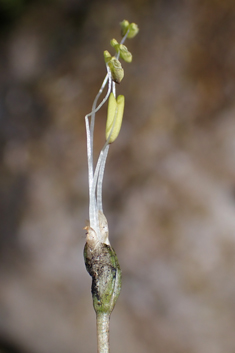
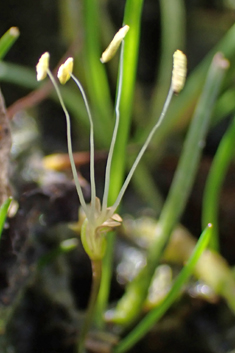
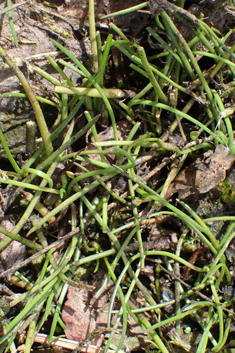
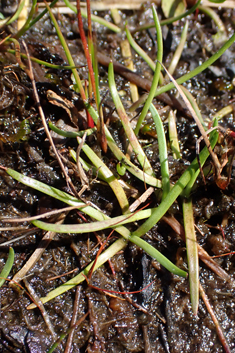
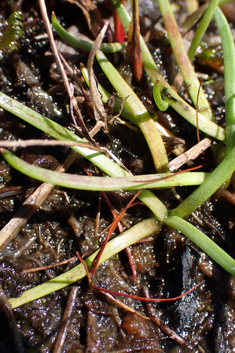
Shoreweed Littorella uniflora
Native. Rare, recorded only from Abbey Pool, Tresco. Grows submerged in water or on seasonally inundated mud. Leaves strap-like, 2-10cm long, flowers borne at the tip of an upright stem, with a single male and one to several female flowers.
 |
 |
 |
 |
| |
|
|
|
 |
 |
 |
 |
| |
|
|
|
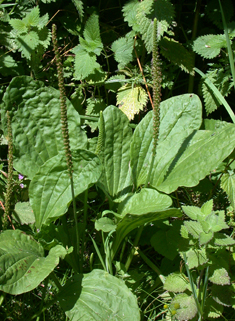
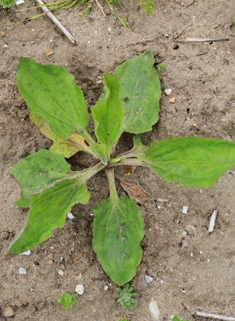
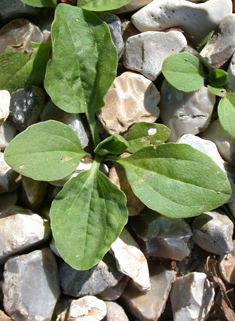
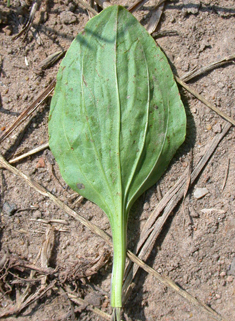
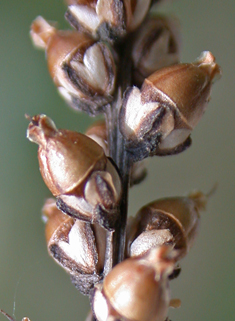
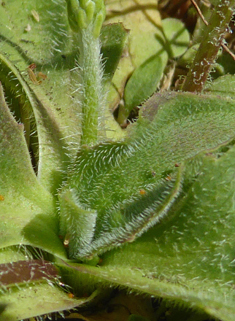
Greater Plantain Plantago major
Native and common throughout the inhabited islands. Thrives on well-trodden ground on tracks, paths, in lawns and playing fields. Flowers May to September. Leaves broadly rounded and all in a basal rosette. Flowers form long, wiry, 'rat's-tail' spikes. The subspecies intermedia occurs in wetland habitats, including the upper edges of saltmarshes and in coastal grazing marshes; it differs in being distinctly hairy on its leaves (especially the petioles) and having 3-5 (not 5-9) veins.
 |
 |
 |
 |
| |
|
|
|
 |
 |
 |
 |
| |
|
|
|
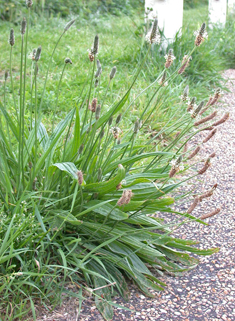
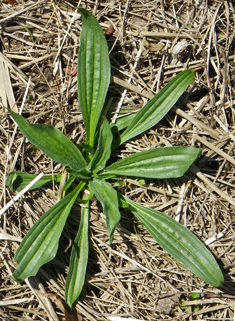
Ribwort Plantain Plantago lanceolata
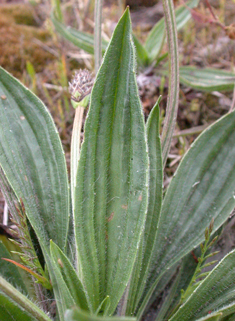
Native and common to abundant throughout the inhabited islands as well as some of the smaller ones. Flowers April to August. Leaves lance-shaped with strongly impressed parallel veins and all in a basal rosette. Flowers form long-oval heads with creamy anthers.
 |
|
 |
 |
| |
|
|
|
 |
 |
 |
 |
| |
|
|
|
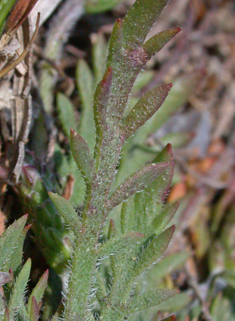
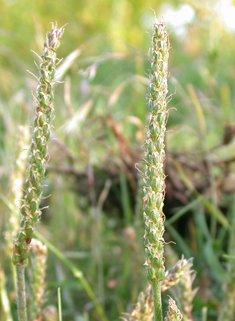
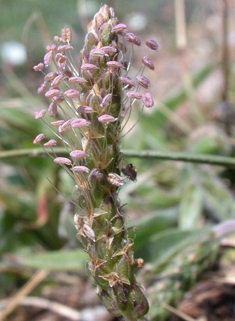
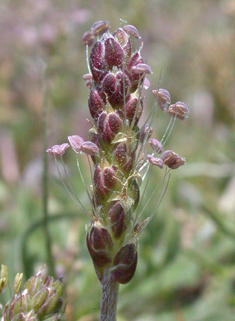
Buck's-horn Plantain Plantago coronopus
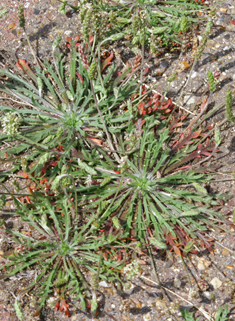
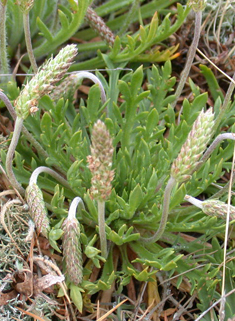
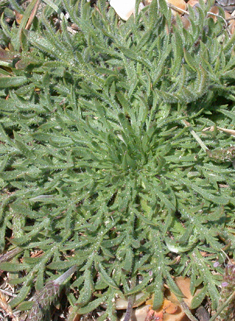
Native and very common on sandy, acid soils and in coastal dunes. Flowers May to July. Leaves deeply lobed into narrow segments and all in a basal rosette. Flowers form elongate spikes, the stamens with creamy to pinkish anthers.
 |
 |
 |
 |
| |
|
|
|
 |
 |
 |
|
| |
|
|
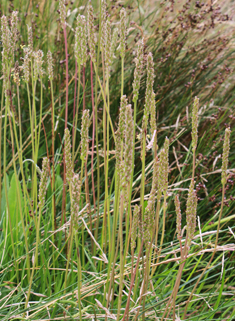
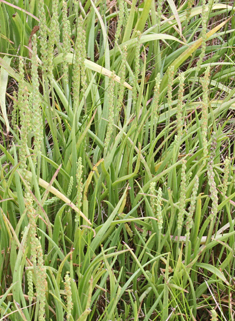
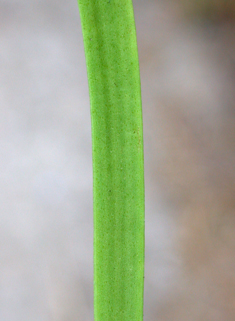
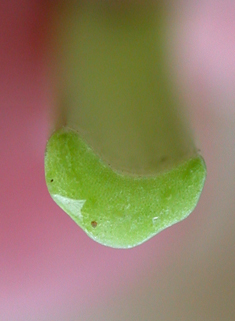
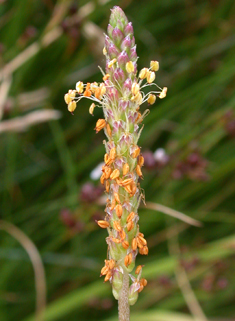
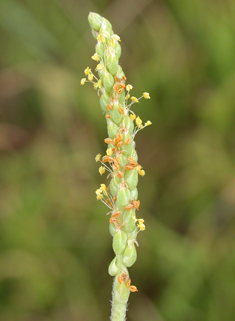
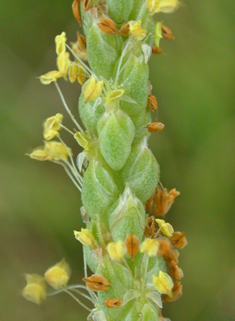
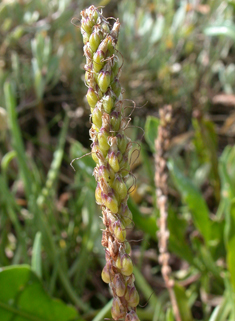
Sea Plantain Plantago maritima
Native in coastal habitats but rather scarce and confined to St Mary's and Tresco. Flowers June to August. Leaves long and grass-like but fleshy and forming a 'U' shape in cross-section; all in a basal rosette. Flowers form elongate spikes with yellow stamens.
 |
 |
 |
 |
| |
|
|
|
 |
 |
 |
 |
| |
|
|
|