Gorses, Brooms & Allies
What are they?
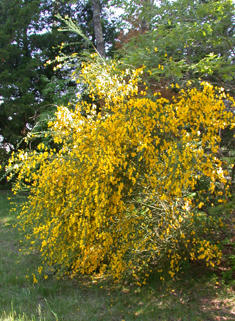
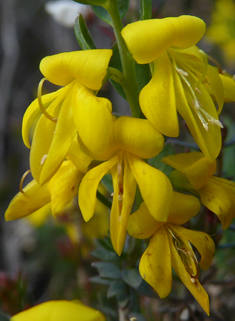
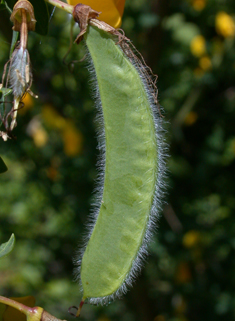
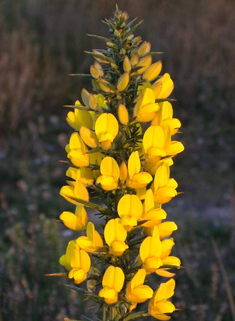
The gorses, brooms and related species are woody shrubs in the pea family. They share family traits of typical 'pea flowers' and pod-like fruits. The plants are rather variable in other ways and may bear branches that are green and rush-like, or carry a formidable armament of spines.
Where are they found?
Some of the native species are common and often dominant on heaths and grassy places, with spiny gorses in particular being rather troublesome due to their persistence and rapid growth. Gorses are sometimes planted as impenetrable hedges, while some other species occur as escapes from cultivation in urban or suburban places.
Identification
These bushy species can readily be identified as a group by a combination of their pea-type flowers and their seed pods. Telling them apart from each other mostly requires taking details of stem type, leaf shape and hairiness of the seed pods.
Common Gorse Ulex europaeus
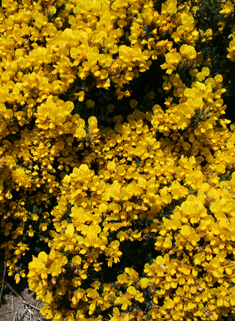
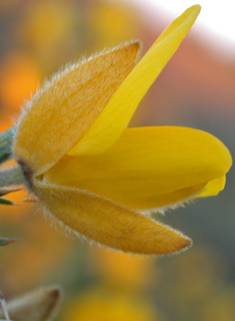
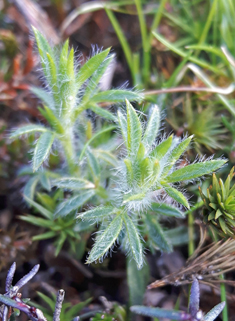
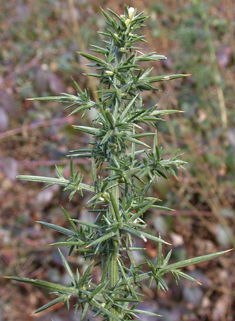
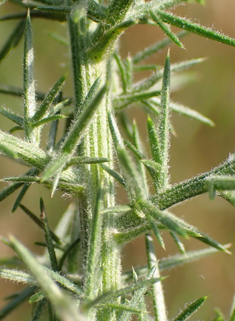
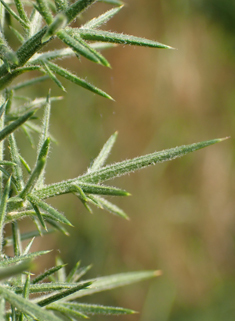
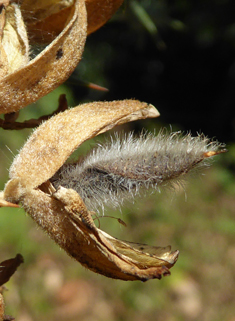
Possibly native (though more likely an ancient introduction) on areas of acidic grassland and heath but also much planted elsewhere. Flowers abundantly in May, but odd flowering branches can be found in any month of the year. Forms a dense, extremely spiny shrub to three metres in height. Leaves on seedlings and young plants are trifoliate but soon drop, leaving spiny, ridged stems. The spines are straight or only slightly recurved. At the base of the flower will be found two, tiny, brown bracteoles, each of which is at least as wide, if not wider than the flower stalk (see photo).
 |
|
 |
 |
| |
|
|
|
 |
 |
 |
 |
| |
|
|
|
Western Gorse Ulex gallii
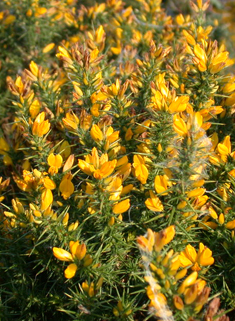
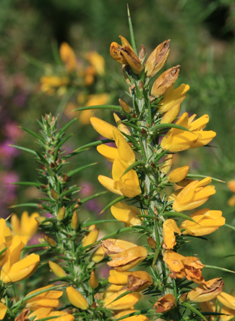
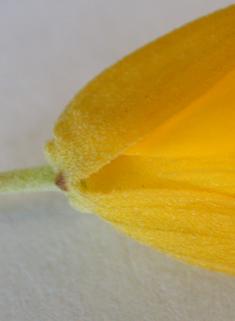
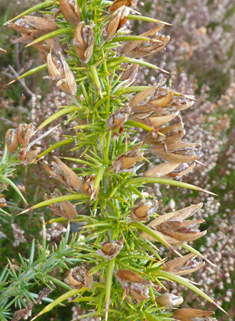
Native on areas of acidic grassland and heath, most notably close to the coastlines. Flowers July to August. Forms a dense, extremely spiny shrub to 1.5 metres in height. Leaves on seedlings and young plants are trifoliate but soon drop, leaving spiny, ridged stems. The spines are typically clearly recurved. At the base of the flower will be found two, tiny bracteoles, each of which is narrower than the flower stalk. Calyx teeth convergent; calyx 9-13mm long.
 |
 |
 |
 |
| |
|
|
|
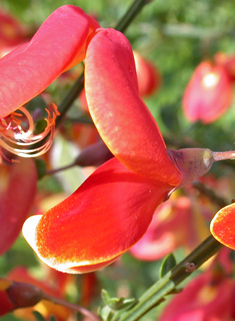
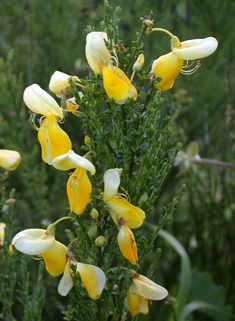
Common Broom Cytisus scoparius
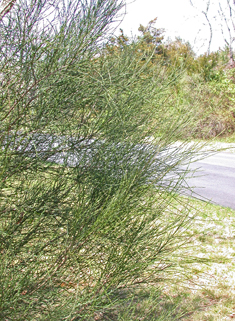
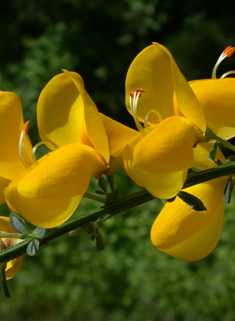
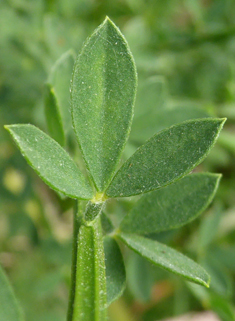
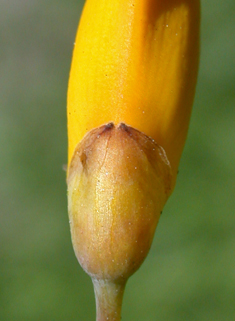
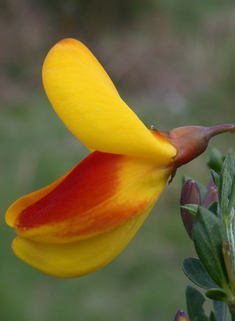
Native. Common on St Mary's and Bryher but rather scattered elsewhere. Flowers May to June. A multi-stemmed, green shrub to two metres in height. Tiny, trifoliate leaves soon drop, leaving green, leafless stems. Flowers predominantly yellow, but other colours occur in cultivation and may sometimes be found in wild plants. Seed pods hairy on the margins, becoming black with age.
 |
 |
 |
|
| |
|
|
|
 |
 |
 |
 |
| |
|
|
|
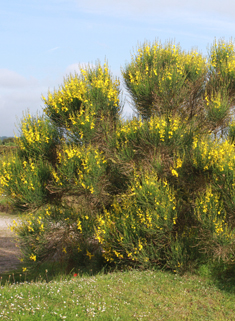
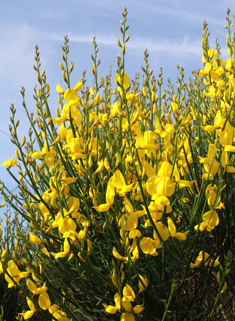
Spanish Broom Spartium junceum
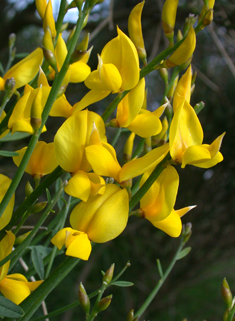
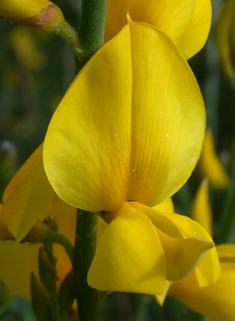
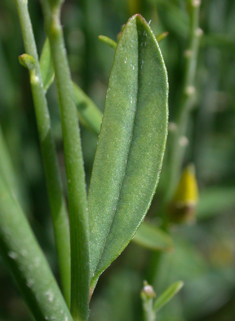
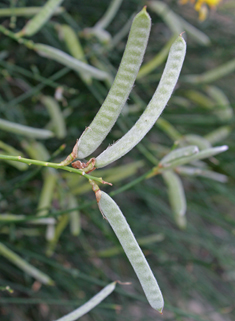
Introduced. Recorded as a garden escape on St Mary's. Flowers May to June. A multi-stemmed, green shrub to three metres in height. Tiny, simple leaves soon drop, leaving stout, rush-like, leafless stems. Flowers predominantly yellow, larger than those of other brooms and heavily-scented. Seedpods long, slightly hairy, becoming black with age.
 |
 |
 |
 |
| |
|
|
|
 |
 |
||
| |
|
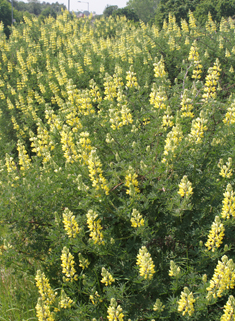
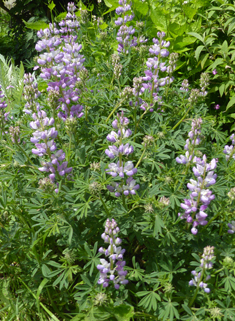
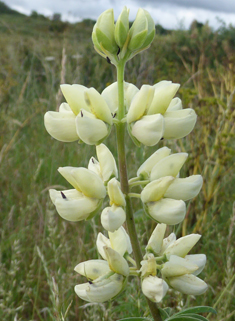
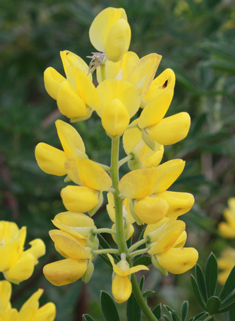
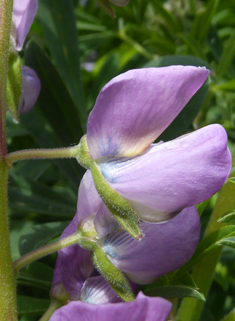
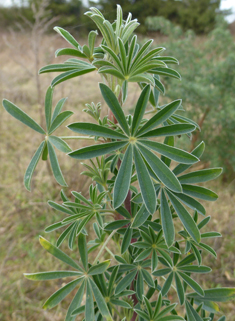
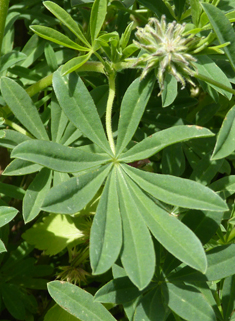
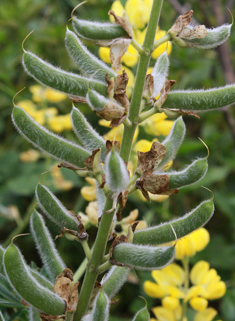
Tree Lupin Lupinus arboreus
Introduced from western North America as a garden ornamental. Frequent to common in coastal dunes and on sandy soils on the inhabited islands. Flowers June to August. A woody-stemmed shrub to 2.5m in height. Flowers of most plants are yellow, but cream, white and blue-tinted plants occasionally also occur.
 |
 |
 |
 |
| |
|
|
|
 |
 |
 |
 |
| |
|
|
|