Wood-sorrels
What are they?
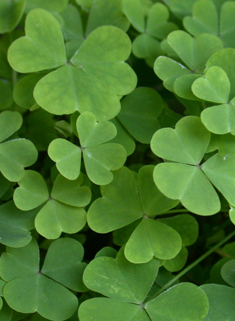
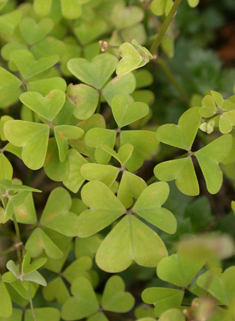
The wood-sorrels are low-growing, herbaceous perennial plants with five-petalled, pink, yellow or white flowers and leaves typically comprising of three leaflets like those of clovers. The flowers are usually carried in small clusters and are followed by elongate seed pods that are usually carried pointing vertically upward.
Where are they found?
All species in the Isles of Scilly are garden ornamentals that spread readily by seed, by vegetative parts such as small bulbils or by rooting readily at the nodes and forming spreading carpets. Species that form carpets are often found as urban weeds, growing from cracks in pavements or walls, or on gravel paths. The larger, pink-flowered species are often found where garden waste is dumped on roadsides, rough ground and grassy places. One species is one of the most pernicious weeds in the islands.
Identification
Flower colour will be a first step to narrowing down the identification of a plant. Leaf detail can be important in the pink species, while flower detail is important in the yellow species. For some identifications it may be necessary to look for the presence or absence of root bulblets.
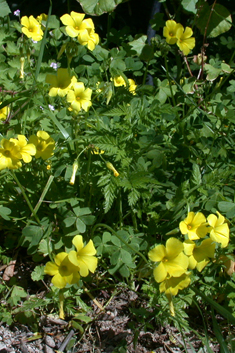
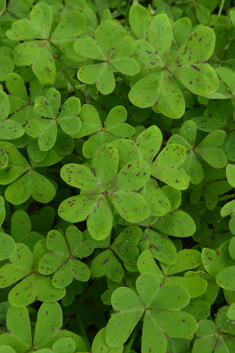
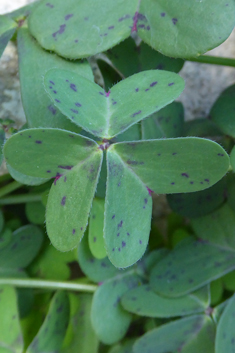
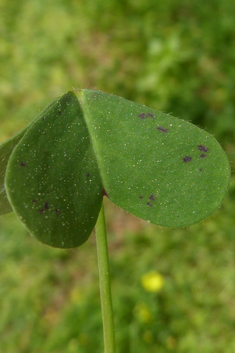
Cape Sorrel Oxalis pes-caprae
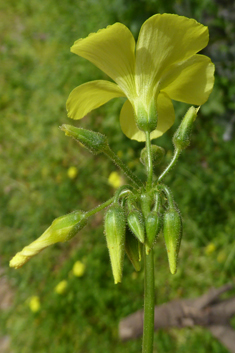
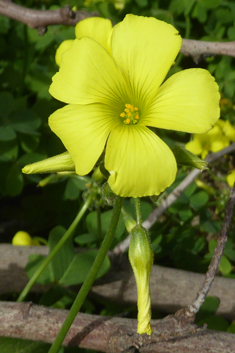
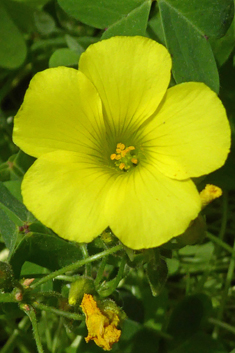
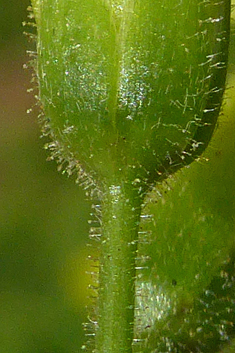
Introduced from South Africa and now a pernicious and problematic weed in the Isles of Scilly, as it also is in parts of mainland Europe. Flowers May to June. Spreads by means of underground bulblets to form tight colonies of plants. Flowers larger than other yellow-sorrels, 15-25mm, vivid yellow; sometimes double-flowered. The leaves often have small, dark spots.
The erroneous name 'Bermuda Buttercup' is commonly used for this plant, but it is neither a buttercup, nor from Bermuda. I have used the more accurate name that is widely used elsewhere.
| |
 |
 |
 |
| |
|
|
|
 |
 |
 |
 |
| |
|
|
|
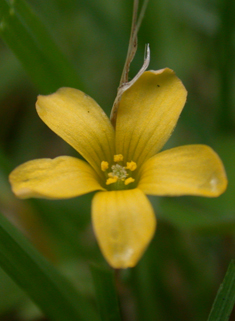
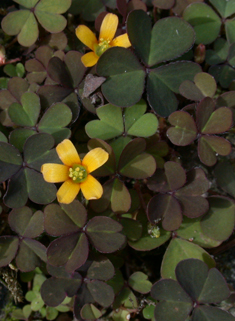
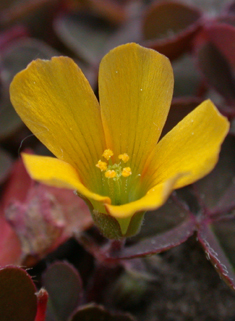
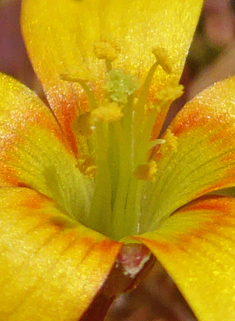
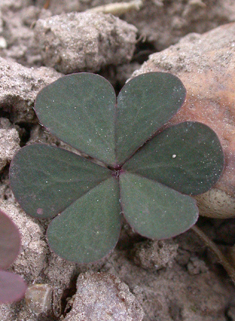
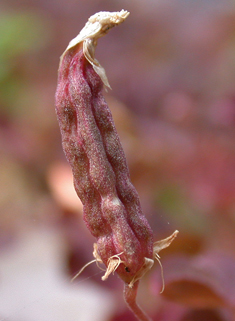
Procumbent Yellow-sorrel Oxalis corniculata
Introduced from the Mediterranean region. Typically a weed of urban habitats, in gardens and cracks in pavements, walls etc.. Flowers June to September. A creeping plant that can cover extensive areas of ground. Leaves may be green but more often the entire plant (except the flowers) is flushed deep reddish-purple. Green-leaved plants can be difficult to tell from Least Yellow-sorrel but flowers have all 10 stamens with anthers (look closely as five are more prominent from a distance) and the flowers are typically in clusters of two to eight (though the flowers not all opening at once).
 |
 |
 |
| |
|
|
 |
 |
|
| |
|
Least Yellow-sorrel Oxalis exilis
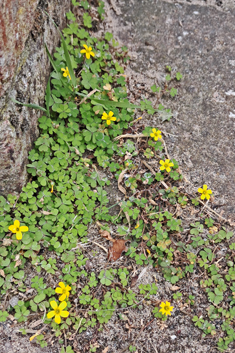
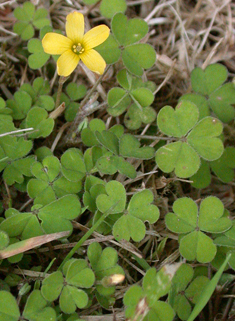
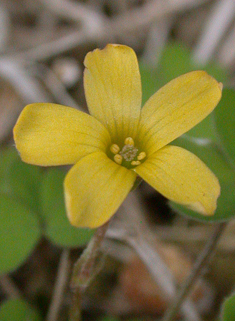
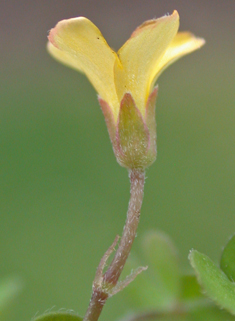
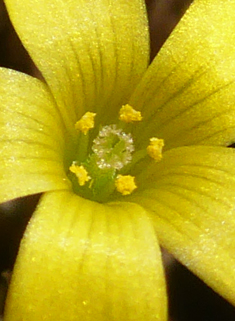
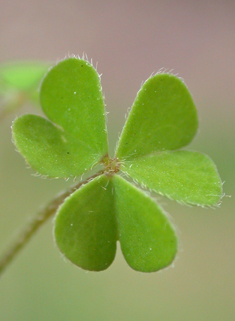
Introduced from Australia and New Zealand with scattered records from across the inhabited islands. A weed of garden borders, lawns and drives. Flowers June to September. A creeping plant that can cover extensive areas of ground. Leaves bright green. Can be difficult to tell from Procumbent Yellow-sorrel but flowers have only 5 of the 10 stamens with anthers and the flowers are typically solitary.
 |
 |
 |
 |
| |
|
|
|
 |
 |
||
| |
|
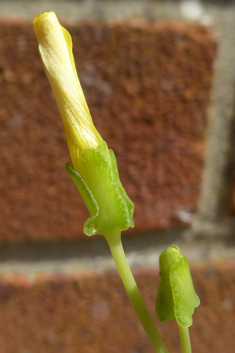
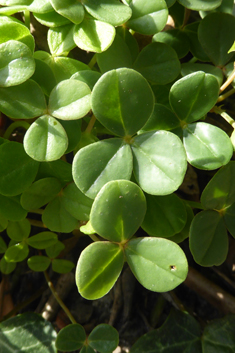
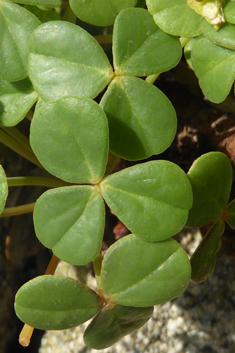
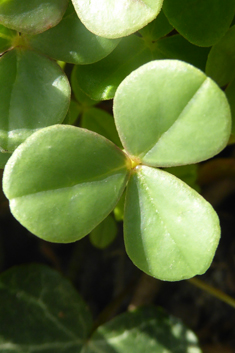
Fleshy Yellow-sorrel Oxalis mirbelii
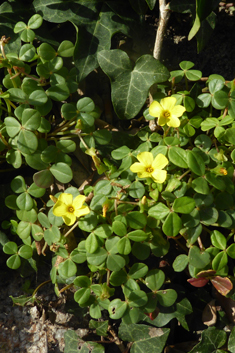
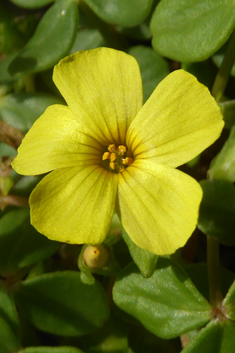
(Formerly Oxalis megalorrhiza) Native to tropical and subtropical Africa. Well established on walls across the inhabited islands. Flowers May to September. A distinctive species with a thick, fleshy root and fleshy leaves.
 |
 |
 |
| |
|
|
 |
 |
 |
| |
|
|
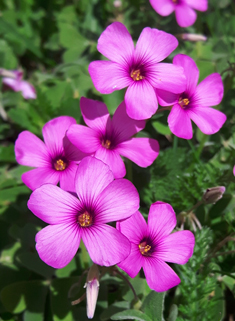
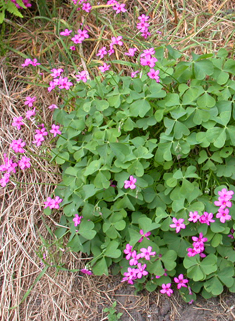
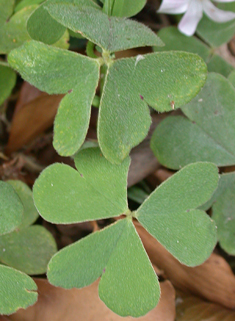
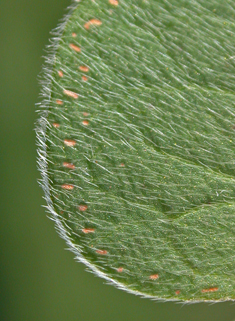
Common Pink-sorrel Oxalis articulata
Introduced from southern South America. Widespread as a garden escape on grassy banks, roadsides and rough ground. Flowers May to October. A tussock-like plant with low mounds of green leaves arising from a rhizomatous root system without bulbs. Flowers bright carmine pink with a darker centre, rarely all white.
 |
|
 |
 |
| |
|
|
|
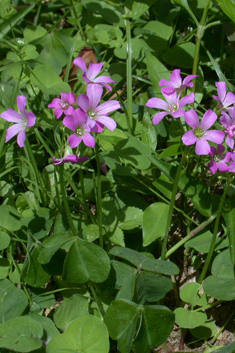
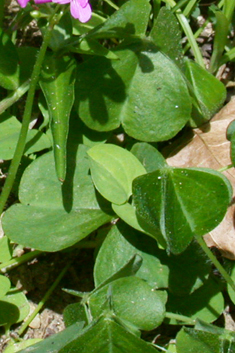
Large-flowered Pink-sorrel Oxalis debilis var. corymbosa
Native to tropical and subtropical South America. Recorded from scattered locations across the inhabited islands. Flowers July to September. Differs from Common Pink-sorrel in having a bulbous root. Flowers with somewhat narrower petals.
 |
|
 |
| |
|
|
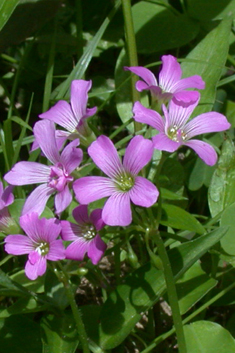
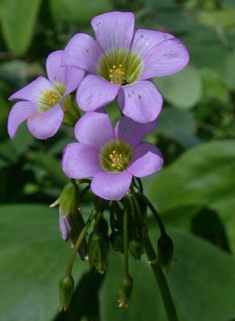
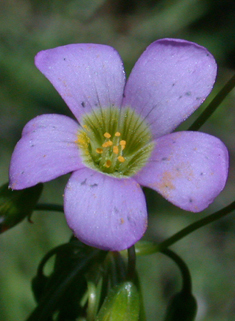
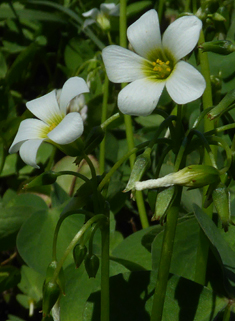
Broad-leaved Pink-sorrel Oxalis latifolia
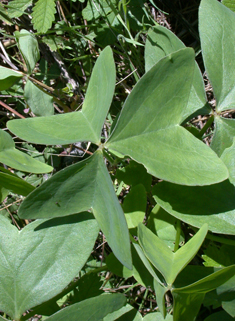
Introduced from northern South America. Uncommon as a garden escape. Flowers May to September. A more spreading plant than Common Pink-sorrel forming looser and more extensive patches of leaves. Leaflets without orange spots on the back. Flowers pink to pale lilac in colour, usually with a whitish centre; occasionally all white. Leaves rather angular in appearance with the three leaflets typically bent downward from their bases.
 |
 |
 |
 |
| |
|
|
|
Four-leaved Pink-sorrel Oxalis tetraphylla
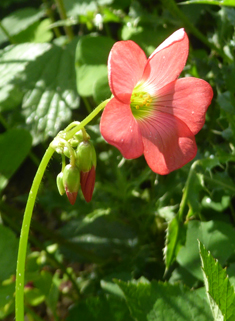
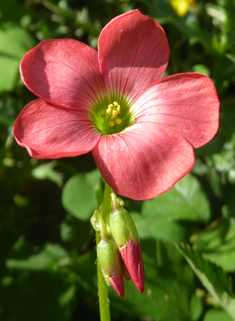
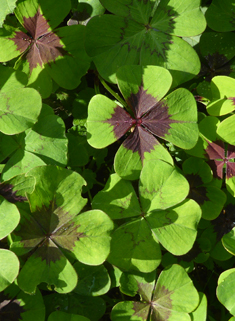
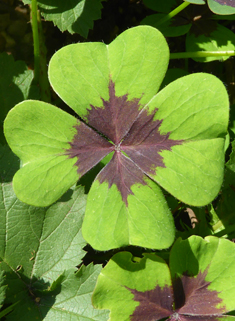
Introduced from Mexico as a garden ornamental. Occasionally found as a garden escape, most frequently on Tresco. Flowers May to September. A spreading species that forms low carpets of leaves that bear four leaflets. Some forms have all green leaves and pale pink flowers but more recently, the cultivar 'Iron Cross' has proved popular in gardens and is finding its way into the wider countryside; it has dark bases to the leaflets and deeper red flowers.
 |
 |
 |
 |
| |
|
|
|
Pale Pink-sorrel Oxalis incarnata
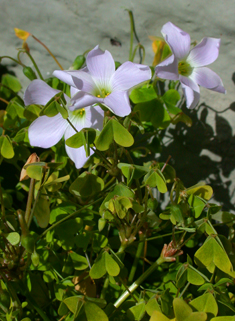
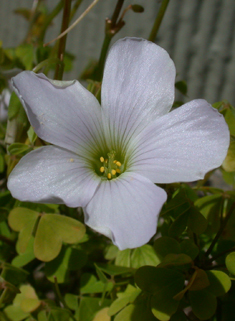
Introduced from South Africa. Recorded from Tresco and St Mary's as an urban weed. Flowers May to July. An upright plant to around 30cm in height (though often less), that forms spreading patches of yellow-green leaves. Flowers delicate, very pale pink, almost white.
 |
 |
 |
 |
| |
|
|
|