Broomrape Family
What are they?
Broomrapes are mysterious plants; with no sign of any green parts, no stems, leaves or fruits, they emerge each year from the soil, solitarily or in clusters. These members of the Orobanchaceae family are all root parasites, obtaining their essential nutrients by tapping into the subterranean parts of other plants. This means they do not require green parts so remain hidden from view until their flowers emerge. The flowers have all the petals fused into a tube and most species carry them on a single spike. Other related species on this page are partially parasitic (hemiparasites); they tap their roots into the roots of other plants, but also have green leaves to produce their own sustenance.
Where are they found?
The distribution of each species is defined by the availability of the host species. Some are generalists and occur on a number of different species, but most are more particular and a knowledge of the host species and their distribution can help in finding these plants.
Identification
Broomrapes are variable and can be tricky to identify. Each flower is accompanied by a pointed bract (and sometimes smaller bracteoles) while beneath the bract, the flower calyx ends in a series of sharply-pointed lobes. The details of the bracts and calyx lobes is important in species confirmation, as is the shape and colour of the lobes of the stigma. As an aid, the close proximity of likely host plants is helpful, too.
Related species are generally easier to identify than broomrapes, using a combination of flower colour/shape and leaf appearance. However, eyebrights are a particularly difficult group and have probably not been fully researched in the islands.
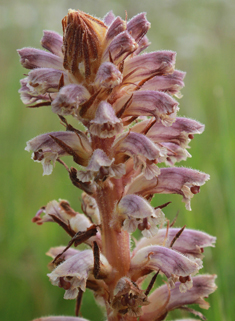
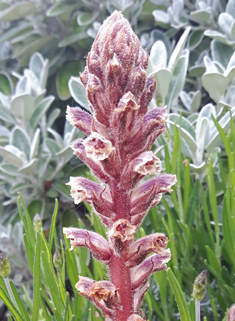
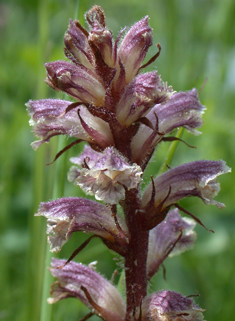
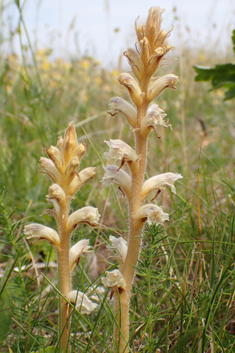
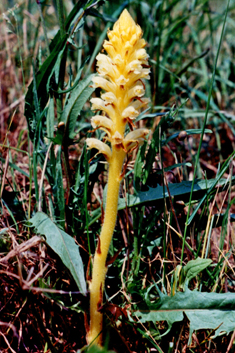
Common Broomrape Orobanche minor
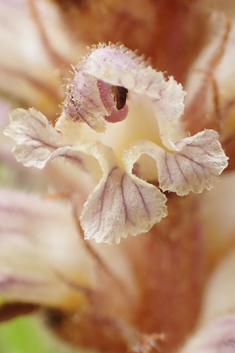
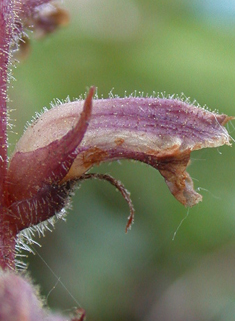
Native. Scattered on the larger islands and most frequently recorded from St Mary's and Tresco. Parasitic typically on members of the daisy, umbellifer and pea families. Flowers June to July. A very variable species, perhaps in part due to the wide range of host species parasitised. Variably pinkish-purple and cream or yellowish in colour. Flowers neatly curved from the base; stigma lobes purplish.
 |
|
 |
 |
| |
|
|
|
 |
 |
 |
 |
| |
|
|
|
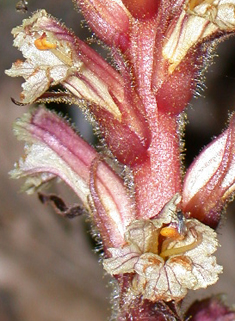
Ivy Broomrape Orobanche hederae
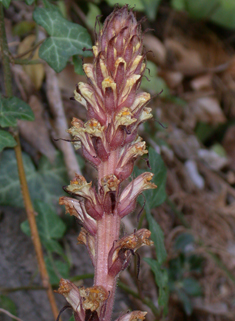
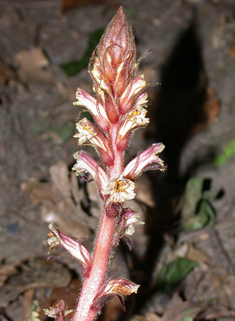
Formerly recorded from Tresco Abbey Gardens but seems to have disappeared from the islands. Flowers June to August. Parasitises ivy. Similar in overall appearance to Common Broomrape (which may also be found parasitising ivy) but with orange stigma lobes that are close together, not strongly separated.
 |
 |
 |
| |
|
|
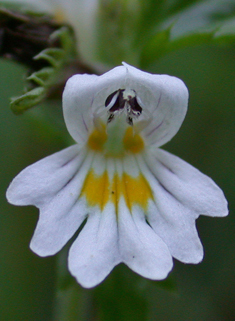
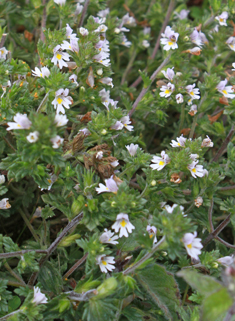
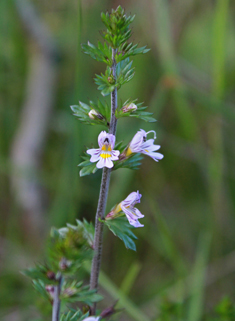
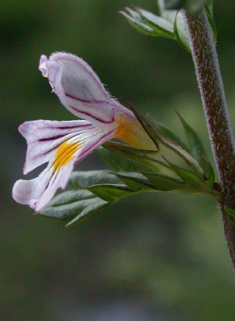
Western Eyebright Euphrasia tetraquetra
Quite widespread in coastal turf on the inhabited islands. Flowers June to September. A small plant that is often found growing in colonies.
The identification of eyebrights to species is often very difficult, requiring critical diagnosis by experienced specialists. Although several other species have been recorded on the islands in the past, these have not been proven to be present during more recent searches. As well as Western Eyebrights, the hybrid Euphrasia nemorosa x E. confusa has been confirmed from single locations on St Mary's and St Agnes.
 |
 |
 |
|
| |
|
|
|
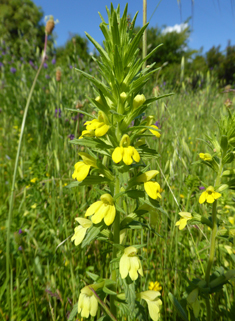
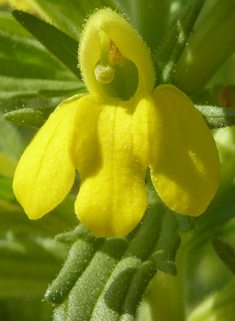
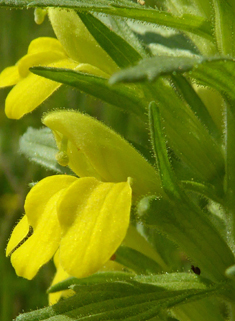
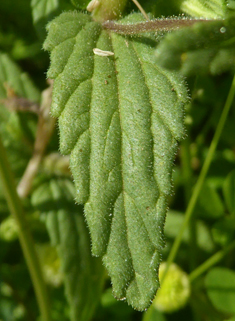
Yellow Bartsia Parentucellia viscosa
A native annual of dry, grassy places. Colonies are often short-lived and do not persist for more than a few years. Flowers June to August. Plants may be single or form small colonies in grassy places. The leaves and stems are slightly sticky with glandular hairs.
| |
 |
 |
 |
| |
|
|
|
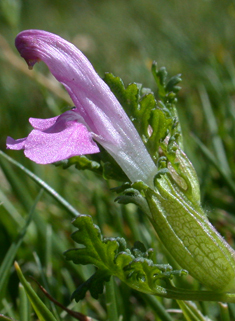
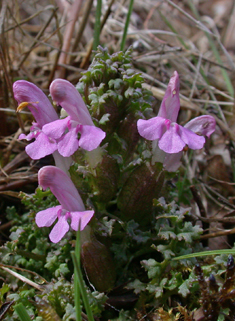
Common Lousewort Pedicularis sylvatica
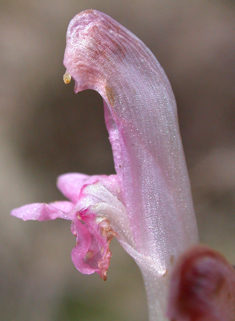
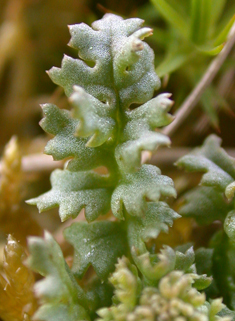
A creeping perennial species of heathland and dunes on the inhabited islands and Samson. Flowers May to August. A rather upright species with deeply and finely cut leaves. The flowers have one pair of tiny, pointed teeth towards the tip of the upper petal tube and the calyx is not hairy.
 |
|
 |
 |
| |
|
|
|