Daisy-bushes
What are they?
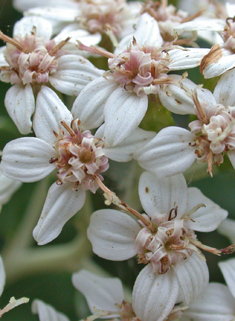
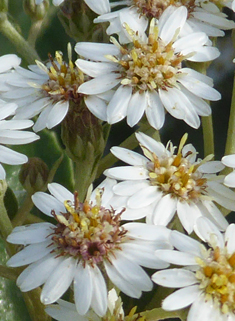
This is a group of plants in the daisy family (Asteraceae) and they are exactly what the name suggests - daisies that grow into woody bushes. While this might seem strange to us, such plants are particularly common in the southern hemisphere and their family allegiance is indicated by the obviously daisy-like flowerheads that they possess.
Where are they found?
This is a group of plants that have been introduced as garden ornamentals or for use in shelterbelts, with many species having thick, leathery leaves that render them salt tolerant.
Identification
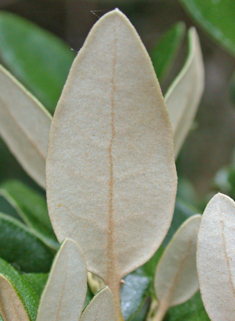
The flowerheads readily identify these plants as members of the daisy family and the leaves are often tough and leathery with the leaf undersides and/or stems covered in dense, white down. Details of the leaf shape and size will generally separate the various species from each other.
Akiraho Olearia paniculata
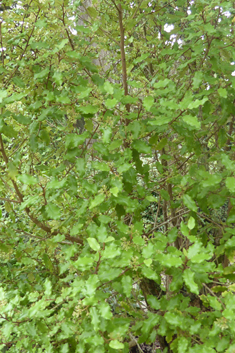
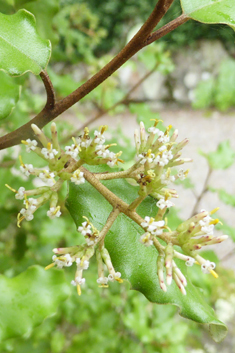
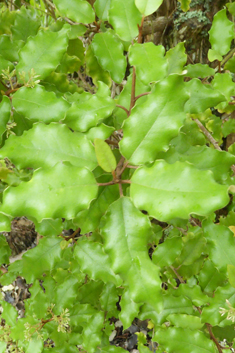
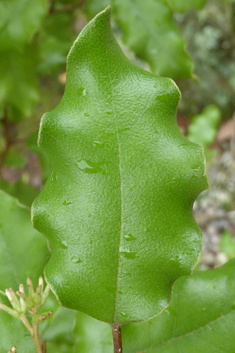
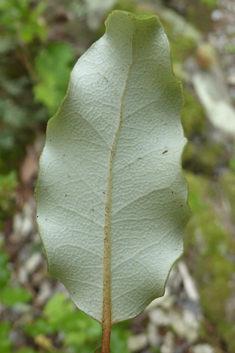
Introduced from New Zealand as a garden ornamental. Recorded from the Abbey Gardens area, Tresco, but the species is wrongly identified in the photo in the Scilly Flora, so the accuracy of records is unclear. Flowers November to December. Strangely for a member of the Asteraceae, each 'flowerhead' consists of a single floret and these are arranged in spreading panicles. Leaves alternate, 3-10cm long and 2-4cm with strongly undulate margins.
A potentially confusing species, the leaves resembling those of Pittosporum tenuifolium while the flowers could be mistaken for a privet.
 |
 |
 |
| |
|
|
 |
 |
 |
| |
|
|
Ake-Ake Olearia traversiorum
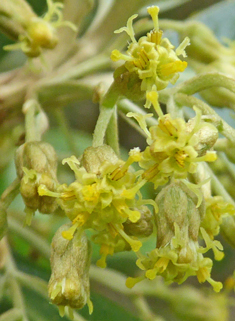
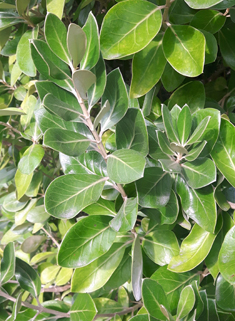
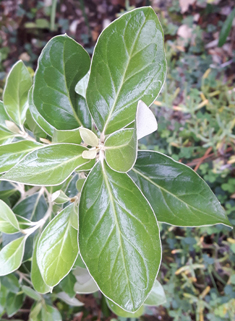
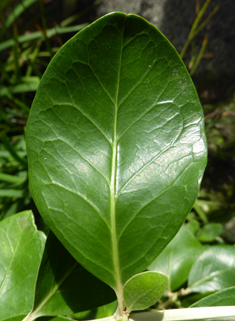
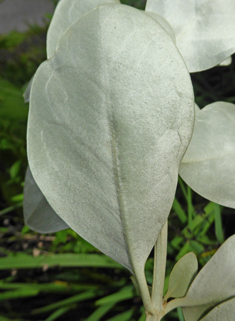
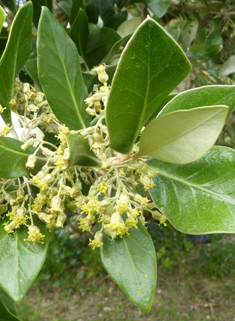
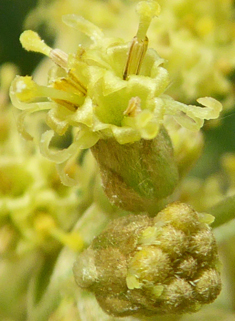
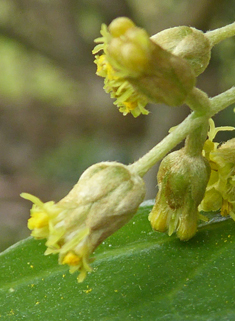
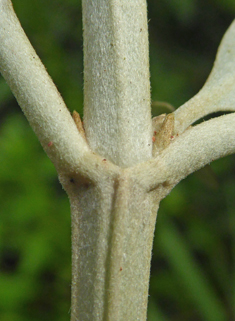
Introduced from New Zealand and the most widely used Olearia as a salt-tolerant windbreak and screen in the Isles of Scilly. Flowers April to August. A large, evergreen shrub capable of growing to 10m in height. Leaves 4-6.5cm long, tough and leathery and with prominent veins above. Leaf undersides and young shoots coated in white, felty hairs. Flowerheads less daisy-like than other Olearia species on this page, having no petal-bearing florets.
 |
 |
 |
 |
| |
|
|
|
 |
 |
 |
 |
| |
|
|
|
Mountain Ake-Ake Olearia avicenniifolia
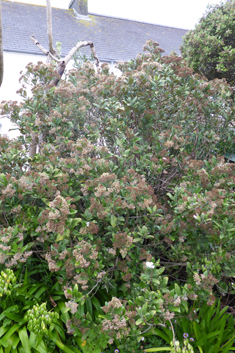
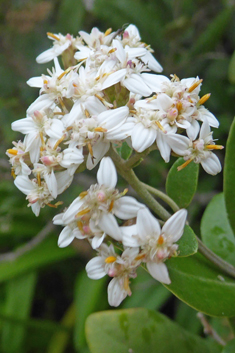
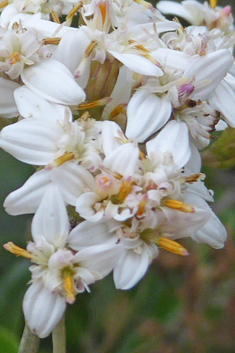
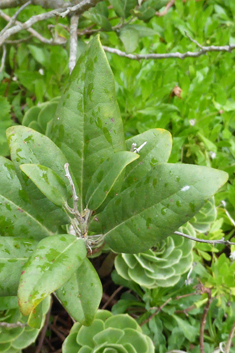
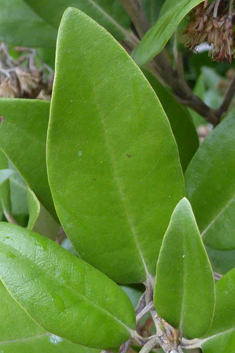
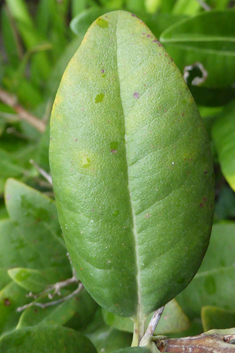
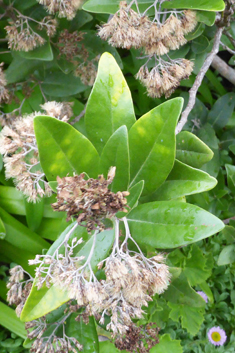
(Mangrove-leaved Daisy-bush) Introduced from New Zealand as a salt-tolerant windbreak and screen in the Isles of Scilly but so far only recorded from Tresco, though it can be seen as an amenity plant on St Mary's also. Flowers July to August. An evergreen shrub capable of growing to 3m in height. Leaves 5-10cm long, tough and leathery but without prominent veins above. Leaf undersides and young shoots coated in white, felty hairs.
 |
 |
 |
 |
| |
|
|
|
 |
 |
 |
|
| |
|
|
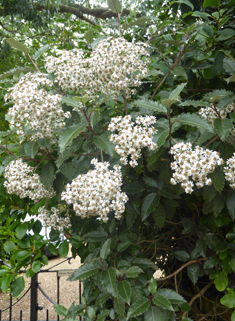
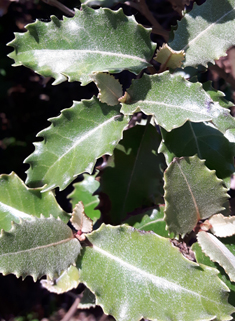
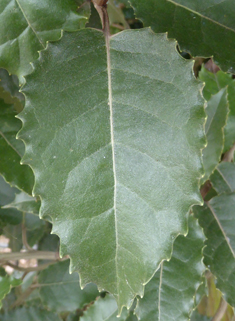
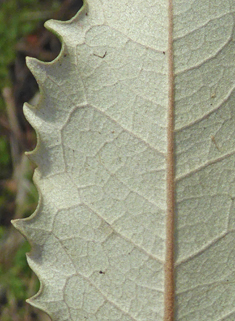
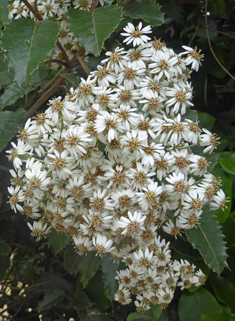
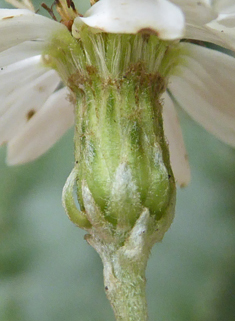
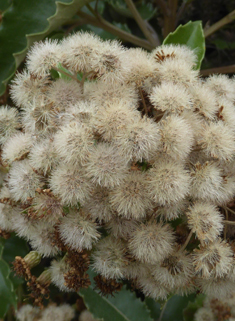
New Zealand Holly Olearia macrodonta
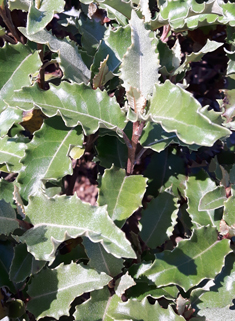
Introduced from New Zealand as a salt-tolerant, garden and amenity plant. Uncommon and only recorded from a few locations on St Mary's and Tresco. Misidentified in the Scilly Flora, where the photo actually shows Holm Oak Quercus ilex. Flowers July to August. May grow to 6m in height but often much less when kept trimmed. Leaves 5-10cm long, superficially like holly but easily told by the white, felted undersides to the leaves.
 |
 |
 |
 |
| |
|
|
|
 |
|
 |
 |
| |
|
|
|
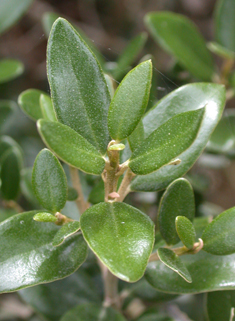
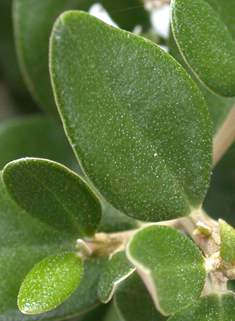
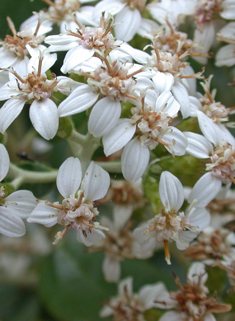
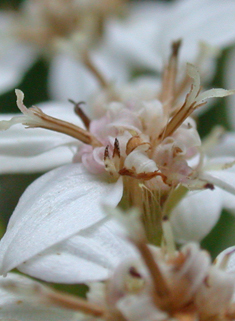
Haast's Daisy-bush Olearia x haastii
Introduced from New Zealand and recorded from St Mary's and Tresco. Flowers July to August. A densely branched, evergreen shrub to 2m in height. Leaves 1-3.5cm long, tough, with thickened cuticles.
 |
 |
 |
| |
|
|
 |
|
 |
| |
|
|
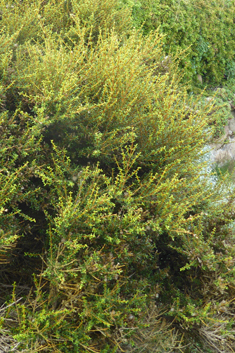
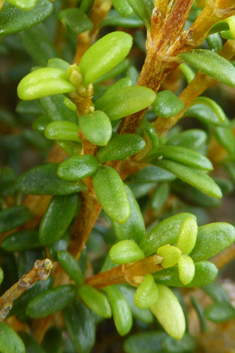
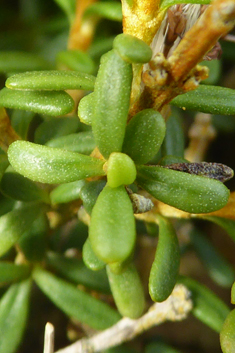
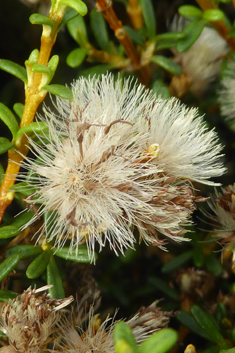
Coastal Daisy-bush Olearia solandri
Introduced from New Zealand as a garden ornamental. Has been established for a long time at Tolman Point, St Mary's. Flowers August to October. Leaves opposite, to 1.5cm long. Stems stickly glandular and covered in golden hairs.
 |
 |
 |
 |
| |
|
|
|