Evening-primroses
What are they?
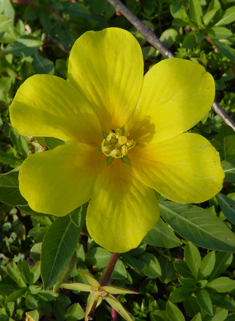
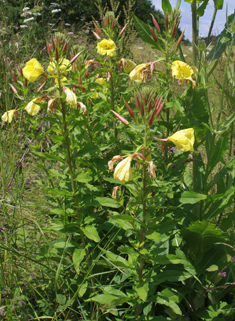
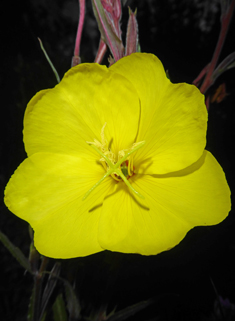
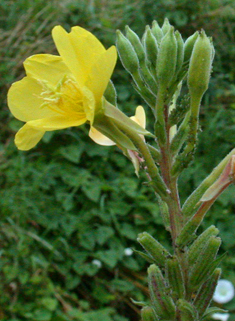
These plants with often large and showy flowers are members of the Onagraceae and related to the willowherbs, which they somewhat resemble in having four-petalled flowers, narrowly ovate to linear leaves and seeds carried in prominent, elongate seed capsules. Evening-primroses in the UK have an intriguing yet confused history; a number of species were introduced from North America, primarily as a crop for the oils they produce, with these crop species then starting to appear as occasional strays on roadsides and rough ground. From these, a number of hybrids occurred spontaneously, some of which are probably endemic to the UK since their parents would not typically meet in the wild. Some such hybrids have, over time, formed stable populations that breed true to type and are now recognised as true species (called nothospecies). The identification of some plants from hybrid populations can be difficult or sometimes impossible if they do not match closely to known species or hybrids; however, the situation currently is a lot easier since evening-primroses are no longer grown as a crop and these plants are now much less common than they were in the 1980s and 1990s.
Evening-primroses get their name from their flowers, which each open for about 12 hours before fading. Individual flowers will open in late afternoon or early evening, stay open through the night, then fade the following morning. Thus, plants found in the afternoon will typically have no flowers open.
Where are they found?
Evening-primroses are occasionally found as garden escapes on field edges and rough ground. Occasional plants may still arise from wildflower or bird seed mixes or may be found in urban environments where they have spread their seeds beyong the garden.
Identification
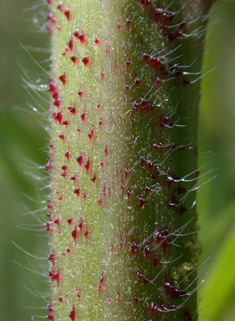
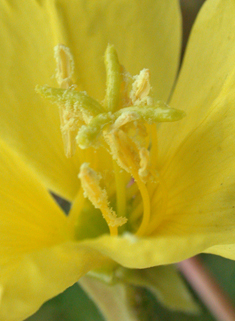
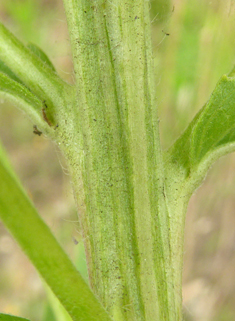
The identification of evening-primroses can be difficult due to the possibility of hybrids and even the possibility of some species in cultivation which may escape into the wider countryside but which have not yet been recorded. Most important are details of the flowers and it is good to note the length of the petals and to note the length of the four-lobed stigma relative to the length of the stamens. Also note the covering of the stems and seed capsules - especially the presence or absence of reddish, bulbous bases to some of the hairs.
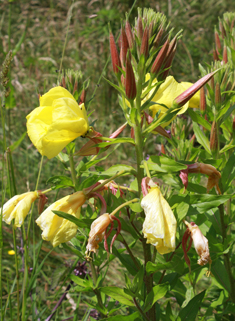
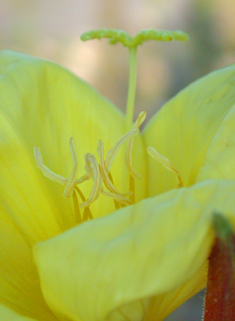
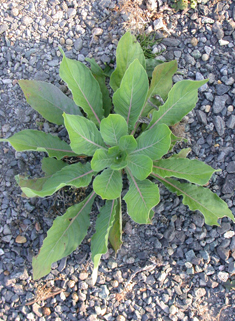
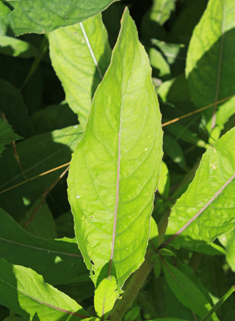
Large-flowered Evening-primrose Oenothera glazioviana
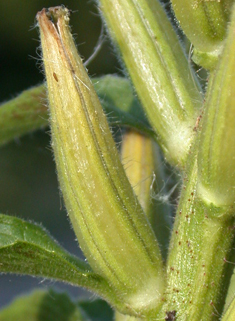
Introduced from North America. The most frequent species on the islands. Flowers June to September. May grow to 1.5m in height. Flowers large with petals to 5cm in length and with sepals clearly stained red on the outside; stigma clearly much longer than the stamens. Seed capsules widest near base and with glandular hairs (sometimes red-striped); stems with many, bulbous red bases to the stem hairs.
| |
 |
 |
 |
| |
|
|
|
 |
 |
 |
|
| |
|
|
Intermediate Evening-primrose Oenothera x fallax
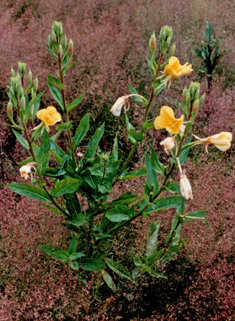
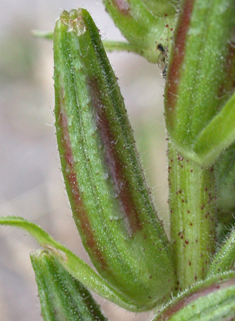
Introduced, recorded once from St Mary's. Flowers June to September. May grow to 1.5m in height. Flowers fairly large with petals to 3cm in length and with sepals having some red streaking on the outside; stigma about the same length as the stamens. Seed capsules widest near base and with glandular hairs (and often red-striped); stems with many, bulbous red bases to the stem hairs.
 |
|
 |
 |
| |
|
|
|
Common Evening-primrose Oenothera biennis
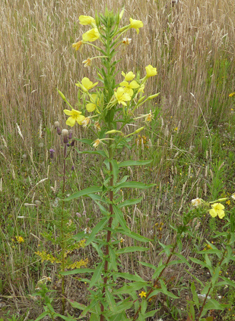
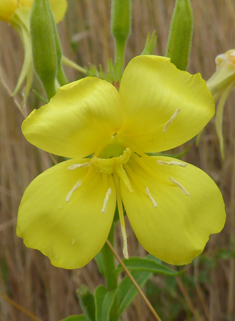
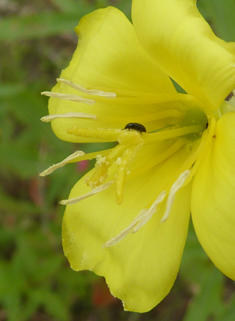
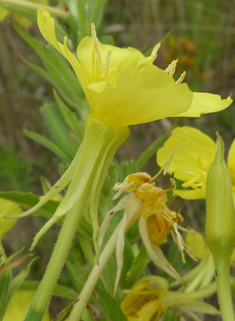
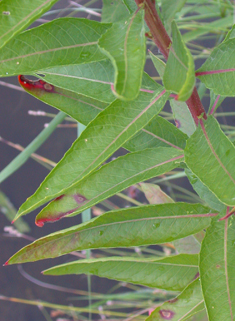
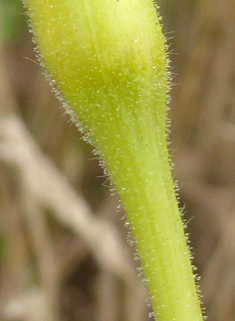
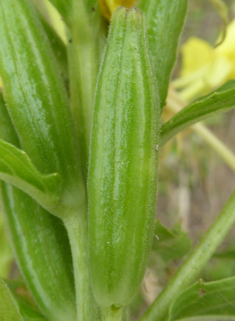
Introduced. Recorded from St Mary's and Tresco. Flowers June to September. May grow to a metre in height. Flowers small to large with petals typically 2-3cm in length and with sepals usually green but sometimes with light red streaking on the outside; stigma about the same length as the stamens or a little shorter. Seed capsules widest near base and mostly without glandular hairs; stems with no (or only a few) scattered, bulbous red bases to the stem hairs. A variable species with a number of named forms, which may be recognised as separate species by some taxonomists.
 |
 |
 |
 |
| |
|
|
|
 |
 |
 |
 |
| |
|
|
|
Small-flowered Evening-primrose Oenothera cambrica
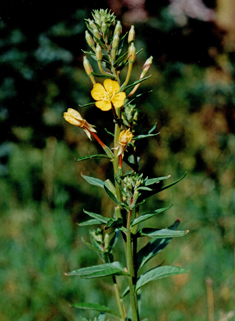
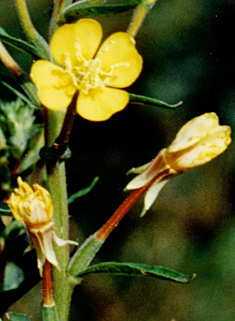
Introduced from North America. Recorded from St Mary's in 2006. Flowers June to September. May grow to a metre in height. Flowers small to medium with petals 2-3cm in length and with sepals green on the outside. Seed capsules widest near base and with glandular hairs; stems with many, bulbous red bases to the stem hairs. Note that there are currently a number of different schools of thought on the identification and origin of plants that we know in the UK as Oe. cambrica and some people now simply consider this to be a small-flowered form of Common Evening-primrose and not the true Oe. cambrica at all.
 |
 |
| |
|