Nightshades
What are they?
This group of plants consists of mostly introduced members of the nightshade family (Solanaceae) and contains an interesting mix of species that have fruits which can be either edible or potentially very poisonous. It therefore follows that being able to recognise them can be of great importance. It does seem perverse that we can eat tomatoes, a fruit that is not only red - the colour of danger - but which also grows on a plant that is a member of such a potentially poisonous family. Similarly, we eat the tuberous roots of the potato, but its fruits can be very poisonous to us. The answer is in the way that the plants localise the poisons that they manufacture, such that various parts of the various species can be eaten in some cases. Nightshades are attractive plants and many are grown as garden ornamentals as well as crop plants.
Where are they found?
The great majority of these plants are introduced species which are most likely to be found in human-influenced habitats such as gardens, allotments and cultivated fields.
Identification
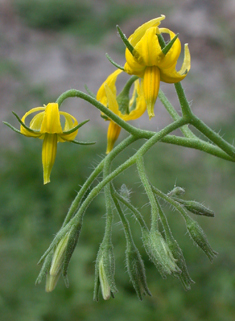
The colour of the flowers and shape of the petals will narrow down your search initially. Leaf shape and fruit details are also important, the latter especially in the green-fruited species that grow on disturbed ground. The flowers have five petals which may be fused at the base or for much of their length to form a flat or slightly bell-shaped flower. Alternatively, the petals may be more or less free and strongly reflexed to form a 'shooting star'. In most species, the yellow stamens are fused into a beak-like column projecting from the centre of the flower. Fruits are fleshy with many seeds inside, typically starting green in colour. Thus, care should be taken in being sure that a fruit is ripe before the colour is used for identification, since some species have fruits that remain green when ripe, while others ripen to yellow, orange, red or black.
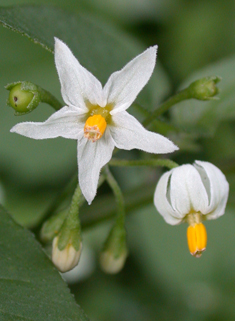
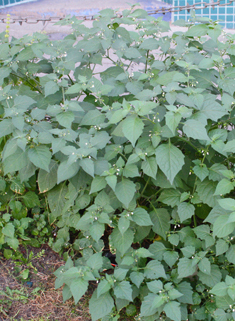
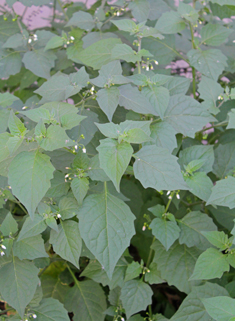
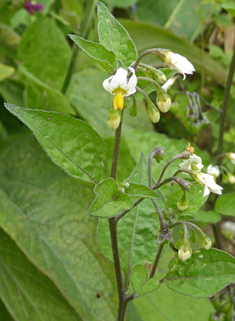
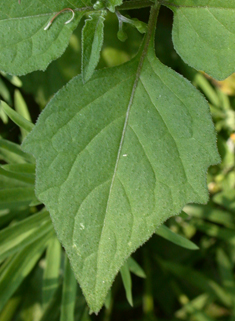
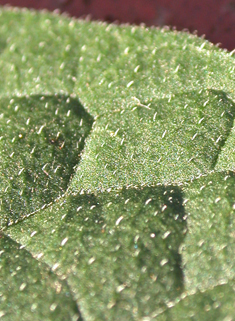
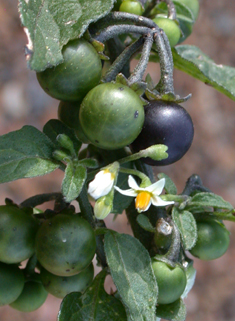
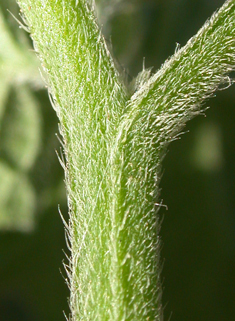
Black Nightshade Solanum nigrum
Native or perhaps an ancient introduction. Widespread on cultivated and disturbed ground. Flowers July to September. Leaves very variable with a number of varieties described, based largely on the variability of leaf-edge lobing and hairiness. Fruits green at first but ripening black.
 |
 |
 |
|
| |
|
|
|
 |
 |
 |
 |
| |
|
|
|
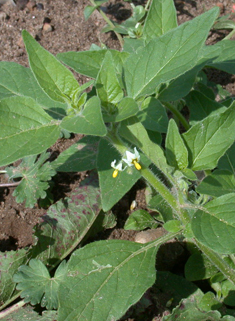
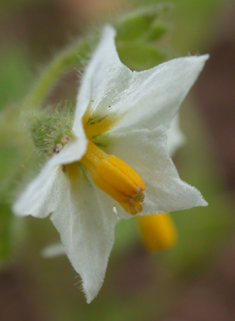
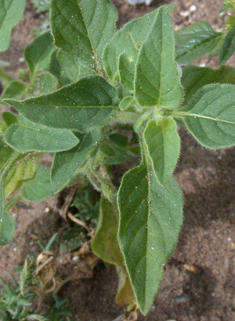
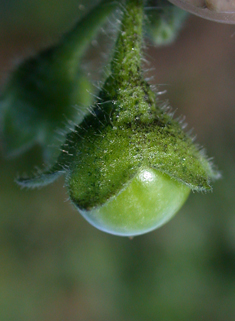
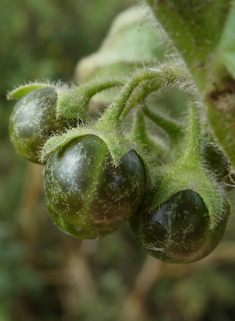
Green Nightshade Solanum nitidibaccatum
Introduced from South America. A low-growing plant of disturbed ground, recorded from St Mary's, St Martins and Tresco. Flowers July to September. Leaves and stems slightly sticky with glandular hairs. Fruits green, sometimes with a dull, brownish cast; sepals rather broad and short and not hiding the berry.
 |
 |
 |
 |
| |
|
|
|
 |
|||
| |
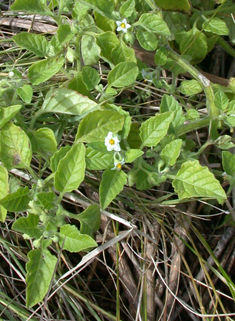
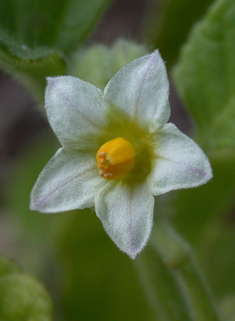
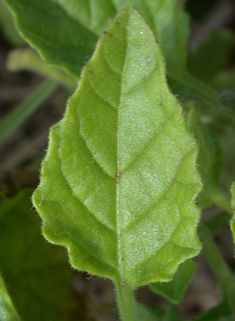
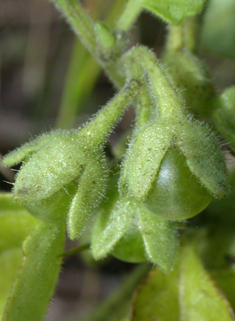
Leafy-fruited Nightshade Solanum sarrachoides
Introduced from South America. Formerly established on St Martins but not seen since the late 1970s. Flowers July to September. Similar to Green Nightshade but leaves typically with a more waved or toothed margin. Fruits green, sometimes with a dull, brownish cast; sepals relatively narrow and long and partly concealing the berry.
 |
 |
 |
 |
| |
|
|
|
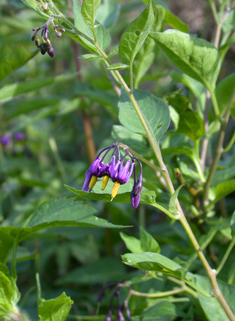
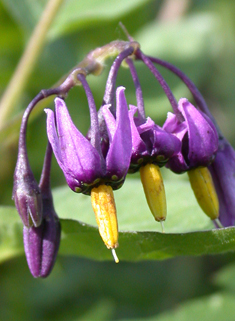
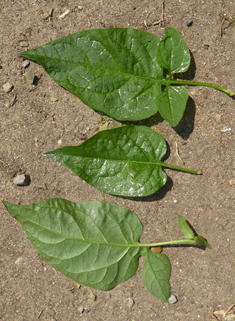
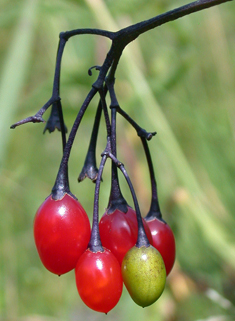
Bittersweet Solanum dulcamara
(Woody Nightshade) Native. A scrambling perennial plant, widespread in damp places and found naturally in wetlands and on shorelines but also regularly as an arable and ditchside weed. Flowers June to September. Leaves variable, from simple to unevenly lobed at the base. Stems thin and tough, scrambling and sometimes twining through and over other vegetation. Note that many people erroneously know this plant as Deadly Nightshade, which is a much rarer species with very different flowers and black berries and has not been recorded on the islands.
 |
 |
 |
 |
| |
|
|
|
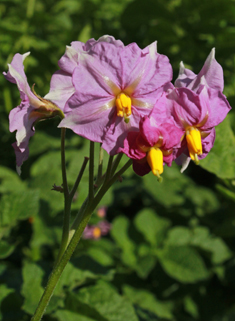
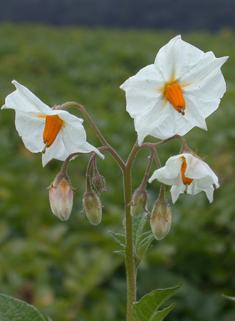
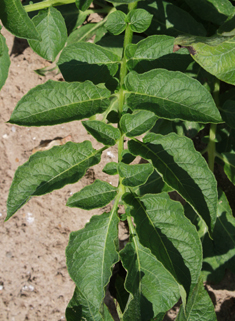
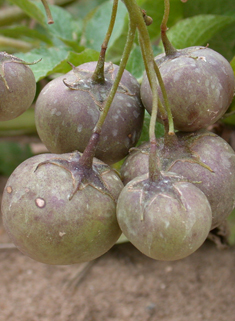
Tuberous Potato Solanum tuberosum
Introduced from South America and now widely grown as a root vegetable. Odd plants may turn up almost anywhere from garden waste. Flowers June to September. The dull greenish or brownish fruits are poisonous and should not be eaten.
 |
 |
 |
 |
| |
|
|
|
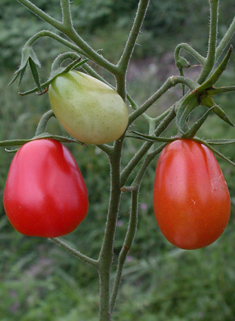
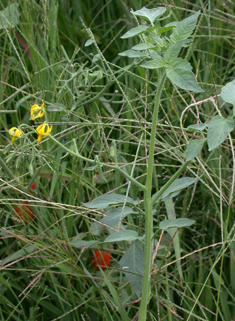
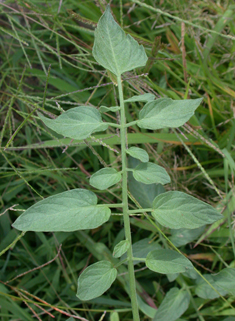
Common Tomato Solanum esculentum
Introduced from South America for its edible fruits. A scrambling plant which is frequently found self-sown on rough ground, allotments or where some kinds of treated manure or effluent are spread on farm fields. Flowers June to September or until killed by frost. Leaves pinnate with irregular-sized leaflets, stickily-hairy and rather pungent. Fruits very variable due to selective breeding and may be green, yellow or red and seemingly almost any shape, but generally larger than the small berries of other nightshade species.
 |
|
 |
|
| |
|
|
|
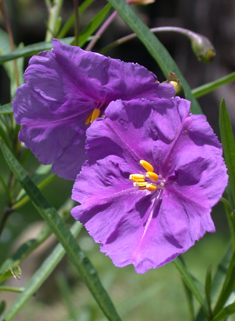
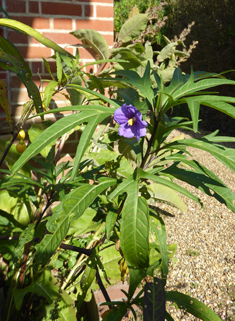
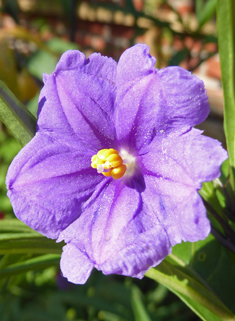
Common Kangaroo-apple Solanum laciniatum
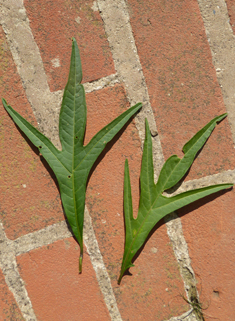
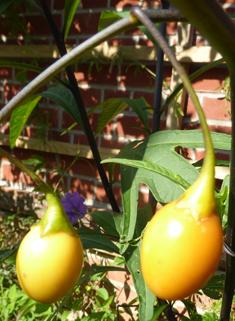
Introduced from Australia as a garden ornamental and established on St Mary's and Tresco. Flowers June to September or until hit by frost. Leaves with long, slender leaflets and often unevenly pinnate. Fruits oval, ripening yellow or orange.
 |
 |
 |
 |
| |
|
|
|
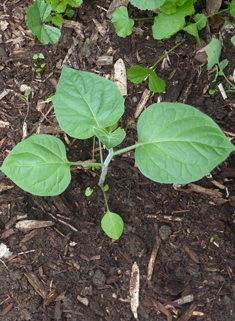
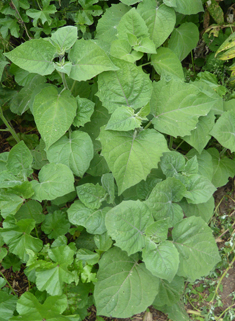
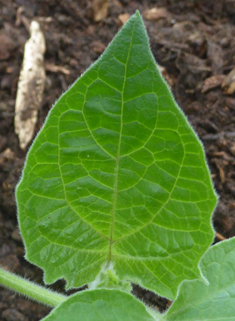
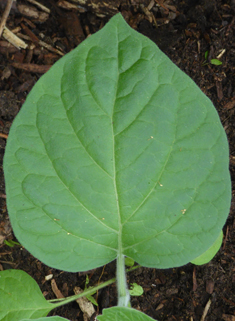
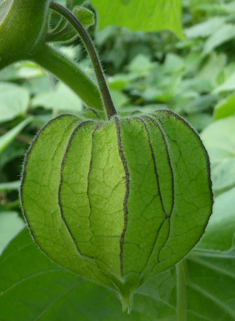
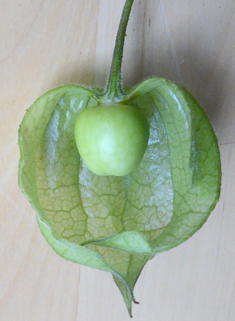
Cape-gooseberry Physalis peruviana
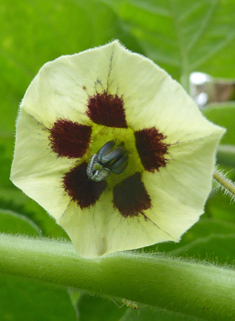
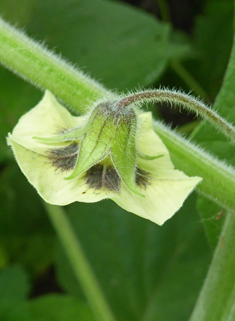
Introduced annual or short-lived perennial from South America as an exotic fruit and occasionally found in the past towards the upper part of beaches in Hughtown, St Mary's. Flowers June to August. A rather sprawling species with relatively large leaves. Petals with dark blotches and calyx densely hairy.
 |
 |
 |
 |
| |
|
|
|
 |
 |
 |
 |
| |
|
|
|