Myrtle Family and similar species
What are they?
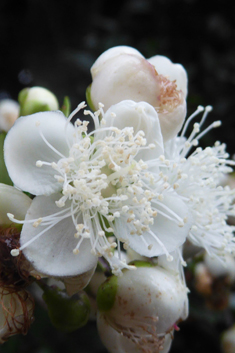
The myrtle family is a large family of mostly tropical or warm temperate plants and has provided us with many attractive garden plants from the southern hemisphere, though there are no members of this family native to the UK. Species are mostly trees or shrubs, often evergreen and sometimes bearing interesting fruits. Many species have distinctive odours to their foliage, produced by oil-bearing glands. Stamens usually many and conspicuous.
Where are they found?
As introduced, non-native species, these species are largely found where planted for ornament or as part of shelter belts.
Identification
The flowers of this family are rather variable in the number of petals or sepals (typically 0, 4 or 5) but they mostly tend to have long and conspicuous stamens. As woody trees and shrubs, most can be identified by leaf and stem details. However, the eucalypts are especially difficult to identify to species, often requiring a suite of characters (bark, adult and juvenile leaf details, flowers and fruits) which may beed to be gathered over a series of visits at different times of the year.
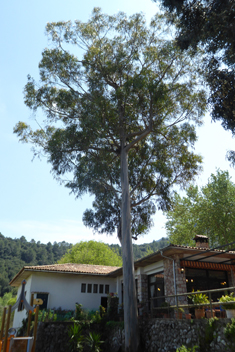
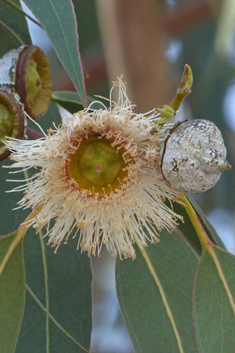
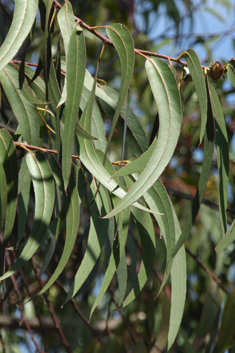
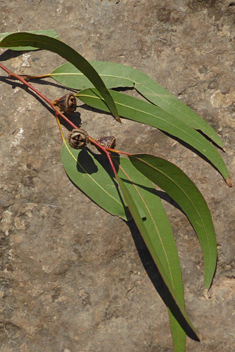
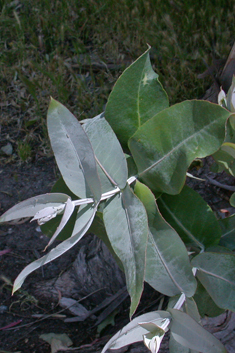
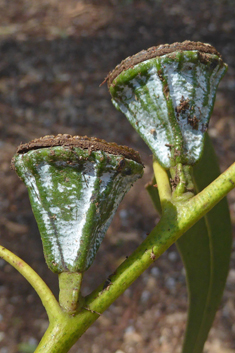
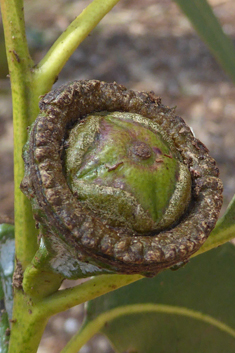
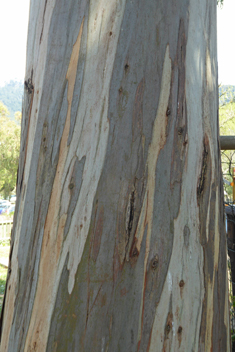
Southern Blue Gum Eucalyptus globulus
Native to south-eastern Australia and Tasmania. Planted around the abbey grounds, Tresco. Flowers 1-3 or sometimes 7-flowered, peduncle 4-13mm long. Flower buds glaucous, turbinate to obconical, warty. Hypanthium 5-12 x 5-17mm, ribbed or more or less smooth. operculum flattened hemispherical. Seed capsules 5-21 x 6-24mm, disc broad, level to ascending. Juvenile leaves opposite, 7-16cm long, at first ovate, rounded at apex, later ones progressively more pointed; sessile and amplexicaule, glaucous. Adult leaves 12-28cm, linear-lanceolate to falcate. Bark grey, white or cream and very smooth, often with rougher lower bark.
 |
 |
 |
 |
| |
|
|
|
 |
 |
 |
 |
| |
|
|
|
Ribbon Gum Eucalyptus viminalis
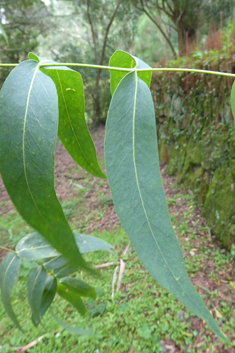
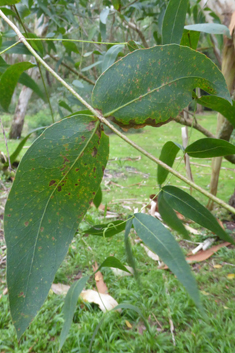
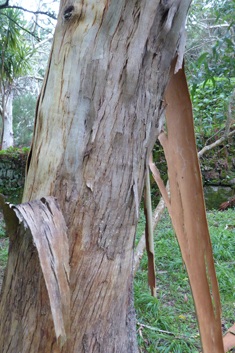
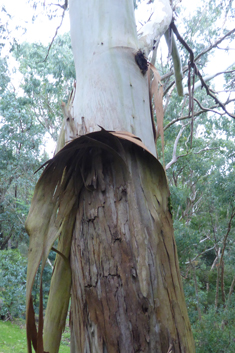
Introduced from eastern Australia as a garden ornamental. Recorded from the Abbey Hill area, Tresco. Flowers in clusters of three or seven (depending on subspecies) in the leaf axils, peduncle 4-13mm long. Flower buds ovoid, hypanthium 2-3 x 3-5mm, operculum conical or hemispherical, apiculate. Seed capsules 4-8 x 5-9mm, hemispherical to subglobose, disc broad, ascending. Juvenile leaves opposite, 5-10cm long, narrowly lanceolate, not connate, green. Adult leaves 12-20cm long, undulate. Bark grey, white or yellowish and very smooth; lower bark (or sometimes all of the main trunk) rough and fibrous.
 |
 |
 |
 |
| |
|
|
|
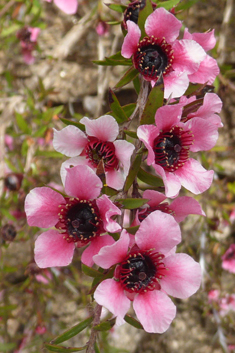
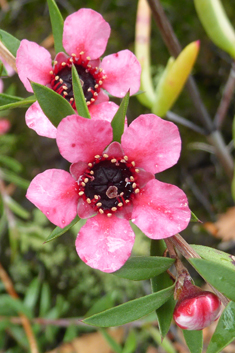
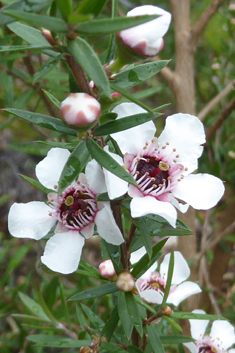
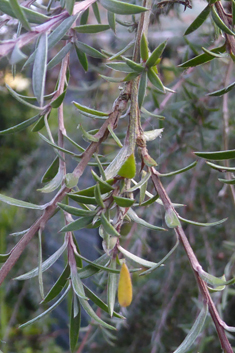
Broom Tea-tree Leptospermum scoparium
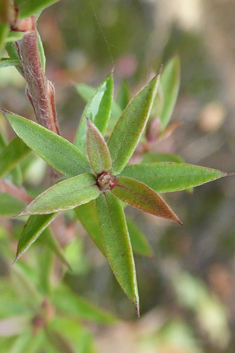
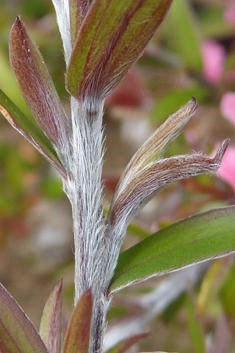
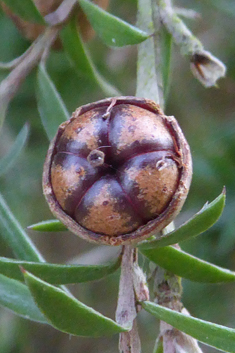
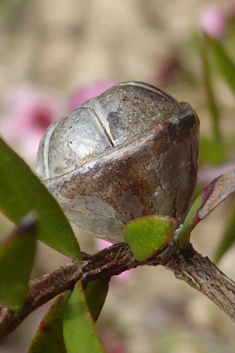
Native to Australasia and introduced as a garden ornamental. Recorded as self sown on Tresco. An open, slender shrub to 3m in height. Leaves evergreen, 6-20mm long, at first silky hairy but becoming smooth. Flowers mostly June to August, various shades of red, pink or white. Seed capsules hairless.
 |
 |
 |
 |
| |
|
|
|
 |
 |
 |
 |
| |
|
|
|
Pohutukawa Metrosideros excelsa
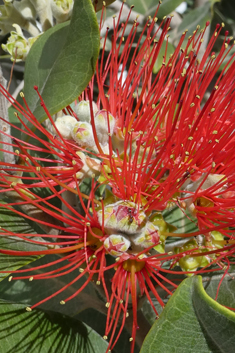
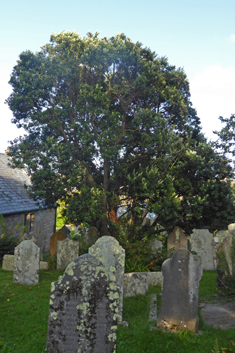
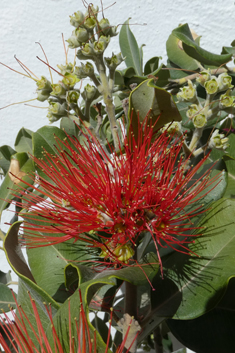
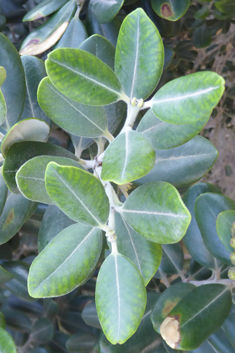
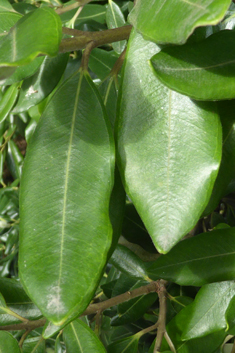
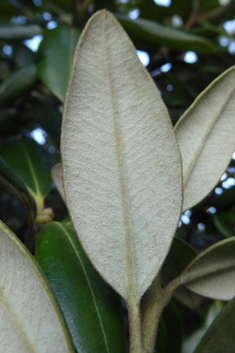
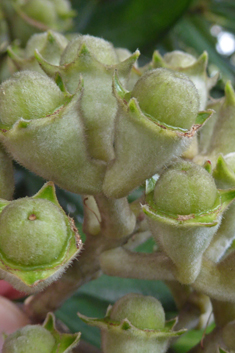
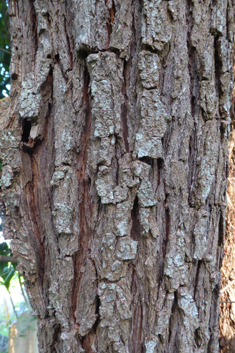
(New Zealand Christmas Tree) Native to New Zealand and introduced as a garden ornamental. Once a feature of Tresco Abbey Gardens, with a stately individual also present in Old Town churchyard, St Mary's but many trees were killed or seriously damaged during cold winters, notably in 1987. A few persist and some damaged trees are regenerating. Leaves evergreen, leathery, densely felted beneath. Flowers petalless with long, scarlet stamens. Old trees often develop curtains of adventitious roots that hang down from the main branches.
 |
 |
|
 |
| |
|
|
|
 |
 |
 |
 |
| |
|
|
|
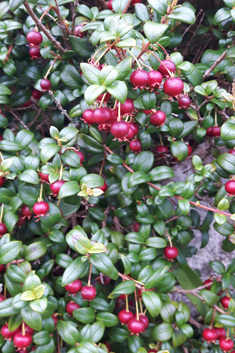
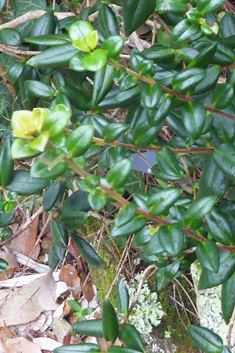
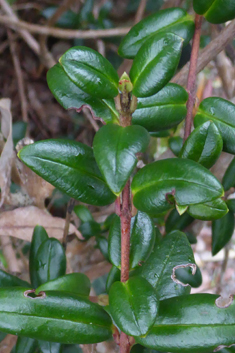
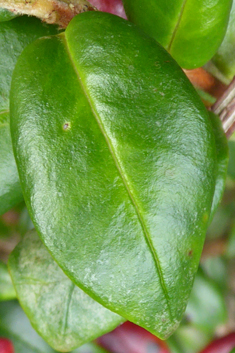
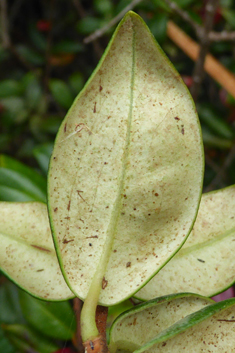
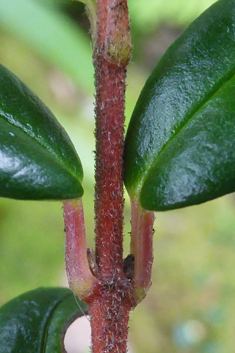
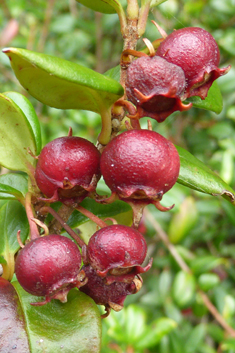
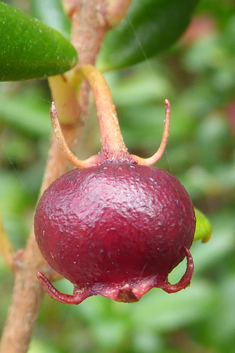
Chilean Guava Ugni molinae
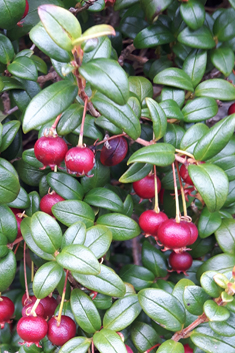
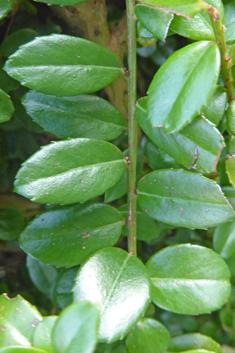
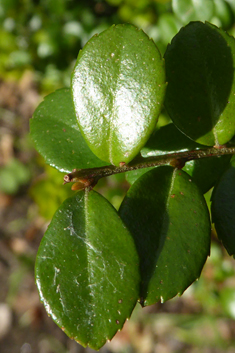
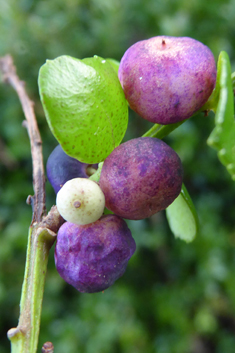
Introduced from southern South America as a garden ornamental and recorded from Tresco and St Martin's. Leaves opposite, 1.4-3.6cm long, evergreen. Flowers June to August.
 |
 |
 |
 |
| |
|
|
|
 |
 |
 |
 |
| |
|
|
|
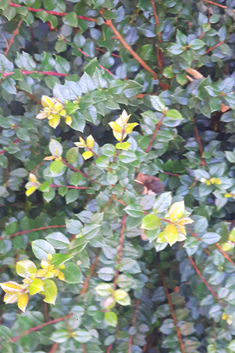
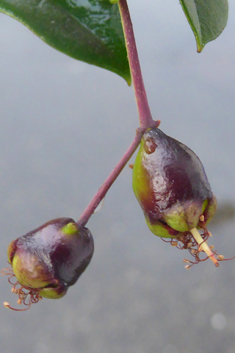
Chilean Myrtle Luma apiculata
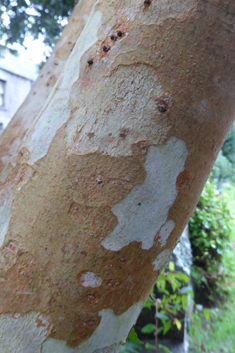
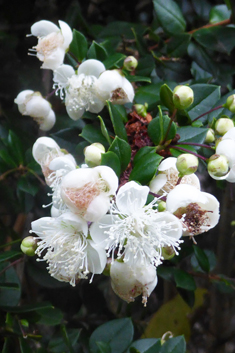
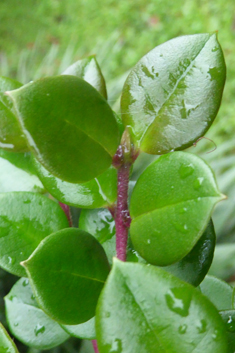
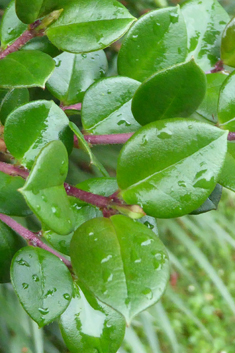
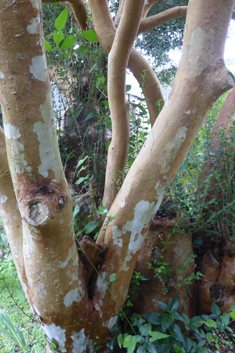
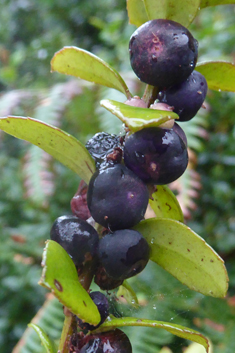
Introduced from southern South America as a garden ornamental and recorded from Tresco and St Mary's. Leaves opposite, 1.5-4.5cm long, evergreen, glandular. Flowers August to September. Eventually forms a multi-stemmed tree with attractive, peeling bark.
 |
 |
|
 |
| |
|
|
|
 |
 |
|
 |
| |
|
|
|
Box Family - Buxaceae
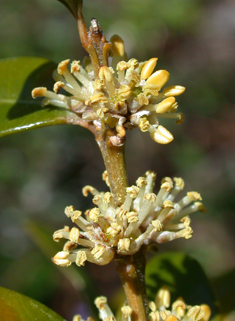
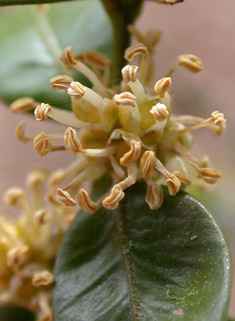
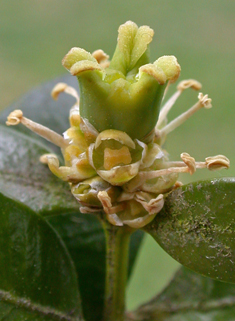
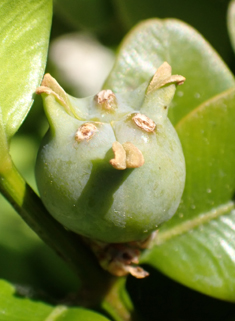
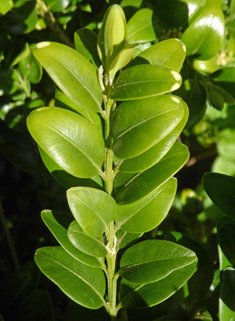
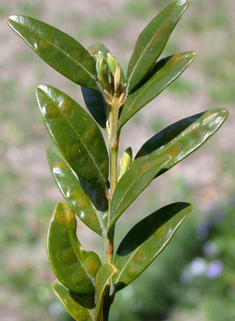
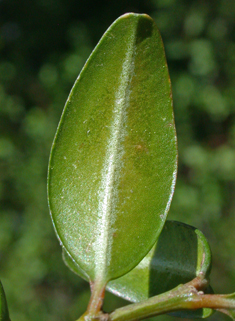
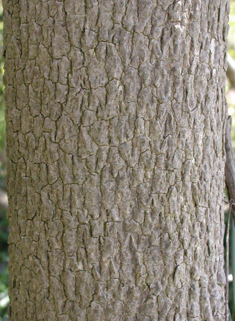
Common Box Buxus sempervirensIntroduced on the Isles of Scilly as a garden ornamental and occasionally recorded where planted or as a garden throw-out. Flowers April to May. Can become a tree in woodland, to 10m in height but often forms a sprawling bush, much lower in height. The petalless flowers are carried in bundles consisting of 5-8 male flowers and a single female flower. The evergreen leaves are 1.2-2.5cm in length. They have a very tough, almost plastic feel to them and this, together with the very distinctive, pungent scent, distinguishes this species from similar plants such as privets and evergreen honeysuckles.
 |
 |
 |
 |
| |
|
|
|
 |
 |
 |
 |
| |
|
|
|
Primrose Family - Primulaceae
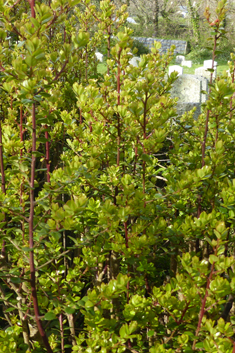
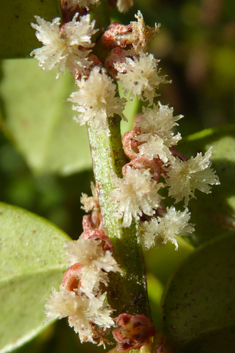
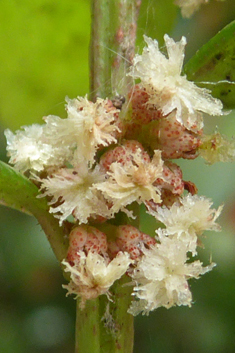
African Boxwood Myrsine africanaIntroduced on the Isles of Scilly, most often as an evergreen shrub for hedging. Most plants were clearly originally planted, but some may occur as bird-sown individuals. Flowers May to June. An evergreen dioecious shrub (male and female flowers on separate plants) to 1.5m in height and often producing rather stiffly upright branches. The tiny flowers are carried in clusters of 2-5, the male flowers dominated by purple anthers, the females with a prominently rayed, disk-like stigma. The evergreen leaves are alternate, 0.5-2cm in length, rather stiff and leathery and with toothed margins.
A strange plant that appears to show no resemblance to other members of the family it is currently placed in.
 |
 |
 |
 |
| |
|
|
|
 |
 |
 |
 |
| |
|
|
|