Gunneras
What are they?
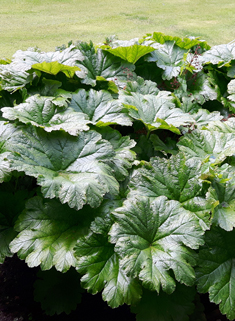
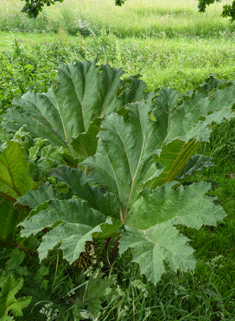
The gunneras are an interesting group of plants from the tropical and subtropical zones of the Southern Hemisphere. They are rather variable in appearance, though most have distinctly rounded 'peltate' leaves, with species ranging from creeping plants with leaves just a few centimetres across, to absolute giants, whose leaves may reach over three metres across! It is these giant species in particular that have become popular as garden plants and to which the name 'giant-rhubarb' has been applied, but the name falsely suggests a relationship to rhubarb, while also being of little value for the smaller species and I prefer gunnera as a general name - both shorter and more appropriate!
Where are they found?
These are naturally plants of wet places and may turn up in a range of wetland habitats. Typically, specimens are originally introduced, but can then spread independently. In Ireland, gunneras are now a major invasive species that are threatening native plant communities and the appearance of these plants (beautiful as they are) in the wider countryside should give cause for concern.
Identification
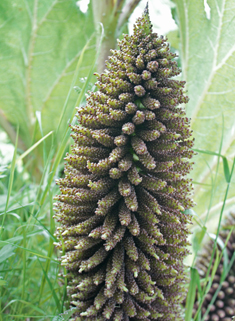
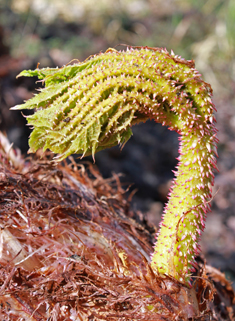
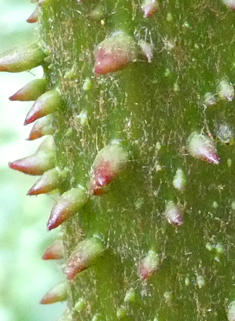
The rather rhubarb-like appearance, coupled with strongly spikey leaf stalks and massive flower spikes sets gunneras apart from other plants, but separation of the species can be difficult and is most easily done by comparing the flower spikes.
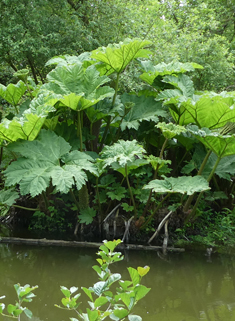
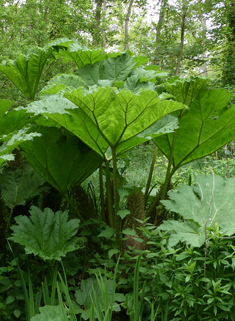
Chilean Giant-rhubarb Gunnera tinctoria
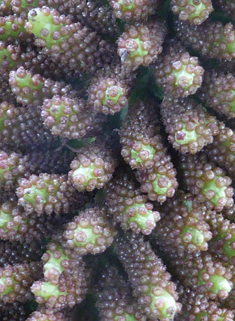
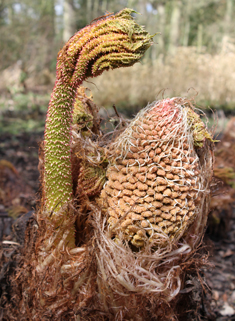
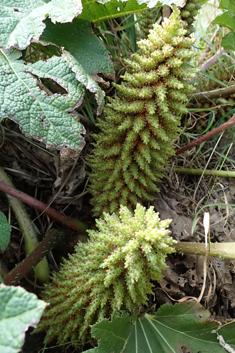
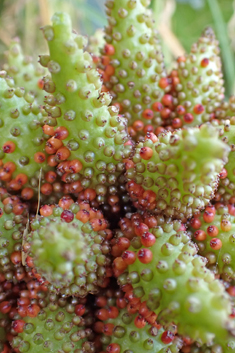
Planted around the southern half of tresco and widely recorded from around the pools there. Flowers May to August. Huge plants with leaves growing to 2.5 metres in height from a central rootstock. Leaves die down in winter, leaving peculiar, gnarly stumps covered in dense hairs. Individual flowers are tiny, but appear in huge, fingered spikes up to a metre in length, with the fingers being relatively short and compact.
 |
|
 |
 |
| |
|
|
|
| |
 |
 |
 |
| |
|
|
|
Hybrid Giant-rhubarb Gunnera x cryptica
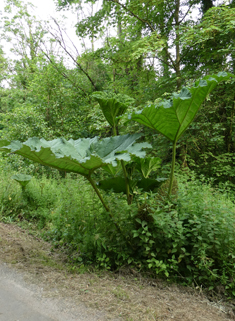
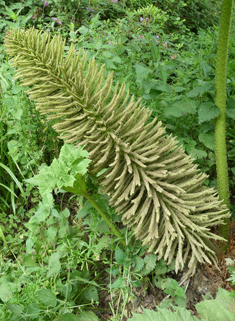
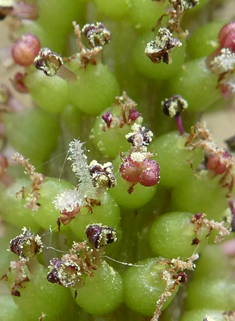
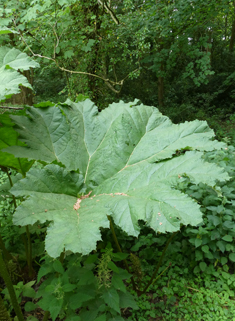
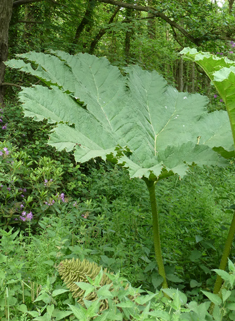
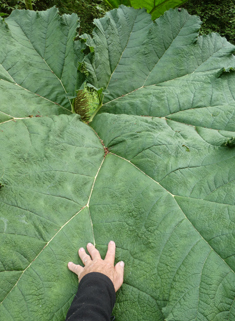
Arose in cultivation as a garden ornamental and probably occurs on Tresco, but this needs confirming. Flowers May to August. Huge plants with leaves growing to 3 metres in height from a central rootstock. Leaves die down in winter, leaving gnarly stumps covered in dense hairs. Individual flowers are tiny, but appear in huge, fingered spikes up to a metre in length, with the fingers being relatively long and open.
Note: Plants once (and still) sold in cultivation as Brazilian Giant-rhubarb (Gunnera manicata) have been shown to be this hybrid and research has shown that the Brazilian species is no longer in culitvation in the UK, having probably died out due to hybridisation and a lack of ability to survive cold winters as long ago as the late 19th Century. This is described in a comprehensive paper by Shaw, Edwards & David (2022) in British & Irish Botany.
 |
 |
 |
|
| |
|
|
|
 |
 |
 |
 |
| |
|
|
|