Fuchsias
What are they?
These plants are members of the Onagraceae, a large family which includes such diverse groups as evening-primroses, enchanter's-nightshades and willowherbs and thus fuchsias are rather unusual in being woody shrubs rather than herbaceous plants. Fuchsias are native to Central and South America, with many species growing in tropical zones; as such, they tend to be much more commonly grown as house or greenhouse plants, but a handful of species and cultivated varieties are partially hardy and will grow out of doors in the UK.
Where are they found?
As introduced ornamentals, fuchsias are most likely to be found where planted for hedging in the wider countryside or bordering private gardens.
Identification
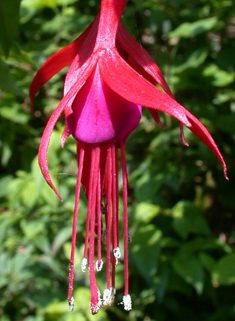
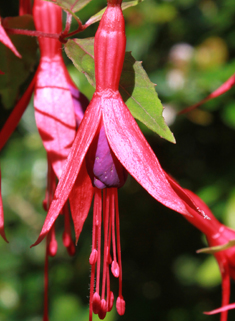
The flowers are well known to most people as they are very attractive and eye-catching. They have five, free sepals and five petals which are furled around to create a corolla tube, from which the eight, very long stamens protrude. Cultivation has provided a bewlidering wealth of hybrids and cultivated forms, but most are not frost-hardy and this page covers the few, hardier varieties that are known to occur and might by chanced across while out and about. Most can be identified by the shape and colour of the flowers.
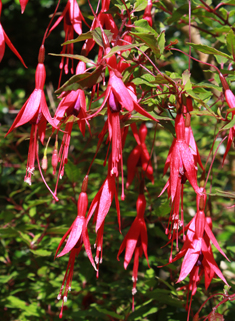
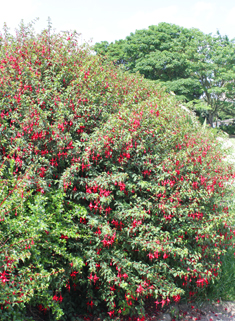
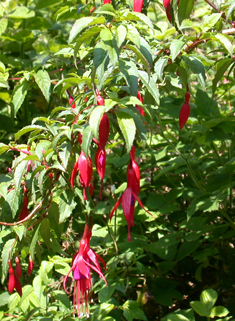
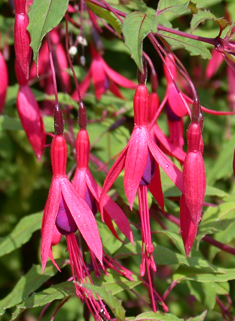
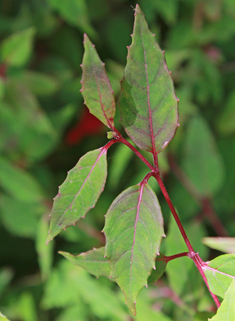
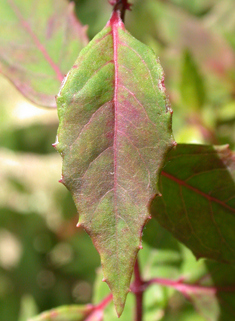
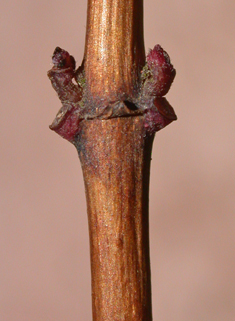
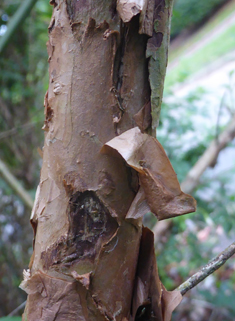
Magellanic Fuchsia Fuchsia magellanica
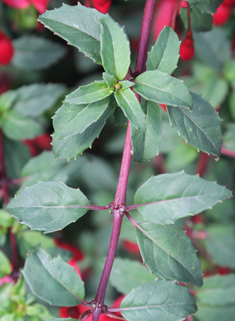
Introduced from southern South America and well established throughout England's south-western region, where it has widely been used for hedging. Flowers June to September or later in mild autumns. A deciduous, suckering shrub, usually to 2.5m in height with gracefully arching branches. Flower slender and pendulous with very long stamens that extend beyond the petal tube.
 |
 |
 |
 |
| |
|
|
|
 |
 |
 |
 |
| |
|
|
|
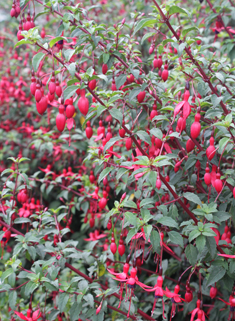
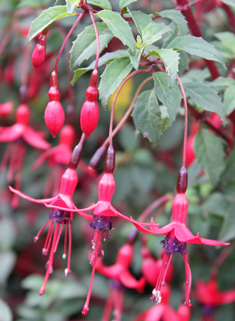
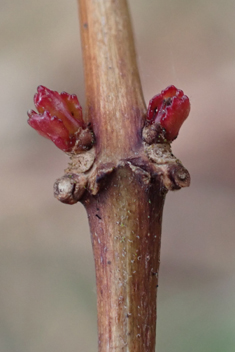
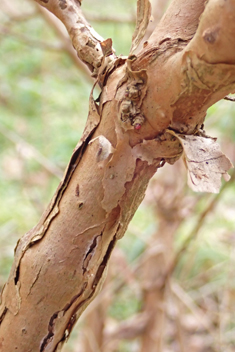
Riccarton Fuchsia Fuchsia magellanica var. riccartonii
A form that arose in cultivation at Riccarton, Ayrshire and which is widely grown as a garden ornamental and amenity plant. Flowers June to September or later in mild autumns. A deciduous, suckering shrub, with leaves averaging slightly longer petioles than those of Magellanic Fuchisa and with broader, more rotund flowers. Generally accepted as a variety of Magellanic Fuchsia but this seems extremely unlikely as the plant is unknown in the wild and originated in cultivation, thus it is more likely to be a hybrid of unknown parentage or merely a 'sport' of Magellanic Fuchsia.
 |
 |
|
| |
|
|
 |
 |
|
| |
|
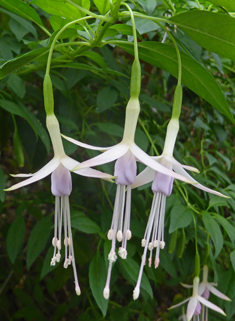
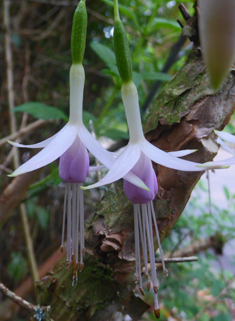
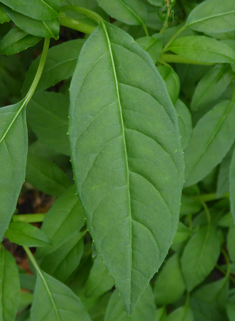
Molin's Fuchsia Fuchsia magellanica var. molinae
A pale-flowered form of Magellanic Fuchsia which is widely grown and sometimes seen as an amenity plant or garden escape. Essentially the same as Magellanic Fuchsia except for its overall paler colour and pale lilac and white flowers.
| |
 |
 |
| |
|
|
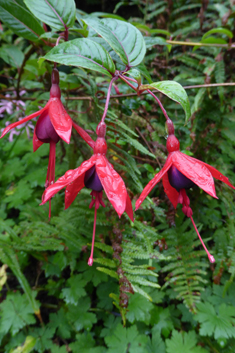
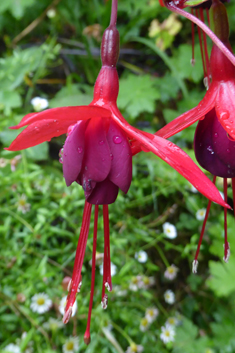
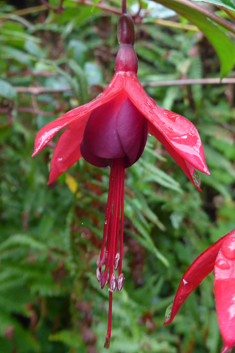
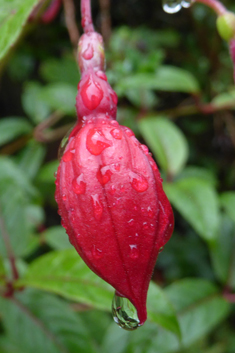
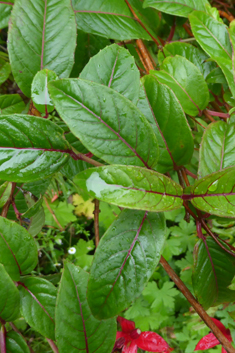
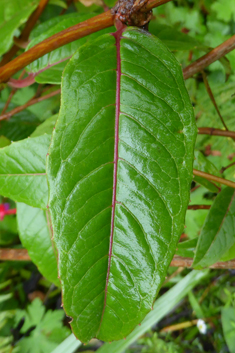
Large-flowered Fuchsia Fuchsia 'Corallina'
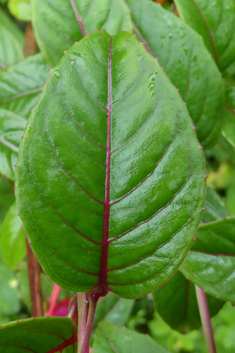
A large-flowered form of Fuchsia, the cultivar 'Corallina' is planted on the Isles of Scilly and is most often considered to be one of a number of forms that come under the hybrid Fuchsia x exoniensis. Flowers are similar in colour to those of Magellanic Fuchsia but are larger, more rotund in profile and typically have extra petals (semi-double). The leaves also average larger and broader than those of Magellanic Fuchsia.
 |
 |
 |
 |
| |
|
|
|
 |
 |
 |
|
| |
|
|