Figworts and Allies
What are they?
The majority of these species are in the family Scrophulariaceae. This family once consisted of a large and highly variable number of species but has recently been reassessed, with many of the species being moved into other families. However, despite this, the family remains a rather eclectic bunch of species with a great deal of variability.
Where are they found?
Members of this family can be found in a wide range of habitats, wet and dry, as well as both sunny and shady. Some are native and likely to be found along hedge lines or semi-natural habitats, while others are introductions typically associated with human environments.
Identification
Each genus within this family has its own set of diagnostic features. While some are relatively easy to determine, groups such as the figworts and mulleins require close attention to flower details.
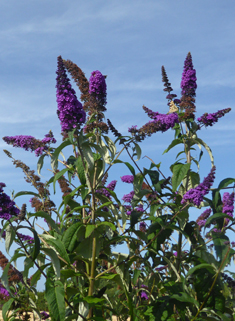
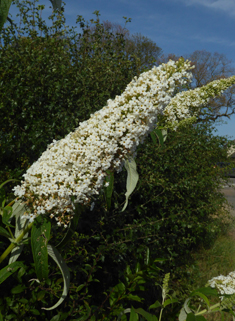
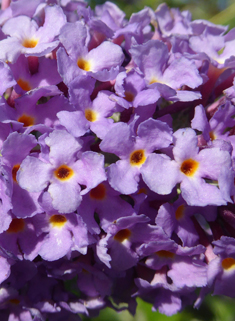
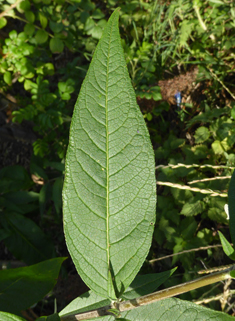
Common Butterfly-bush Buddleja davidii
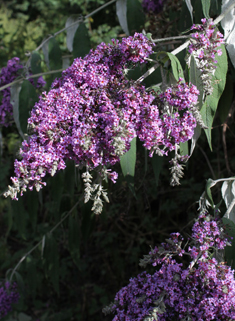
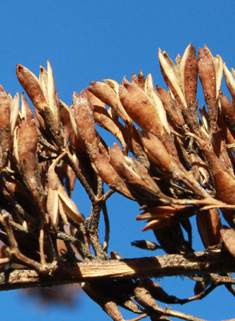
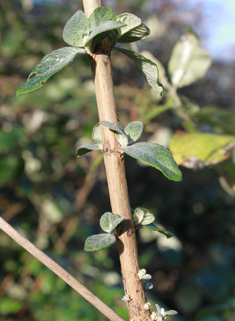
Introduced from Asia as a garden ornamental. Remains uncommon on the islands with a scattering of records from St Mary's and Tresco. Flowers July to September. A many-branched shrub to 6m tall. Flowers may come in a variety of shades of blue-purple to red-purple, pink and white. Most have flowers in a dense, tapered spike, but some cultivars bear more open, branched flower clusters.
 |
|
 |
 |
| |
|
|
|
 |
 |
 |
|
| |
|
|
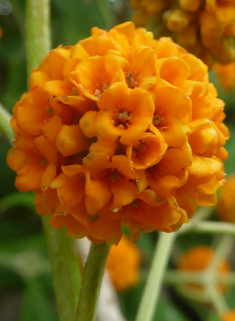
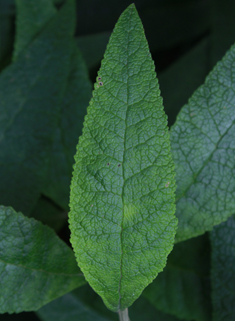
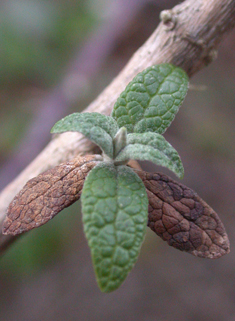
Orange Butterfly-bush Buddleja globosa
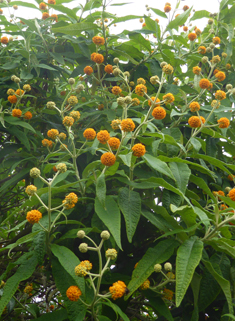
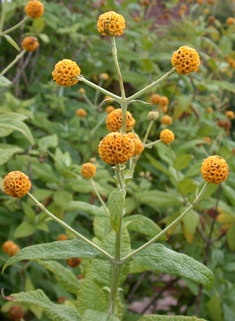
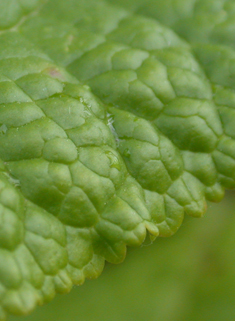
Introduced as a garden ornamental from South America. Occurs sporadically as a garden escape, recorded on St Mary's and Bryher. Flowers May to June. A many-branched shrub to 5m tall. The leaves are deeply veined, giving them a 'crinkled' look and are usually a deeper, darker green than those of Common Butterfly-bush.
 |
 |
 |
| |
|
|
 |
 |
 |
| |
|
|
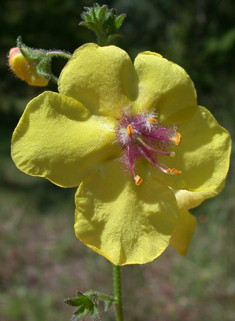
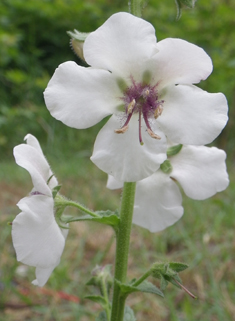
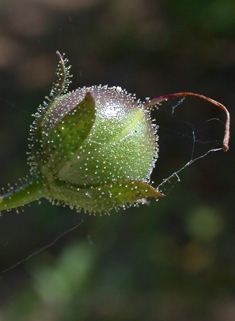
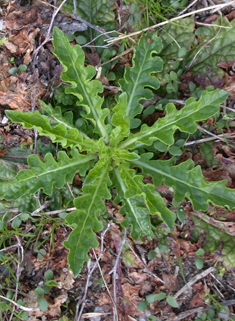
Moth Mullein Verbascum blattaria
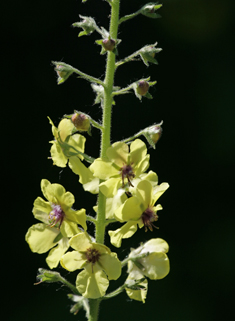
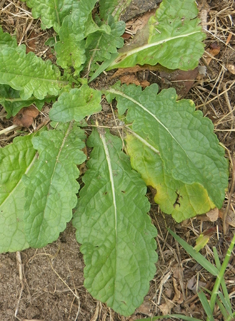
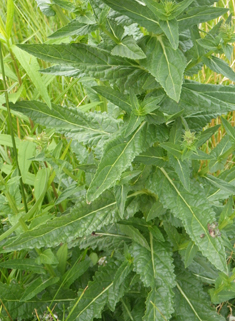
Introduced from Europe and an occasional garden escape, recorded twice on the islands but not known to be currently present. Flowers June to August. A small species, to less than a metre in height and with a very open flower spike, the flowers being arranged singly on long stalks from the base of small, leafy bracts. Flowers are large and broad-petalled and may be yellow or white. Stamens all purple-haired, the upper three with reniform anthers and the lower two with shortly decurrent anthers. Stigmas capitate. Leaves green, more or less hairless and variable in shape, sometimes being wavy-edged. Upper part of plant and seed capsules have sticky-glandular hairs.
| |
 |
 |
 |
| |
|
|
|
 |
 |
 |
|
| |
|
|
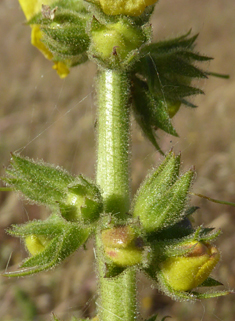
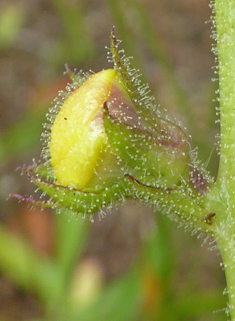
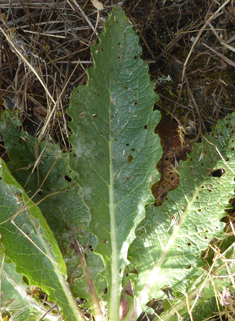
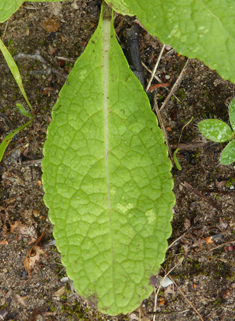
Twiggy Mullein Verbascum virgatum
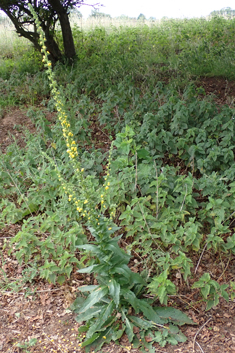
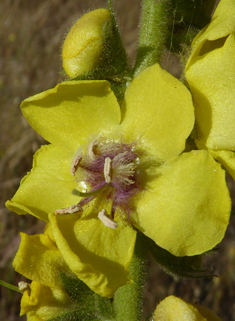
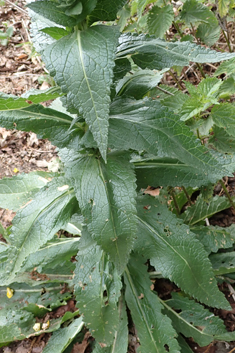
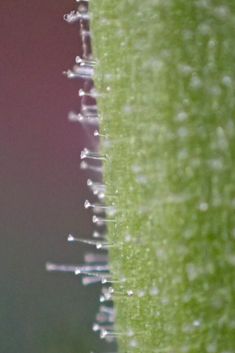
Introduced from Europe with single records from Tresco and Bryher but not seen recently. Flowers June to September. A fairly small species with an unbranched flower spike, the flowers being arranged in clusters of 2-5 from the base of small, leafy bracts. Towards the top of the spike, flowers may be single at each bract, but their stalks are clearly shorter than the length of the calyx (sepal tube). Flower spike very glandular-hairy. Stamens with the purple hairs, the lower two becoming hairless towards their tips; upper three anthers reniform, the lower two shortly decurrent. Stigmas capitate.
 |
 |
 |
 |
| |
|
|
|
 |
 |
 |
 |
| |
|
|
|
Orange Mullein Verbascum phlomoides
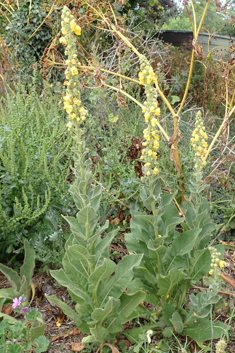
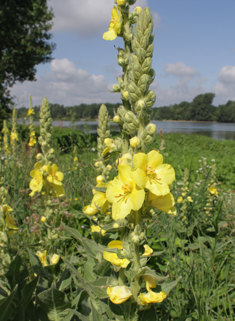
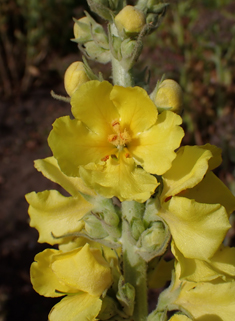
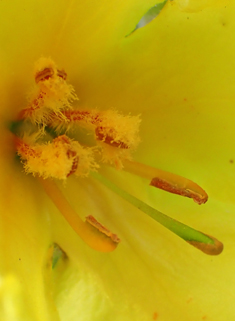
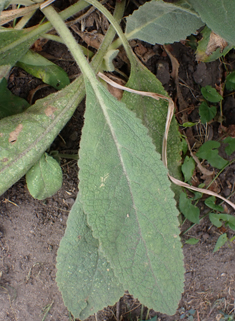
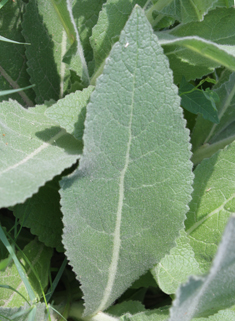
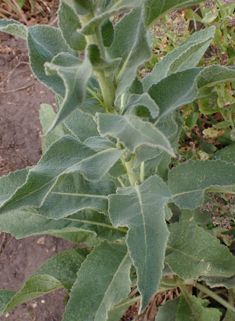
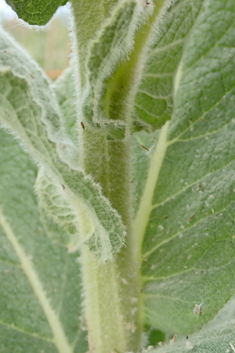
Introduced from Europe and not established on the islands, the last record being from St Mary's in 1993. Flowers June to August. A very showy species, with relatively large, fully open flowers with broad petals; upper three stamens with pale yellow hairs and reniform anthers, lower two stamens hairless and with decurrent anthers. Stigma with spatula-like tip. Flower spike usually with short side branches in the upper stem leaf bases. Stem leaves with rounded bases, only shortly running into the stem. Leaves softly downy all over and often rather pale-looking due to the dense white hairs.
 |
 |
 |
 |
| |
|
|
|
 |
 |
 |
 |
| |
|
|
|
Great Mullein Verbascum thapsus
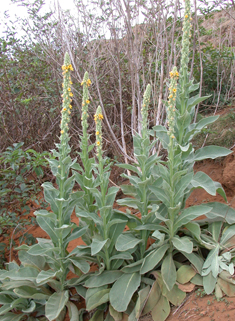
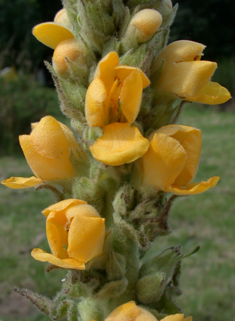
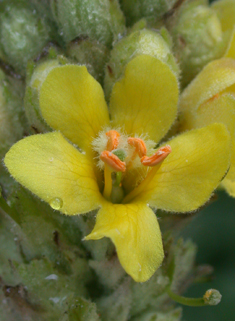
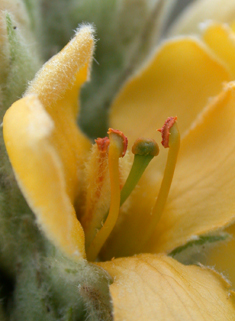
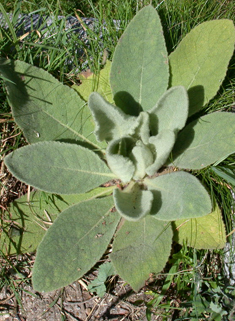
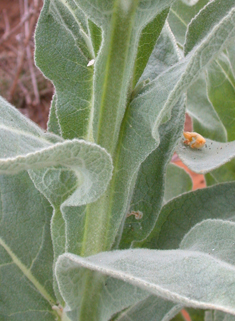
Native and by far the commonest species of mullein, being recorded from all the inhabited islands as well as some of the smaller islands. Flowers June to August. Stems grow up to two metres in height with the flower spike usually being unbranched (though damaged stems may form a few side branches). Flowers relatively small and often only half opening; deeper yellow than those of other species. Stamens hairs white or pale yellow, dense on the upper three filaments, sparse on the lower two; upper three anthers reniform, lower two oblique and decurrent. Stigma capitate, with a rounded knob on the end (not spatula-shaped). Upper stem leaves have prominent, decurrent (winged) bases that run down the length of the stem to at least the next leaf. Leaves are rather thick and felty, and densely covered in off-white, star-shaped hairs.
 |
 |
 |
 |
| |
|
|
|
 |
 |
||
| |
|
Dark Mullein Verbascum nigrum
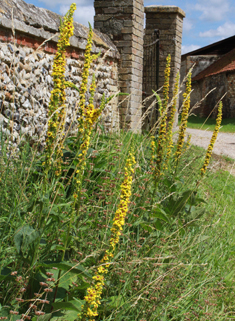
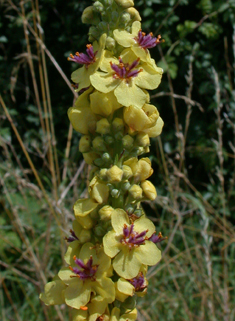
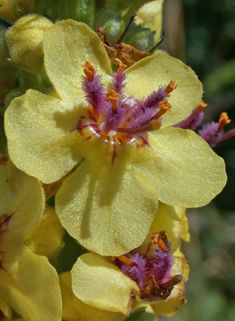
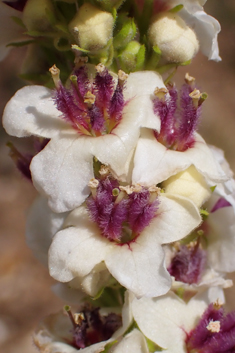
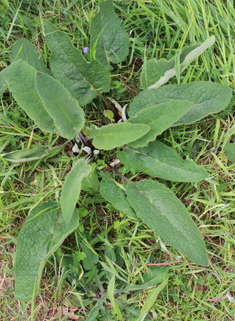
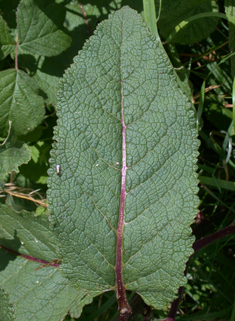
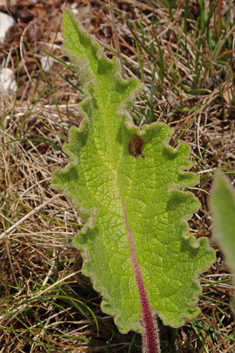
A native species in the UK but considered only a garden escape in the Isles of Scilly, where recorded from two locations on St Mary's. Flowers June to September. A relatively short species, to around a metre in height, the flower spike usually unbranched, or sometimes with a few side branches. Flowers relatively small but opening fully; pale yellow (rarely white). Stamens all with purple hairs and reniform anthers. Stigma small, capitate. Leaves hairy, but less so than most other species and consequently having a greener appearance; petiole and basal midrib typically purple-tinged; base cordate.
 |
 |
 |
 |
| |
|
|
|
 |
 |
 |
|
| |
|
|
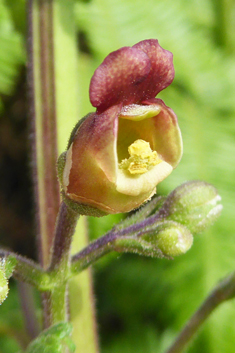
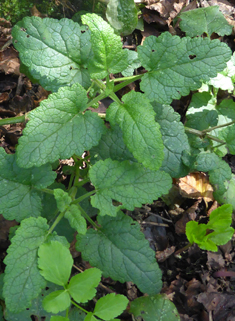
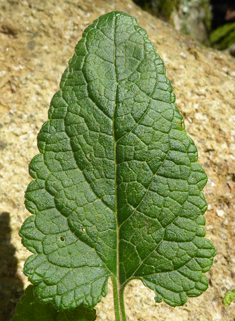
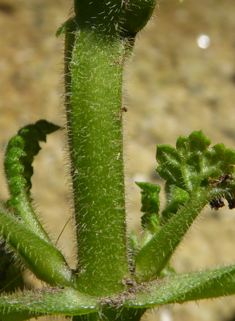
Balm-leaved Figwort Scrophularia scorodonia
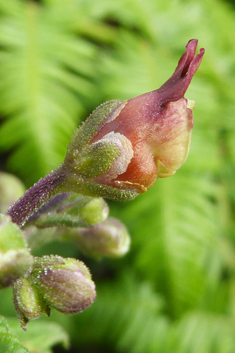
Originally introduced and now widespread throughout most of the islands in shady borders, hedgebanks and similar places. Flowers June to August. Leaves rather like those of Lemon Balm (Melissa officinalis) in shape. Stems unwinged and clearly downy.
| |
 |
|
| |
|
|
 |
 |
 |
| |
|
|
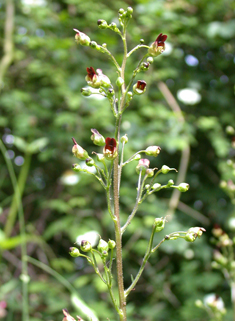
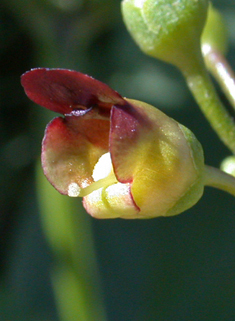
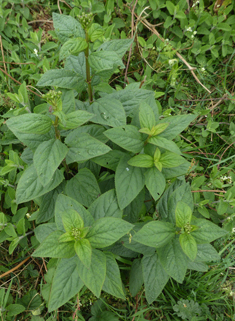
Common Figwort Scrophularia nodosa
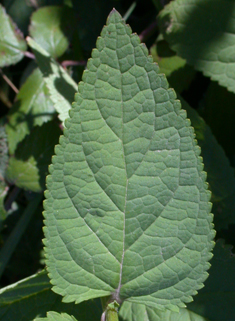
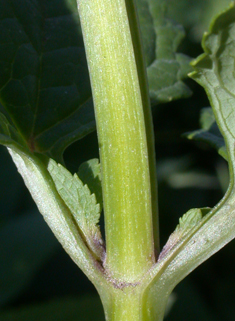
Native but rare and only recently refound at single locations on St Mary's and St Martin's. Flowers June to September. Leaves typically triangular or spear-shaped, with a squared off or only slightly rounded base. Stems more or less unwinged.
 |
 |
|
| |
|
|
 |
 |
 |
| |
|
|
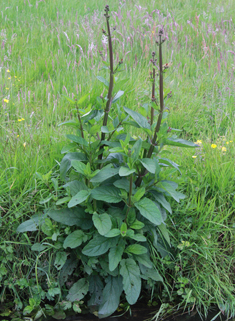
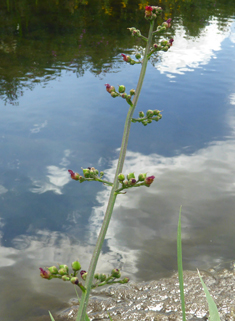
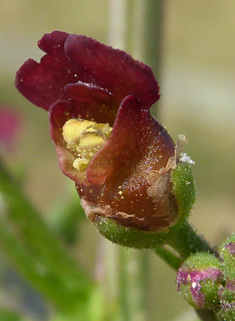
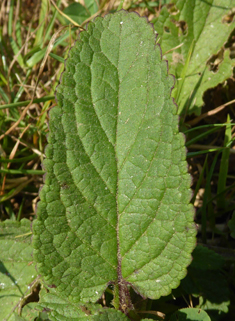
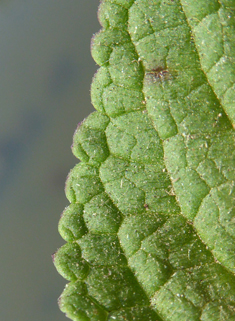
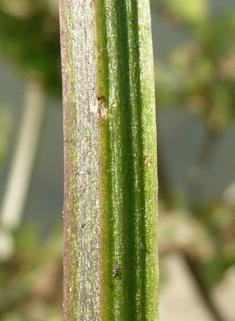
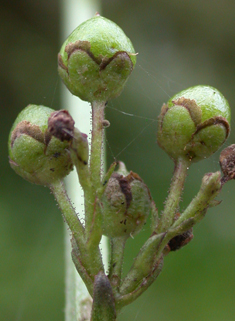
Water Figwort Scrophularia auriculata
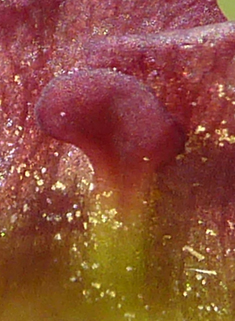
Native but rare on St Mary's and St Martin's. Flowers June to September. Leaves typically round-tipped and with a heart-shaped (cordate) base; leaf margins with blunt, rounded teeth. Stems strongly winged. The staminode has a rounded tip that is barely wider than long.
 |
 |
 |
 |
| |
|
|
|
 |
 |
 |
 |
| |
|
|
|
Bear's-breech Family - Acanthaceae
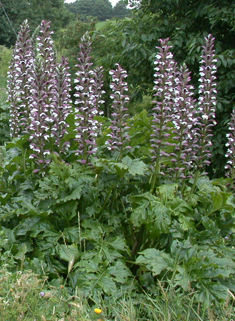
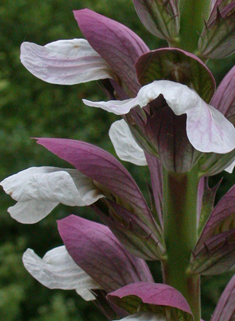
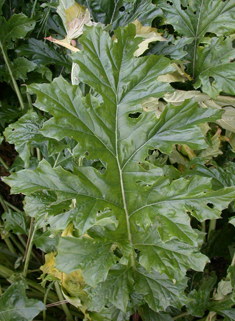
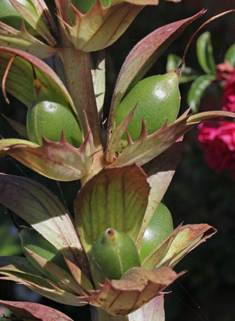
Spineless Bear's-breech Acanthus mollisIntroduced from the Mediterranean region as a garden ornamental and quite frequent as a garden escape on the inhabited islands. Flowers June to August. Leaves glossy with relatively broad side lobes and no spines.
| |
 |
 |
 |
| |
|
|
|