Fern Allies & Unusual Ferns
What are they?
This page includes a small assemblage of somewhat atypical fern species, together with other, non-flowering, vascular plants that also spread by means of spores rather than seeds.
Lesser Clubmoss Family - Selaginellaceae
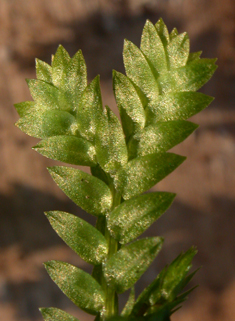
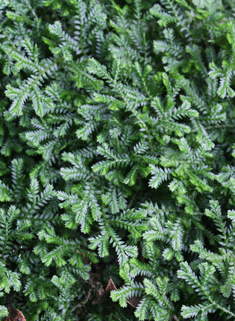
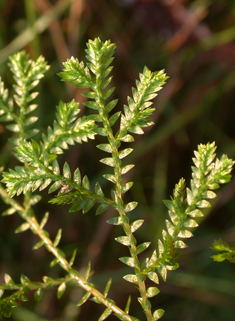
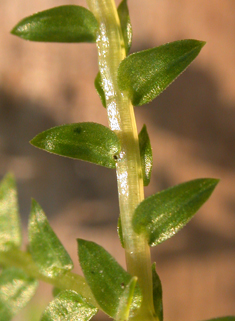
Krauss's Clubmoss Selaginella kraussianaIntroduced from tropical Africa. Long-established in the Abbey Gardens area, Tresco and first recorded outside the gardens in 20216.
| |
 |
|
 |
| |
|
|
|
Horsetail Family - Equisetaceae
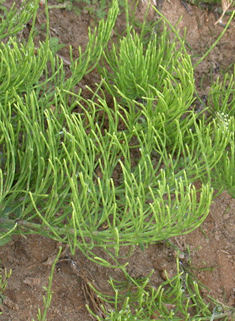
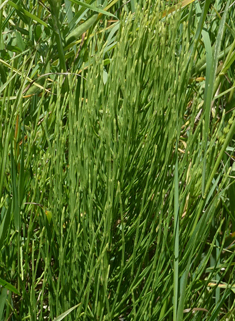
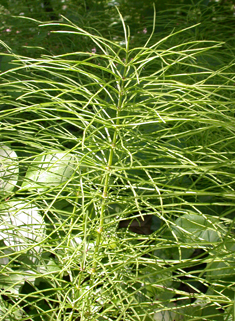
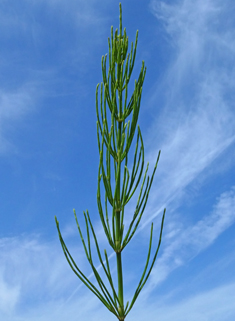
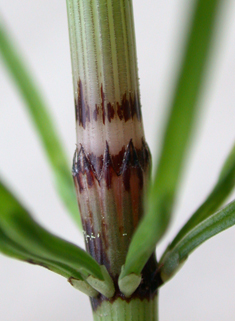
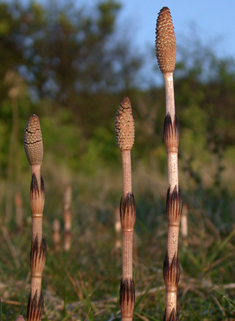
Field Horsetail Equisetum arvenseNative in the UK but probably only an introduction on the islands and not seeming to persist. Cones on pale brownish, unbranched stems in April-May and withering as the green, branched stems emerge. Stems with 6-19 ridges and of two types - stands of straight, upright stems, or mats of curled or twisted stems, all growing from a far-reaching, deep-seated and persistent root stock.
 |
 |
 |
 |
| |
|
|
|
 |
 |
||
| |
|
Adder's-tongue Family - Ophioglossaceae
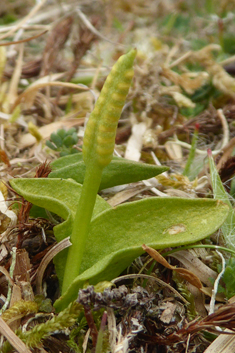
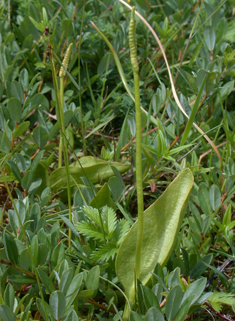
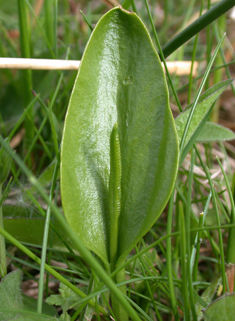
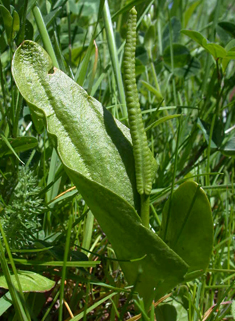
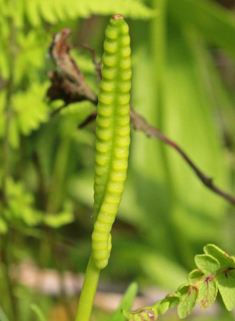
Common Adder's-tongue Ophioglossum vulgatumNative. Previously recorded from a single site on the north side of St Agnes. Spore-bearing fronds may be found from late May to August. The above-ground, visible part of this plant consists of an oval-shaped, sterile leaf, from the base of which appears the elongate spike that is the fertile leaf that bears the spores. Some shoots consist only of simple, sterile leaves and these are easily passed over and not readily recognised as being an adder's-tongue. Plants may grow to around 25cm in height when among taller vegetation, but are often much less, typically 5-10cm in height.
 |
 |
 |
 |
| |
|
|
|
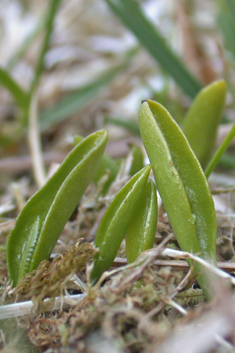
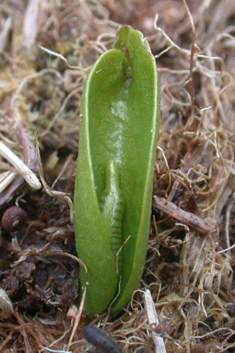
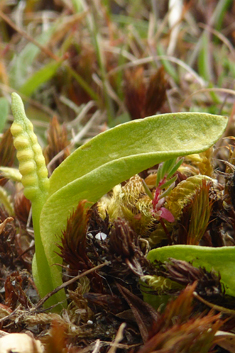
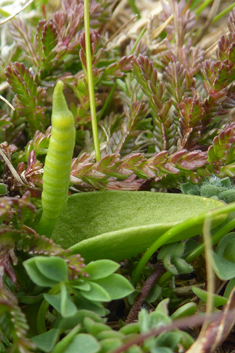
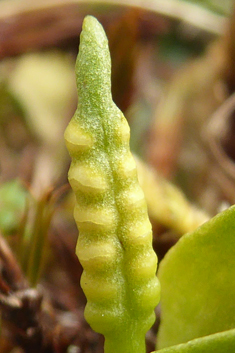
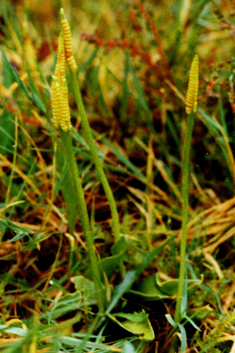
Small Adder's-tongue Ophioglossum azoricum
Native. Single plants and small colonies appear sporadically on the main five inhabited islands in heathy, short-turf habitats and damp hollows. Spore-bearing fronds may be found from April to August.
 |
 |
 |
 |
| |
|
|
|
| |
 |
 |
|
| |
|
|
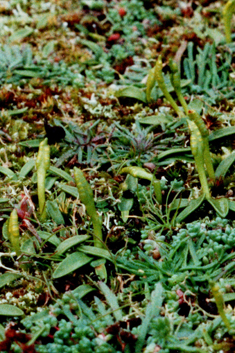
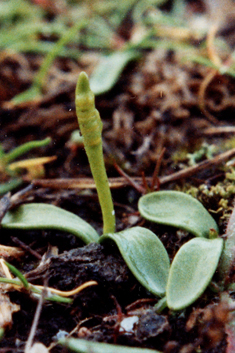
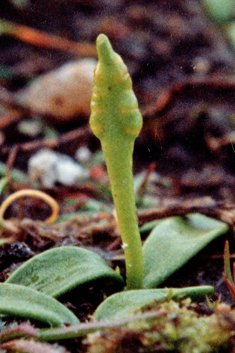
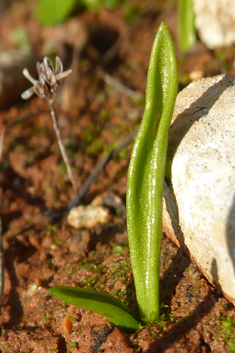
Least Adder's-tongue Ophioglossum lusitanicum
Native. Extremely rare, with the only colony in the British Isles occurring towards the southern end of St Agnes in short turf. Plants are tiny, typically just 2-2.5cm in height. Leaves narrower than those of other adder's-tongues and often slightly keeled. Spore-bearing frons ripen typically during January-March, though young fertile fronds begin to emerge in October.
 |
 |
 |
 |
| |
|
|
|
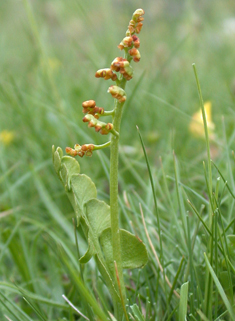
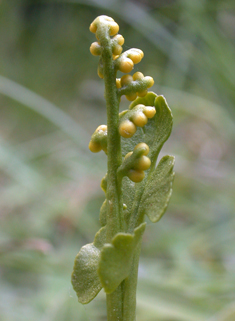
Moonwort Botrychium lunaria
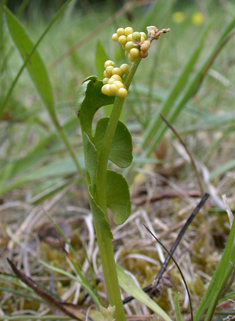
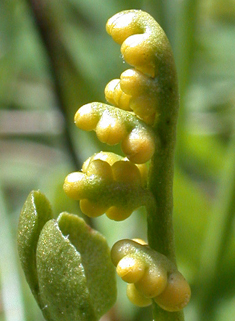
Native. A rare plant of coastal dune grassland. Formerly recorded from Bar Point, St Mary's and more recently from the south end of Tresco. Spore-bearing fronds typically found from June to August. A more elaborate plant than the adder's-tongues, with a strongly lobed sterile leaf and a branched, fertile leaf which carries the spores in small, grape-like structures.
 |
 |
 |
 |
| |
|
|
|