Cudweeds and Everlastingflowers
What are they?
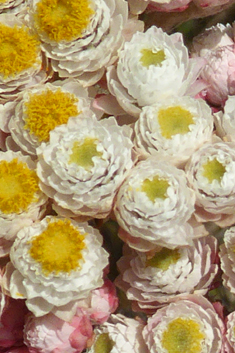
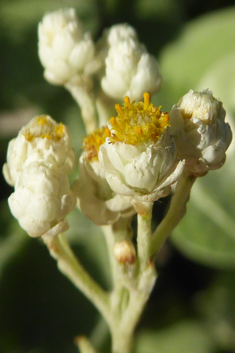
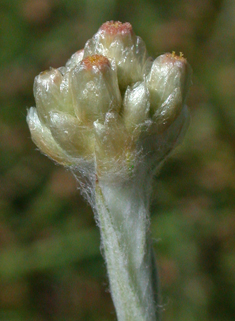
This page covers some of the least showy members of the daisy family (Asteraceae). While their flowers may appear very different from those of a daisy, they are essentially rather similar upon a closer look, since they rather resemble the button-like centre to a daisy flower but lack a ring of coloured petals around the outside. The flowerheads each consist of a tight cluster of small, individual florets which may be picked out with a hand lens. Most of the species on this page are known as cudweeds, but this page also includes the 'everlastingflowers' which get their name because their flower parts tend to become stiffly papery with age and are very long-lasting, making them popular with flower arrangers.
Where are they found?
Our native species are mostly plants of light, sandy soils on heaths, coastal dunes and drier arable margins, but some are also found in damp places, while others are introduced and more likely to be found in disturbed or urban environments. This range of habitat choices can aid the identification process.
Identification
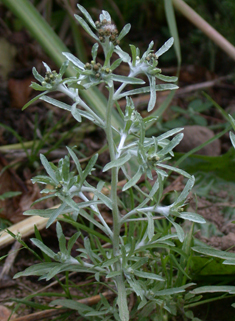
The cudweeds are generally annual plants that form a tussock of basal leaves before producing upright spikes that terminate in flower clusters. Some of the associated species are perennials, eventually forming a woody bush. Most of these species are fairly easy to identify by checking the growth style, leaf shape and the flowers, but some of the cudweeds are a little tricky and a hand lens might come in handy at times. All the plants on this page are densely hairy.
Common Cudweed Filago germanica
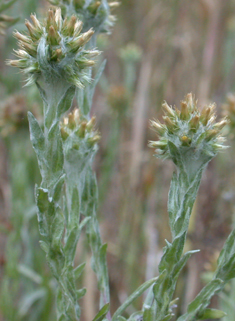
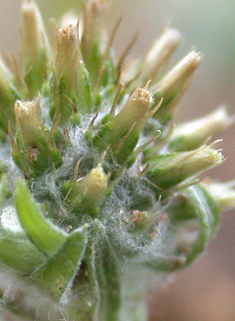
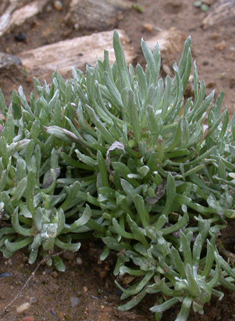
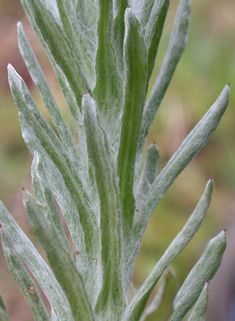
Native. Common on light soils on St Mary's with a few records from St Agnes, Tresco and Bryher. Flowers July to August. Small plants from 5-40cm in height, sometimes growing in tight swards with many plants packed close together. Stem leaves linear and relatively narrow compared with closely-related species; leaf-tip tapered to a point. Flowerheads like furry, spiky balls at the tops of woolly, upright stems, each cluster of florets being surrounded by a few, spiky-looking outer bracts that are straw-coloured.
 |
 |
 |
 |
| |
|
|
|
Marsh Cudweed Gnaphalium uliginosum
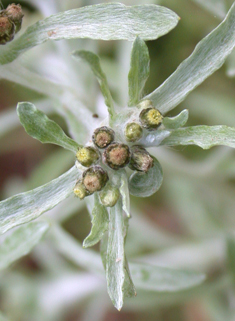
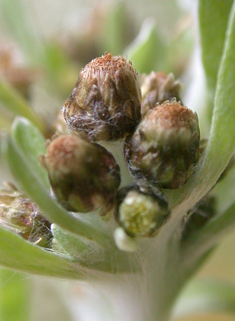
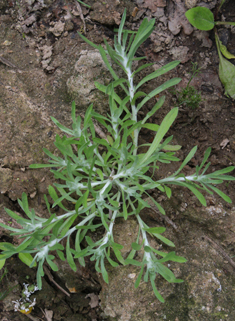
Native. Widespread and quite common in many areas on lighter, sandy soils where water sits in winter, such as rutted tracks and field margins. Flowers July to September. Differs from our other cudweeds in forming many-stemmed, bushy plants from a basal rosette of leaves. Stems and leaves densley white-hairy, the leaves often gently curved or waved. Flowerheads borne in tight clusters with dark outer bracts and surrounded by spreading, leafy bracts.
| |
 |
 |
 |
| |
|
|
|
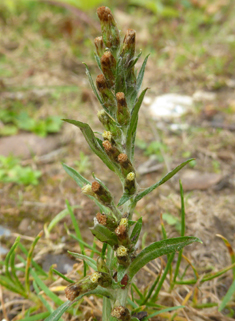
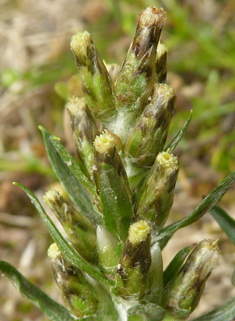
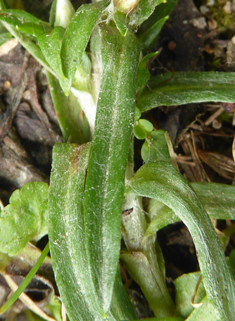
Heath Cudweed Omalotheca sylvatica
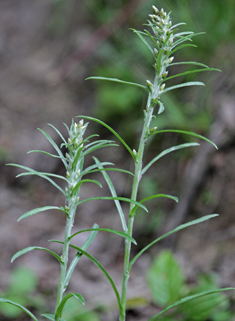
Native in the UK but probably introduced on Scilly. Survived for a few years at a single location on St Mary's but not currently known to be present. Flowers July to September. Small plants from 5-50cm in height, typically producing a spreading mat of basal leaves before sending up vertical, flowering stems. Stem leaves linear and slender; leaf-tip tapered to a point. Flowerheads borne in the leaf axils, producing distinctive, upright spikes of flowers, tapering to a point.
 |
 |
 |
 |
| |
|
|
|
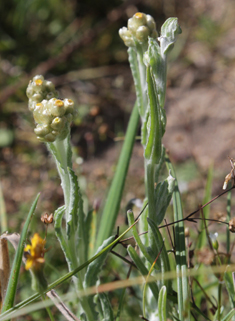
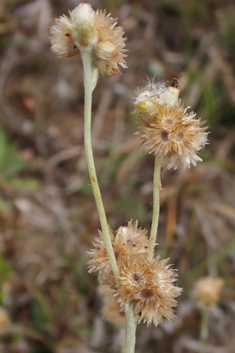
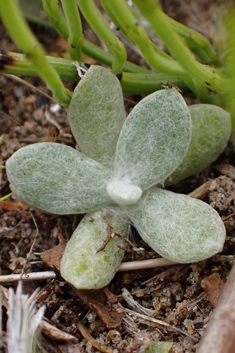
Jersey Cudweed Pseudognaphalium luteoalbum
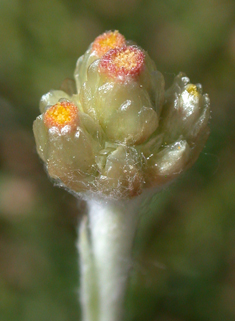
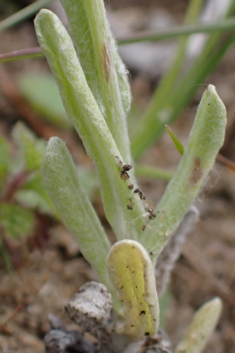
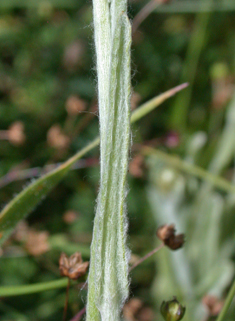
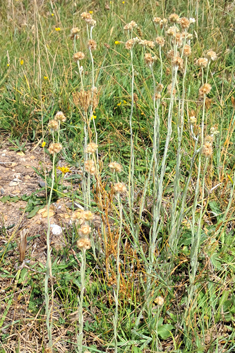
(Laphangium luteoalbum) Introduced to the islands with records from 2004 on St Mary's and from 2009 on Tresco and plants continuing to increase. Flowers June to August. A slender plant with densely white-woolly stems and leaves, the leaves with recurved margins; upper leaves narrower and appressed to the main stem. The flowers are carried in small clusters well above the leaves and have silvery outer bracts.
 |
|
 |
 |
| |
|
|
|
 |
 |
 |
 |
| |
|
|
|
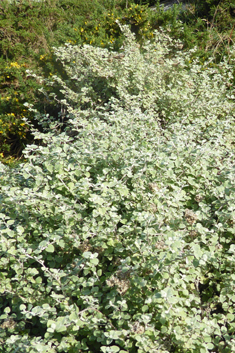
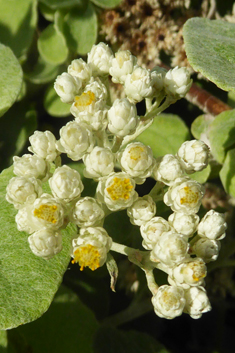
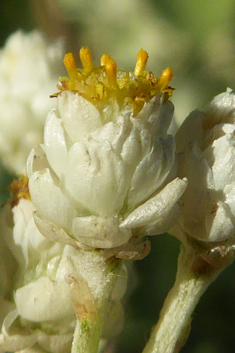
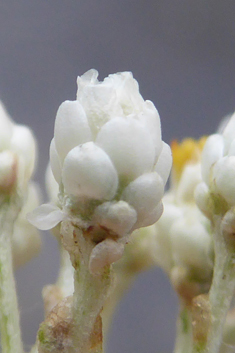
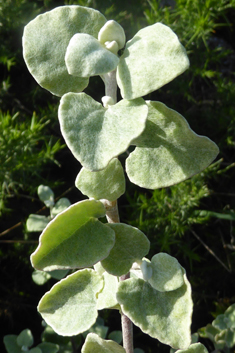
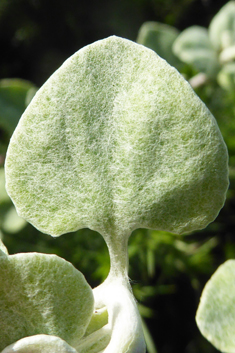
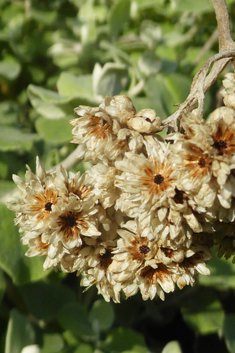
Silver-bush Everlastingflower Helichrysum petiolare
Introduced from South Africa as a garden plant and now spreading into natural habitats, especially around coastlines. Flowers July to September. A woody-based, sprawling perennial, often used as a trailing plant in hanging baskets.
 |
 |
|
 |
| |
|
|
|
 |
 |
 |
 |
| |
|
|
|
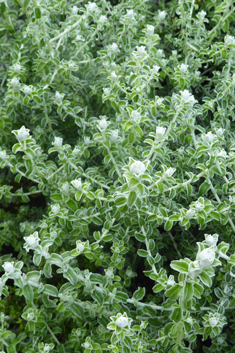
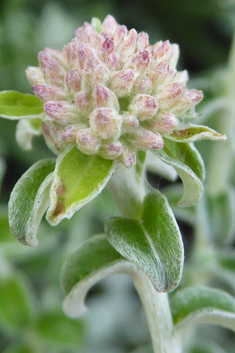
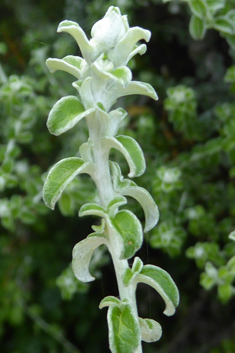
Thyme-leaved Cobwebbush Plecostachys serpyllifolia
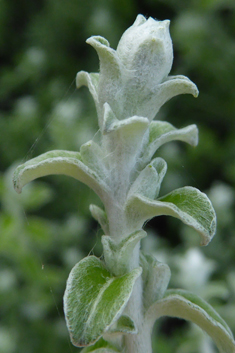
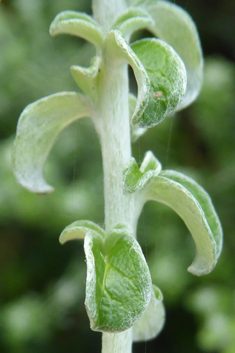
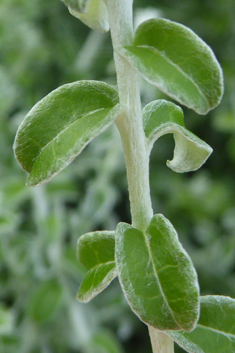
Introduced from South Africa as a garden plant and now spreading by seed from original plantings on St Mary's and Tresco. Flowers July to September. A woody-based, sprawling perennial.
 |
 |
||
| |
|
||
 |
 |
 |
 |
| |
|
|
|
Strawberry Everlasting Helichrysum felinum
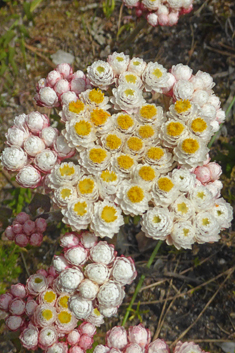
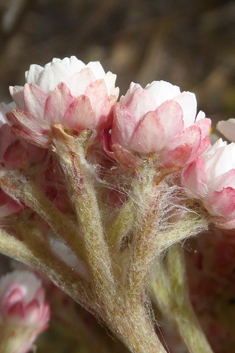
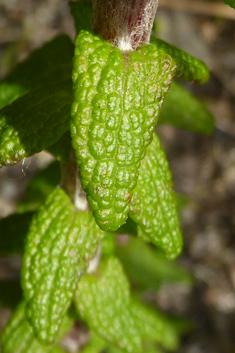
Introduced from South Africa as a garden plant and recorded in the 1980s from the Abbey Gardens, Tresco, where it is still in cultivation. Flowers July to September. A low-growing perennial with red tints to the flower bracts and leaves with deeply impressed veins.
 |
|
 |
 |
| |
|
|
|