Clovers
What are they?
Clovers are amongst the best-known of our native flowers and provide a vital nectar source for many species of insects. These are members of the pea family with typical, trifoliate leaves, but the flowers are arranged rather differently to most pea species. Each individual flower has the five, highly modified petals that are typical of the pea family, but clover flowers have become much narrower in outline and can appear almost tubular, with greatly reduced standard petals. The flowers are further modified into tight, clustered heads.
Where are they found?
Clovers are a diverse bunch of species, but most may be found in open, grassy places such as lawns, roadsides, grassy heaths, coastal dunes and similar places.
Identification
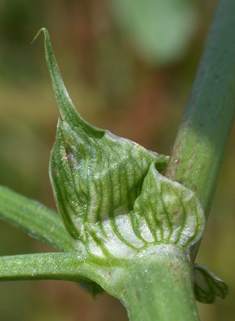
The compact head of pea flowers coupled with trifoliate leaves makes clovers readily identifiable as a group. Identifying individual species can be more tricky and often requires checking two things; firstly, the paired stipules that appear as bract-like growths at the base of the leaf stalks, then secondly, the appearance of the flowerhead as the flowers mature into fruiting heads. In the latter case, the calyx (a tube formed by the five, fused sepals at the base of the flower) often changes shape and its appearance can help with identification.
White Clover Trifolium repens
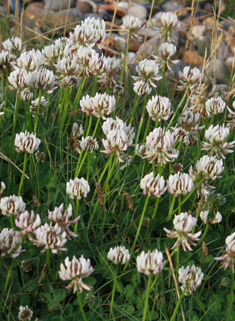
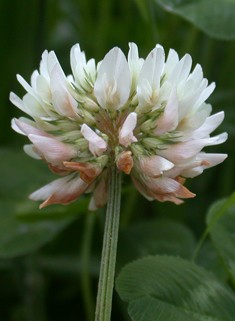
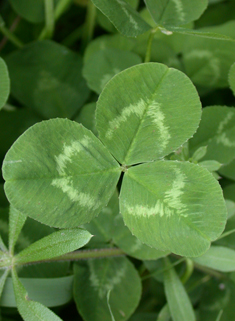
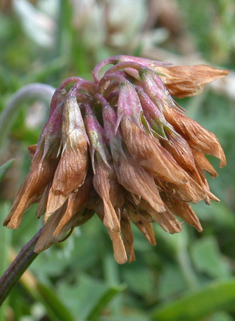
Native but also widely introduced in a variety of larger, cultivated forms. Widespread and common in all kinds of open, grassy habitats. Flowers mostly May to September but a few flowers may be found throughout the year. Rather variable due to the presence of cultivated forms, but leaves typically with rounded leaflets which are well-marked with a pale ring. Flowers white, or sometimes tinged with pink on the lower flowers in the head. This is a mat-forming species that typically has low stems like runners that root into the ground at the leaf nodes.
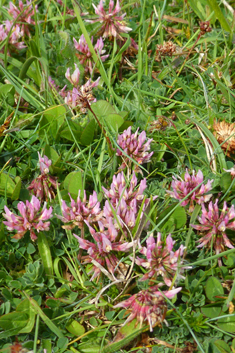
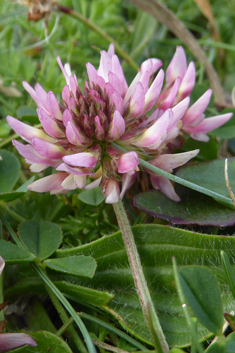
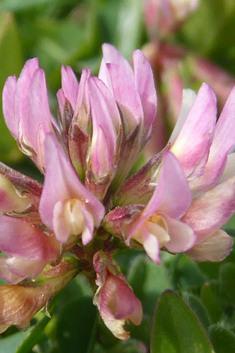
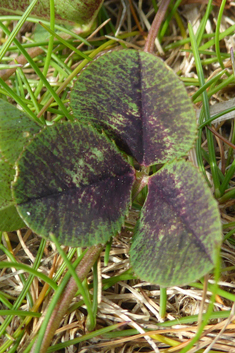
In coastal grasslands, the variety townsendii occurs, with pink-tinted flowers and usually variably purple-stained leaves.
 |
 |
 |
 |
| |
|
|
|
 |
 |
 |
 |
| |
|
|
|
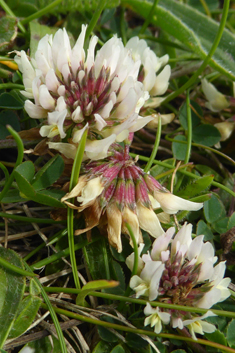
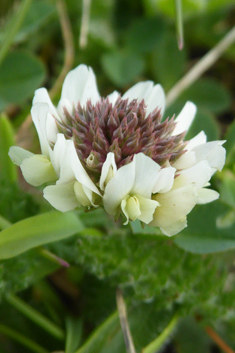
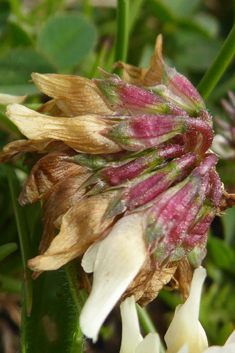
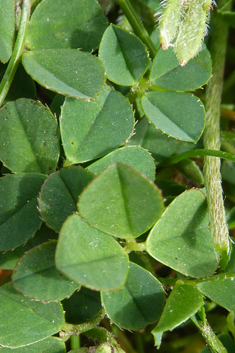
Western Clover Trifolium occidentale
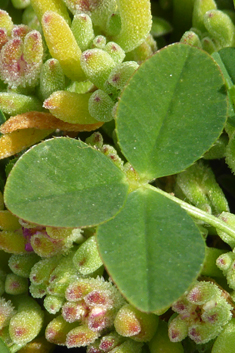
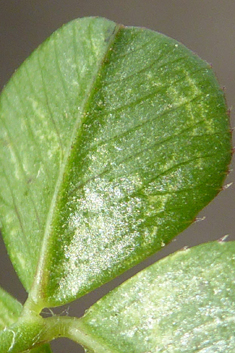
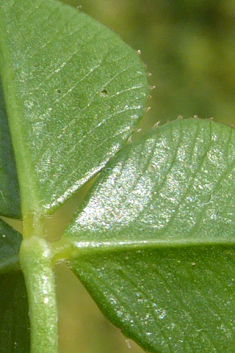
Native in short grassland in coastal areas. Flowers mostly March to June. Rather variable due to the presence of cultivated forms, but leaves typically with rounded leaflets which are well-marked with a pale ring. Rather similar to White Clover and most easily told by its leaves which are unmarked green (or slightly blue-green) above and glossy beneath. The leaves are also thicker than those of White Clover.
 |
 |
 |
|
| |
|
|
|
 |
 |
 |
 |
| |
|
|
|
Alsike Clover Trifolium hybridum
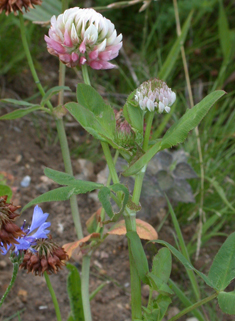
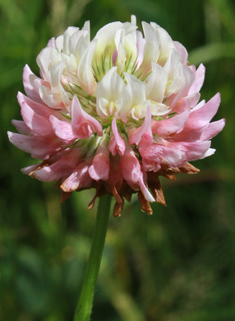
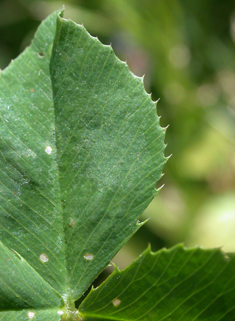
Introduced from mainland Europe in grass seed mixes and recorded just a handful of times from the larger islands. Flowers June to September. Rather like White Clover but leaves typically with more elongate, unmarked leaflets. Flowers white at the top of the flowerhead and pink below, giving a clear, two-tone effect. This is a rather erect species that does not have stems like runners that root into the ground at the leaf nodes.
 |
 |
 |
 |
| |
|
|
|
Clustered Clover Trifolium glomeratum
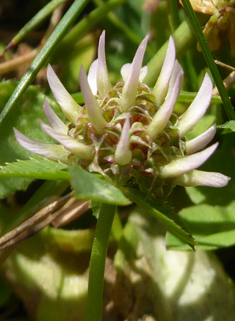
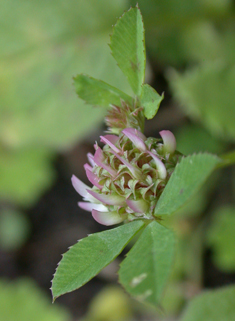
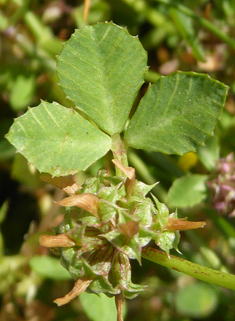
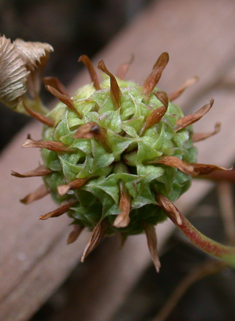
Native. Rather rare with records from St Mary's Tresco and St Martin's. Flowers June to August. A tiny, hairless clover, to 20cm in height but typically much less. Flowers very narrow and producing spike-like clusters in very rounded flowerheads. After flowering, the old petals persist as brownish spikes and the calyx lobes expand and overlap to form a solid-looking globe.
 |
 |
 |
 |
| |
|
|
|
Suffocated Clover Trifolium suffocatum
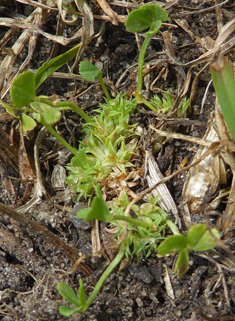
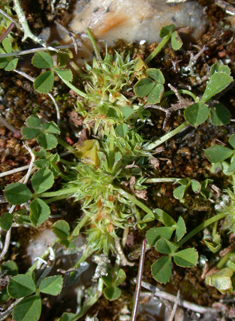
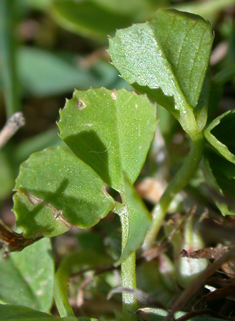
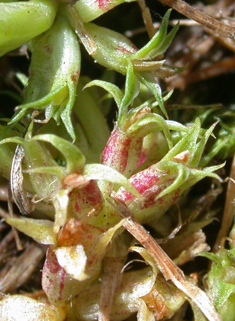
Native. A plant of open ground on sandy soils. Widespread but rather local. Flowers April to August. A tiny, prostrate species that forms a tight rosette of calyxes, surrounded by a ring of long-stalked leaves. The flowers are dull white, the petals shorter than the surrounding calyx and difficult to spot. The red-tinged calyxes form a prickly-looking knot at the centre of the plant with their strongly reflexed and overlapping lobes.
 |
 |
 |
 |
| |
|
|
|
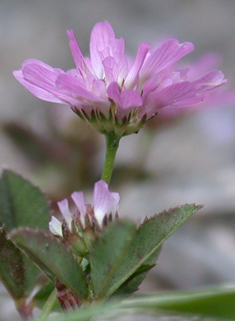
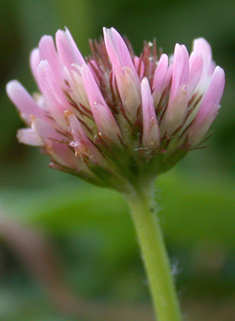
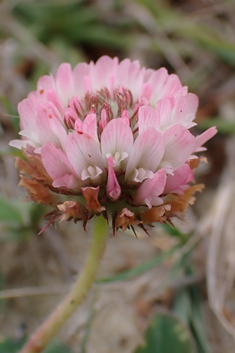
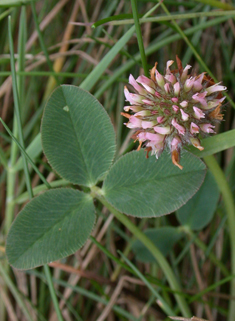
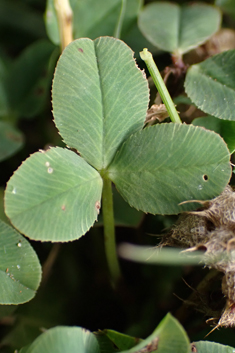
Strawberry Clover Trifolium fragiferum
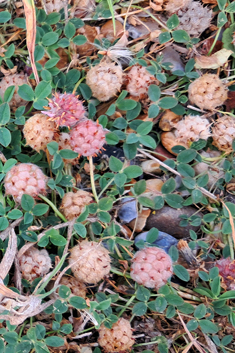
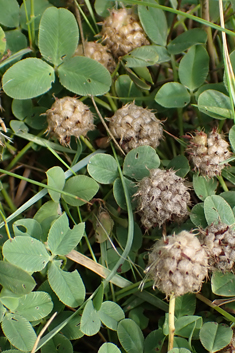
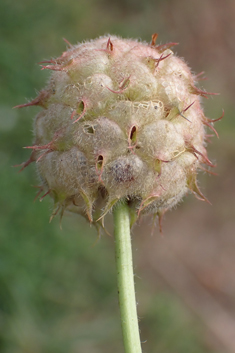
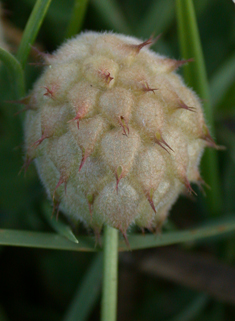
Native. There are old records for Tresco and St Martin's but the species has not been seen recently. Typically a plant of damp ground, even tolerant of slightly salty ground. Flowers July to September. A low, creeping species with rooting leafnodes like White Clover. Flowers pale pink and usually in somewhat smaller heads than those of Red Clover. Most distinctive after flowering, when the seedheads swell to form rounded structures that rather resemble small strawberries.
 |
 |
 |
 |
| |
|
|
|
 |
 |
 |
 |
| |
|
|
|
Reversed Clover Trifolium resupinatum
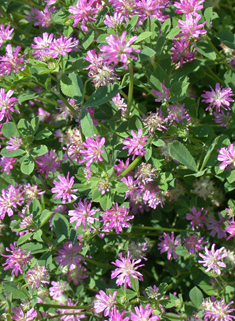
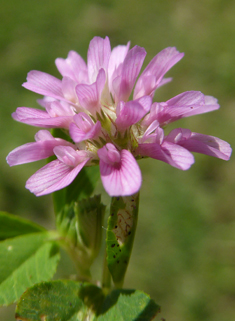
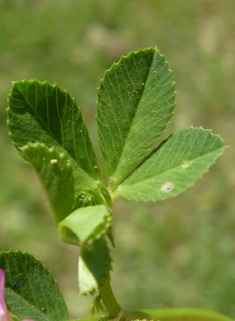
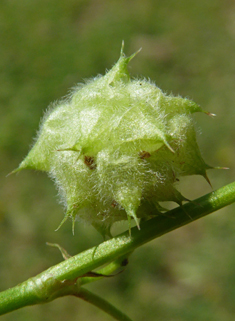
Introduced from mainland Europe. Occasionally turns up in newly seeded grass areas where at least some of the seed source has been from overseas, but seldom seems to persist more than a few years. Has been recorded recently from Tresco and St Martin's. Flowers June to September. A very distinctive clover due to the flowerheads which consist of flowers that are each rotated 180 degrees on their axis so that they are, in effect, upside down. This has the result of each flower curving outwards and away from the flowerhead, creating a more open, flat-topped appearance to the flower cluster.
 |
 |
 |
 |
| |
|
|
|
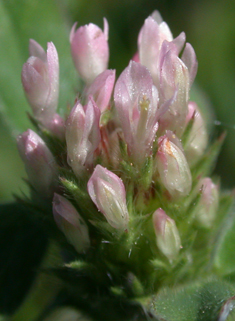
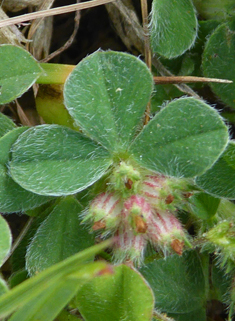
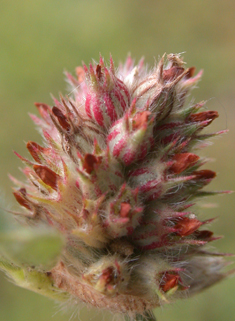
Knotted Clover Trifolium striatum
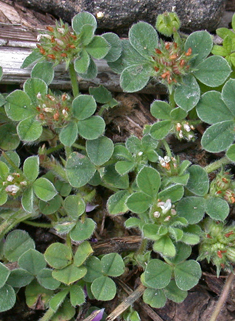
Native. A plant of open, sandy areas, recorded from the inhabited islands but very local. Flowers May to July. A tiny, prostrate species (occasionally taller amongst grass stems) with softly hairy stems and leaves. Flowers pink, in rather narrow heads. After flowering, the main body of the calyxes swell to form a cluster of small barrel shapes, all with prominent, red ribs.
 |
 |
 |
 |
| |
|
|
|
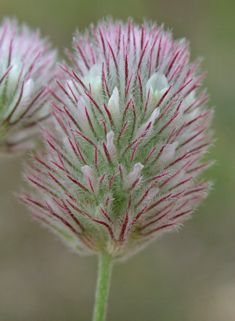
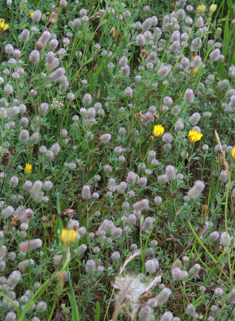
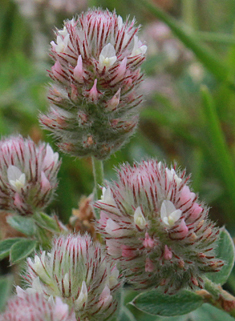
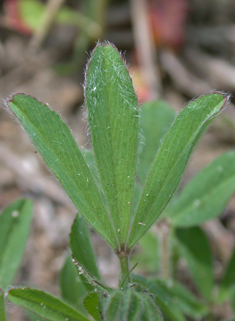
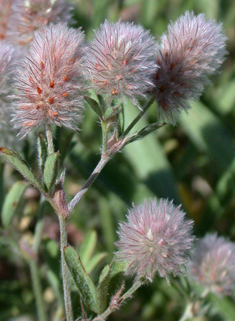
Hare's-foot Clover Trifolium arvense
Native. An annual species which can be frequent on recently disturbed ground. Flowers June to September. A small, finely downy, much-branched species with distinctly hairy flowerheads and narrow leaflets. Flowers are pink in bud, opening white.
 |
 |
 |
 |
| |
|
|
|
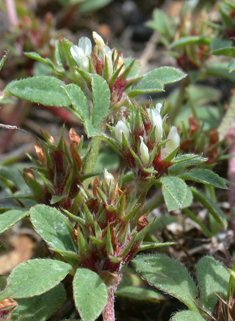
Rough Clover Trifolium scabrum
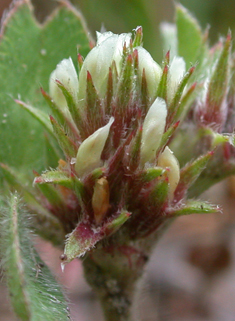
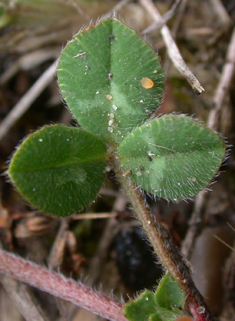
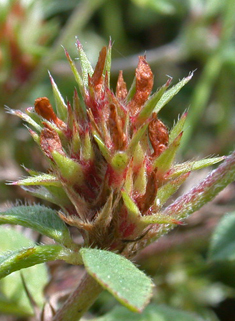
Native. Generally uncommon on sandy soils, on St Mary's, Tresco and St Martin's. Flowers May to July. A tiny, softly downy clover, to 20cm in height but typically much less. Flowers white, narrow and often rather lost among the stiff, spike-like calyx lobes. After flowering, the calyx lobes remain stiff and erect, giving a rather spiny look to the seedheads. A distinctive feature of this species are the veins in the leaflets, which thicken and curve backwards as they reach the leaf margins.
 |
 |
 |
 |
| |
|
|
|
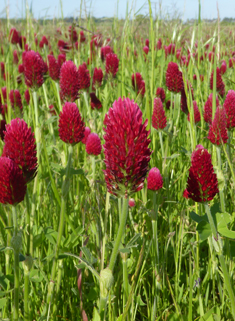
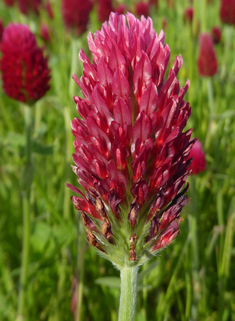
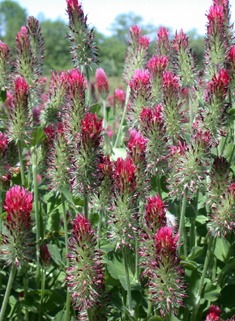
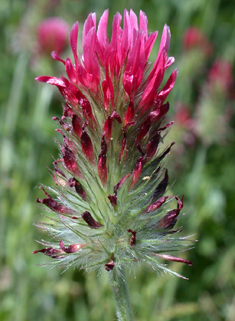
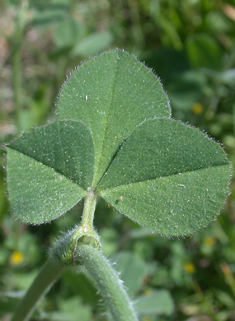
Crimson Clover Trifolium incarnatum subsp. incarnatum
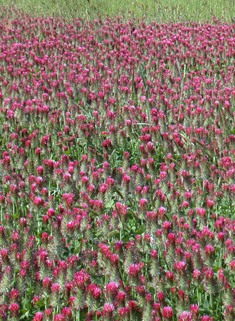
Introduced from mainland Europe. Introduced in farm seed mixes and occasionally persisting for a while where seed is spilt. Flowers May to September. An upright, hairy species to around 50cm in height with broad, overlapping leaflets. The flowers are rich crimson red and the flowerheads elongate as they ripen and mature.
 |
 |
 |
| |
|
|
 |
 |
 |
| |
|
|
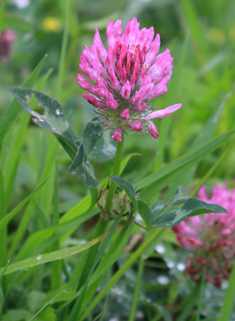
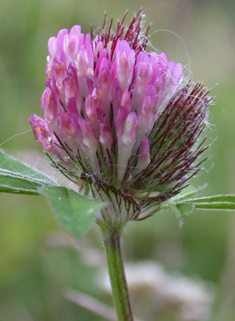
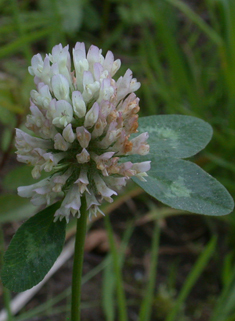
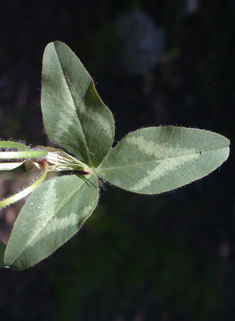
Red Clover Trifolium pratense
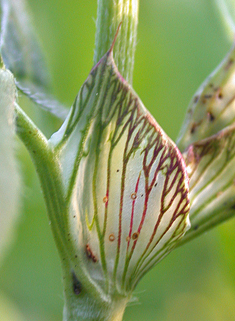
Native. Common on some of the inhabited islands but less so on Tresco and St Martin's. Flowers May to October or later. A very variable species but typically rather upright, not with creeping stems. Leaflets rather narrow and elongate, usually with a clear, pale mark. Leaf stipules rather broad and membranous, terminating in a fine, bristle-like tip. Typically, a leaf and its broad stipules will be found immediately beneath the flowerhead. Occasional plants with white flowers may appear, but these can be identified correctly by the leaf and stipule detail.
 |
 |
 |
 |
| |
|
|
|
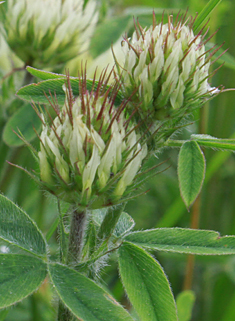
Zigzag Clover Trifolium medium
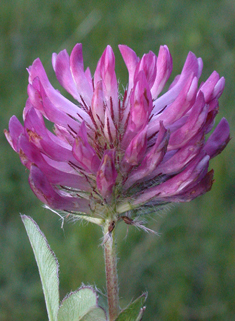
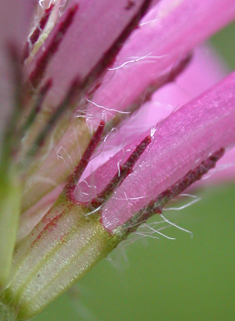
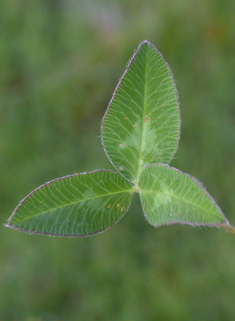
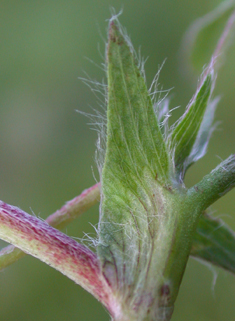
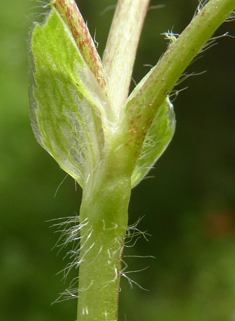
Native. Much less common than Red Clover and typically found on heavier soils in damp places. Most frequently reported from Bryher. Flowers May to September. Very like Red Clover, but leaf stipules very narrow, green (not membranous) and tapering evenly from the base to the tip. The flowerhead has a clear section of stem beneath it before the appearance of the uppermost leaf.
 |
 |
 |
 |
| |
|
|
|
Bird's-foot Clover Trifolium ornithopodioides
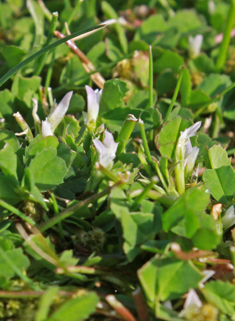
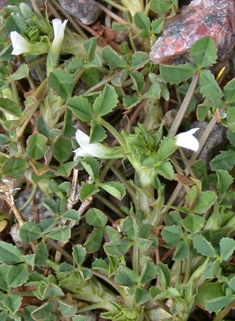
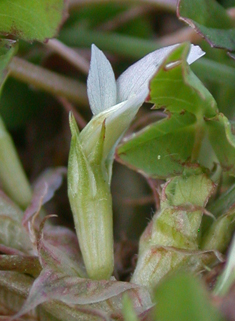
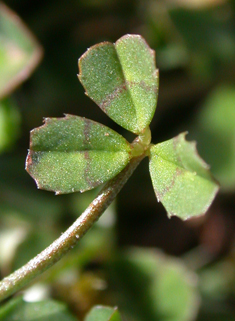
Native. An annual of sandy places near the coast. Flowers May to September. An annual, prostrate species. Flowers very pale pink (often appearing white in photos due to overexposure!), solitary or in small clusters of 2-4. Leaves and stems hairless.
 |
 |
 |
 |
| |
|
|
|
Subterranean Clover Trifolium subterraneum
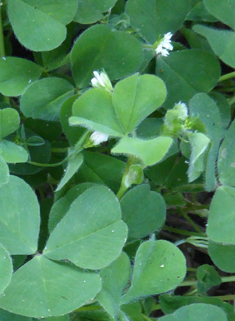
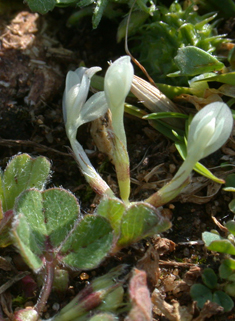
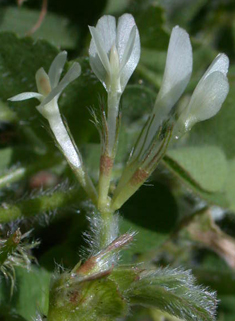
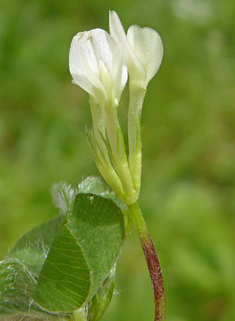
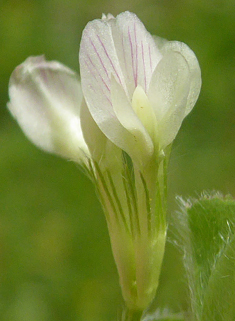
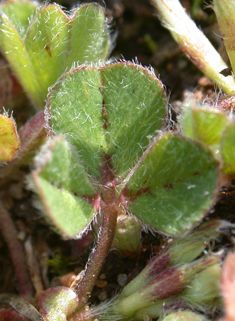
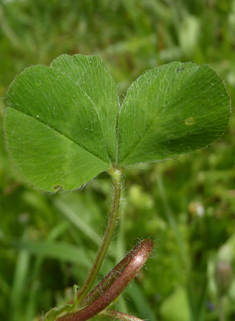
Native. Quite frequent in grassy places on the inhabited islands and Samson. Flowers June to September. A downy annual that is tiny and easily missed due to its unassuming appearance. The plant produces flowerheads that include a mix of two to five, fertile flowers with creamy white petals and non-fertile flowers that have no petals. The plant has the peculiar habit of burying its ripening seedheads into the ground as they mature.
 |
 |
 |
 |
| |
|
|
|
 |
 |
 |
 |
| |
|
|
|