Bulbfield Lilies
What are they?
This page includes a number of plant species that have been grown commercially (either currently or in the past) and persist as more-or-less self sustaining populations on field margins, roadsides and other uncultivated patches of land. Though these plants are often called lilies, most of them are, in fact, in other plant families and not true lilies at all.
Iris Family - Iridaceae
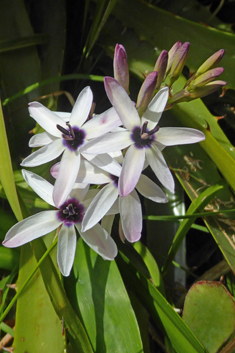
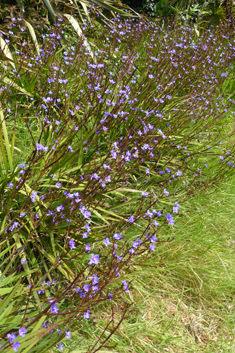
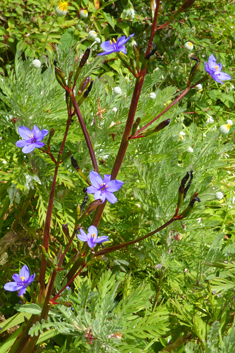
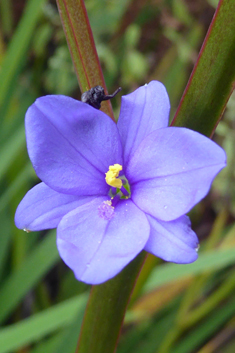
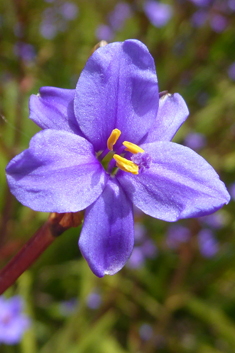
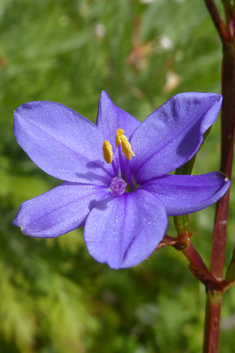
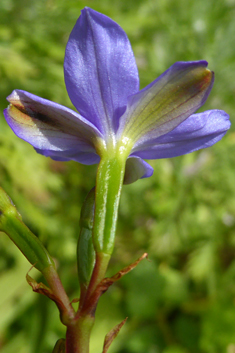
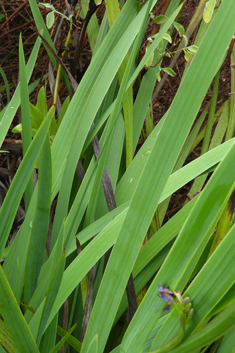
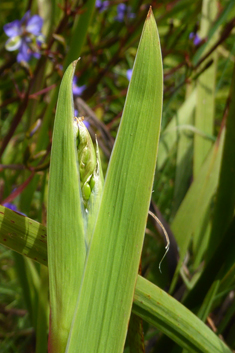
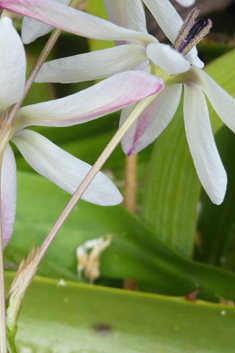
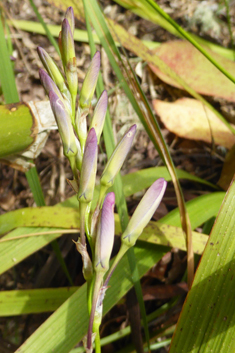
Blue Corn-lily Aristea eckloniiNative to tropical and subtropical Africa. Well established in the southern half of Tresco and a few records from St Mary's. Flowers May to July.
 |
 |
 |
 |
| |
|
|
|
 |
 |
 |
 |
| |
|
|
|
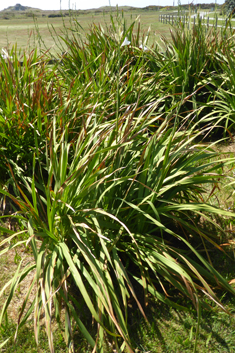
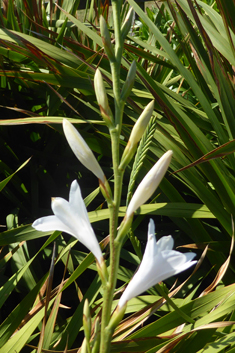
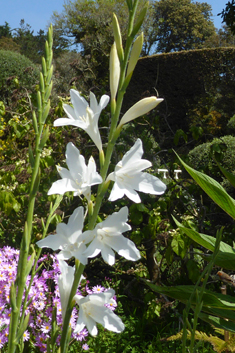
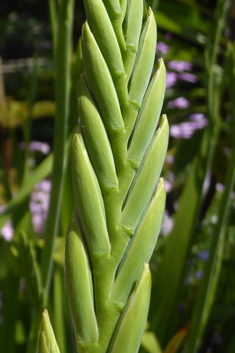
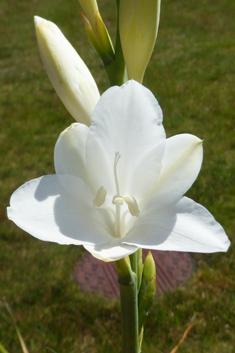
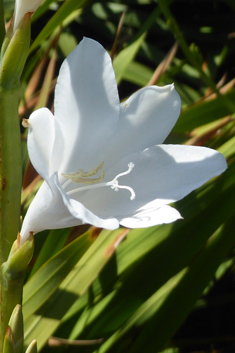
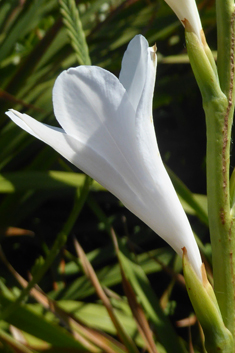
Cape Bugle-lily Watsonia borbonica
Native to South Africa. Well established in dune habitats in the southern half of Tresco and a few records from St Mary's. Flowers May to June. Flowers pink, but note that plants established on Tresco are of a white flowered form.
 |
 |
 |
 |
| |
|
|
|
 |
 |
 |
|
| |
|
|
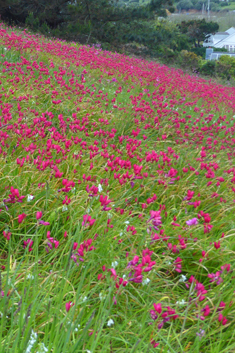
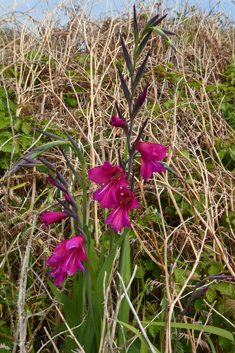
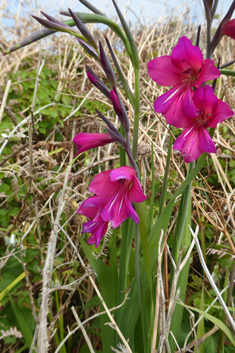
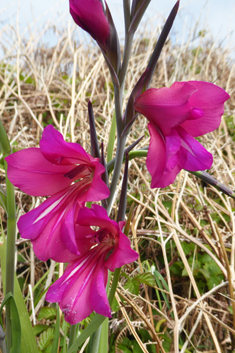
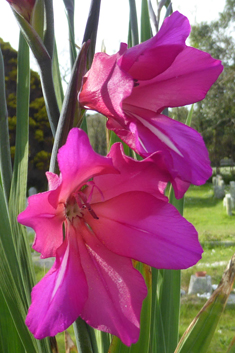
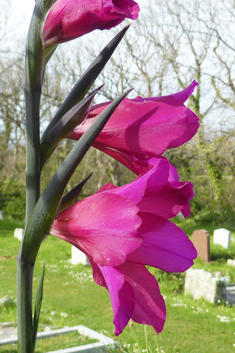
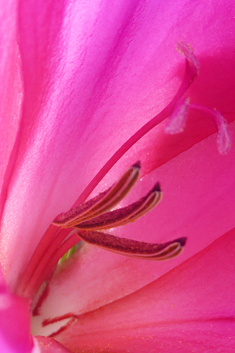
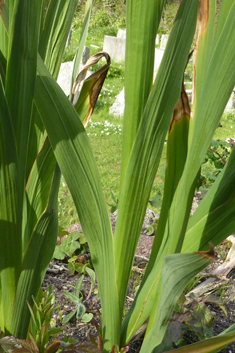
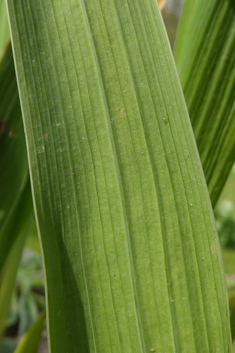
Whistling Jacks Gladiolus x byzantinus
A hybrid between two Mediterranean species which occurs naturally in southern Europe but may also have arisen in cultivation. Well established throughout the inhabited islands and a feature of the Scillonian landscape when in flower. Flowers May to July.
The taxonomy and nomenclature of this plant has changed over time. Formerly considered to be the subspecies byzantinus of Gladiolus communis, this is now considered to be a hybrid between G. dubius and G. italicus. As such, it also needs a new English name, since 'Eastern Gladiolus' is not relevant to its distribution (and is, in any case, equally not so for Gladiolus communis, which is not 'eastern' in its distribution is any way!). As such, the traditional Scillonian name of Whistling Jacks is used here, since it is a unique name that has long been used for this taxon.
 |
 |
 |
 |
| |
|
|
|
 |
 |
 |
 |
| |
|
|
|
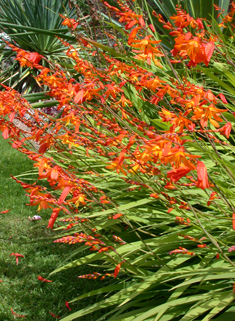
Montbretia Crocosmia x crocosmiiflora
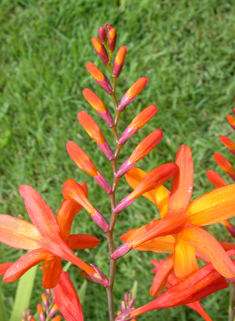
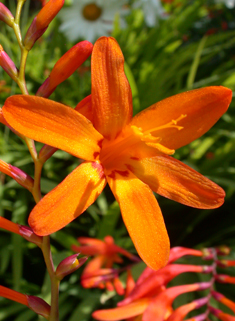
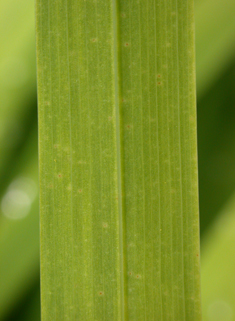
A hybrid of garden origin. Common on banks and hedge bottoms throughout most of the inhabited islands, though apparently rare on Bryher. Highly invasive in Cornwall but seemingly less so on the Isles of Scilly. Flowers September to early November. Flowers brilliant orange, arranged in a two-sided spike. Produces large clumps of leaves, which are bilaterally flattened and sword-like.
 |
 |
 |
 |
| |
|
|
|
Bicoloured Cobra-lily Chasmanthe bicolor
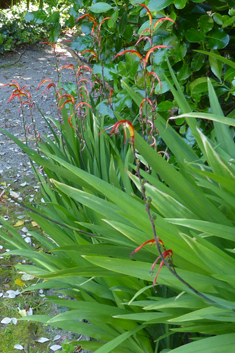
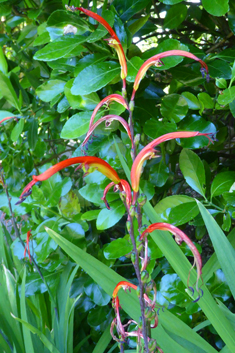
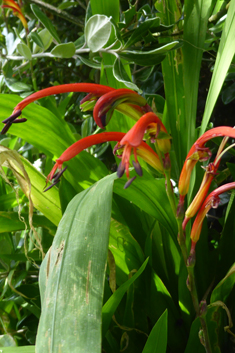
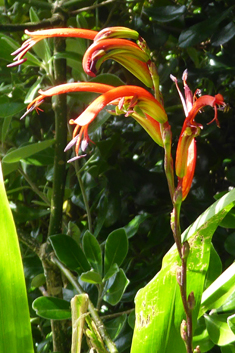
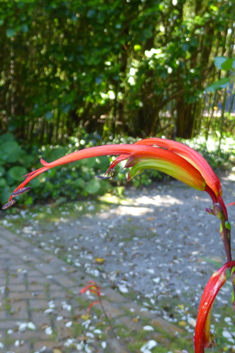
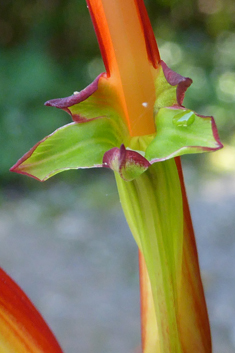
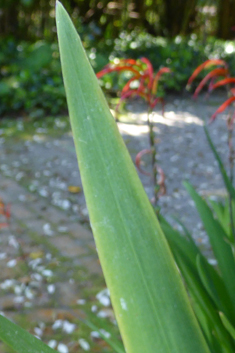
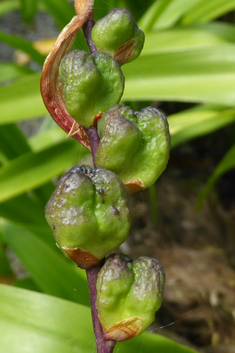
Native to South Africa. Frequent along roadsides and hedge bottoms on St Mary's and small populations on the other inhabited islands except Bryher. Flowers April to June. Flowers brilliant orange, very slender and arched, like a cobra's head. Stamens protrude beyond the tip of the long, upper petal. Leaves are bilaterally flattened and sword-like.
 |
 |
 |
 |
| |
|
|
|
 |
 |
 |
 |
| |
|
|
|
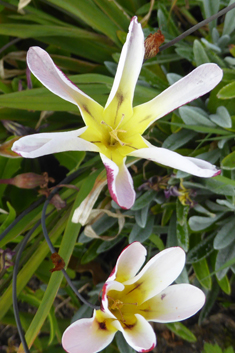
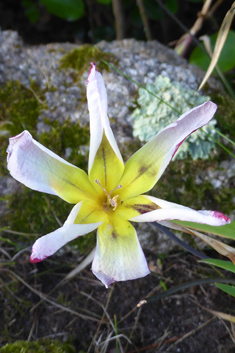
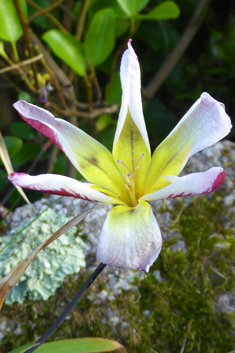
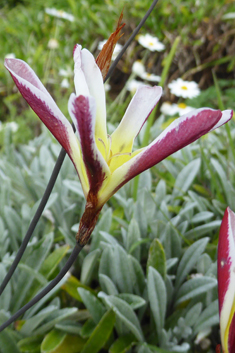
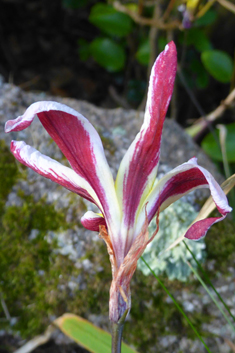
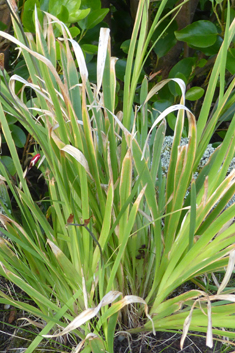
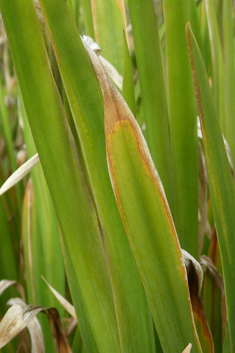
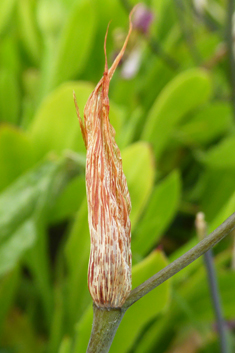
Plain Harlequinflower Sparaxis grandiflora
Native to South Africa. Flowers April to May. Flowers in various combinations of white, yellow and purple according to subspecies and/or crossing of the subspecies.
Note: The Sparaxis and Ixia species have been misidentified and confused with each other in the past, so an attempt has been made here to clarify their identification, but the occurence of records currently remains unknown until previous records are re-assessed.
 |
 |
 |
 |
| |
|
|
|
 |
 |
 |
 |
| |
|
|
|
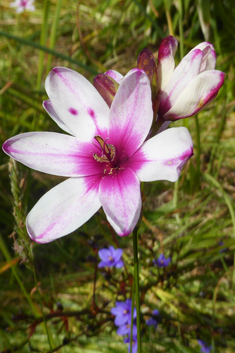
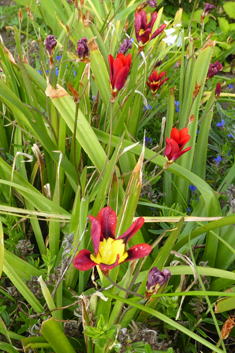
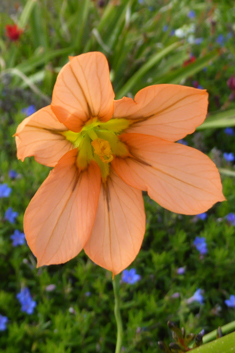
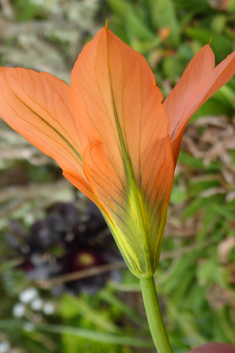
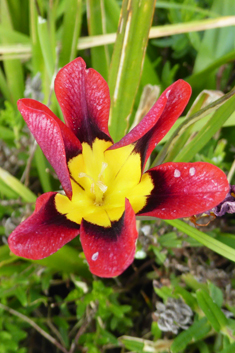
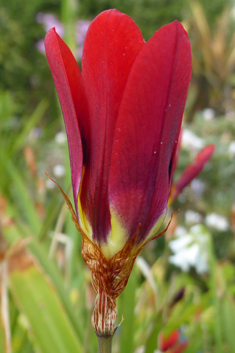
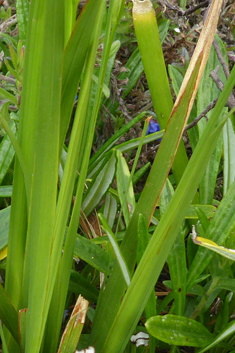
Tricolor Harlequinflower Sparaxis tricolor
Native to South Africa. Flowers April to May. Flowers white, pink or in a wide range of orange or red shades, typically with a yellow centre that is bordered with dark reddish-purple.
Note: See note under Plain Harlequinflower above.
 |
 |
 |
| |
|
|
 |
 |
 |
| |
|
|
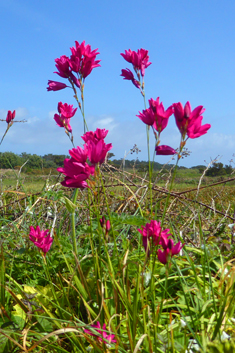
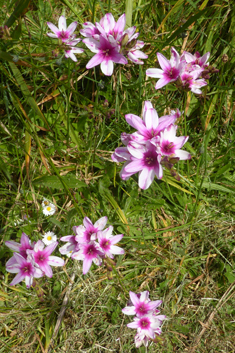
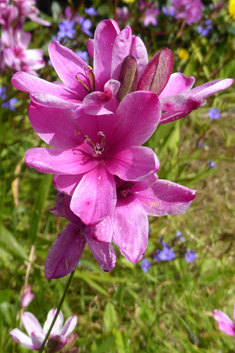
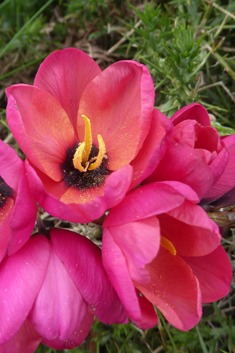
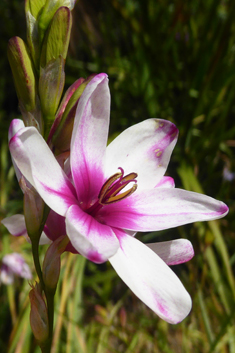
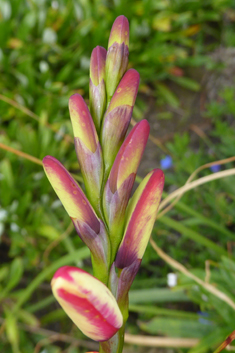
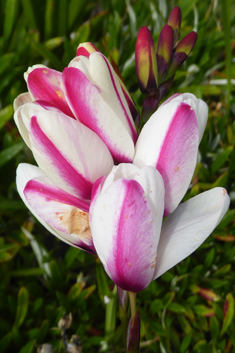
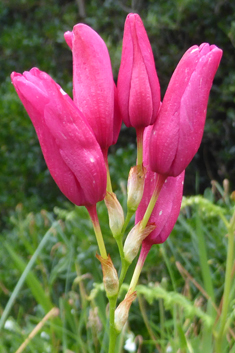
Red Corn-lily Ixia campanulata
Native to South Africa. Flowers April to May. Flowers red or pink, often also mixed with white. Clusters of 2-9 flowers carried on flexuous stems. Perianth tube shorter than the petal segments.
Note: See note under Plain Harlequinflower above.
 |
 |
 |
 |
| |
|
|
|
 |
 |
 |
 |
| |
|
|
|
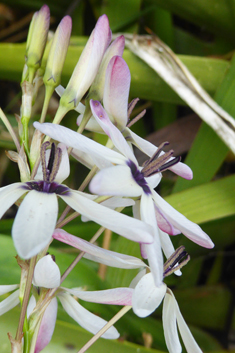
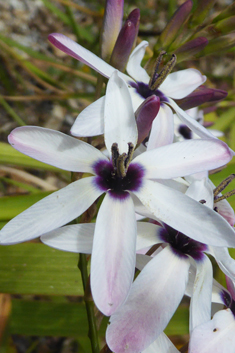
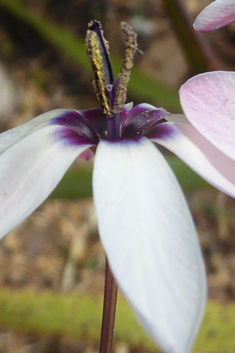
Tubular Corn-lily Ixia paniculata
Native to South Africa. Flowers April to May. Flowers white or cream, typically with a dark blotch at the mouth of the perianth tube. Clusters of 5-18 flowers carried on flexuous stems. Perianth tube much longer than the petal segments.
Note: See note under Plain Harlequinflower above.
| |
 |
 |
 |
| |
|
|
|
 |
 |
||
| |
|
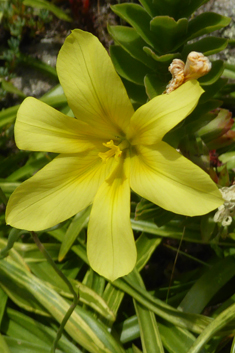
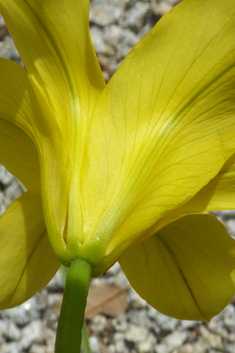
Cape-tulip Moraea collina
(Homeria collina) Native to South Africa. Flowers April to May. A small handful of records of garden escapes from Tresco, St Mary's and St Martin's.
| |
 |
| |
|
Peruvian Lily Family - Alstroemeriaceae
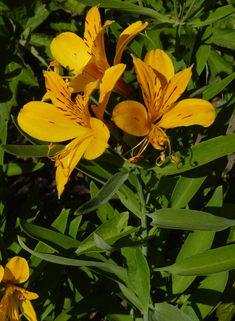
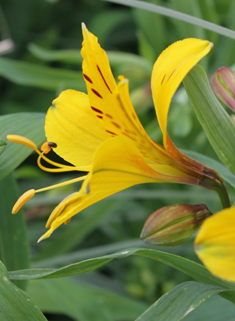
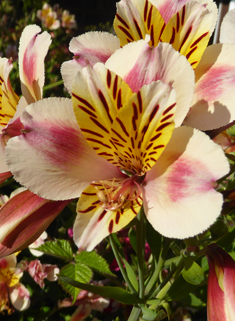
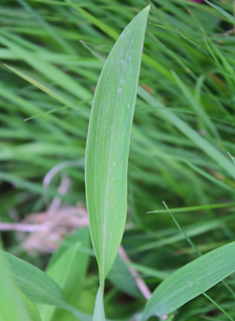
Golden Peruvian Lily Alstroemeria aureaIntroduced from Chile and grown commercially for the cut flower trade. Flowers June to August or later in mild weather. The flowers may be yellow, orange, pink or white and often with dark streaks on the upper tepal. Leaves simple, narrowed at the base and often twisted. Forms small colonies from spreading root systems.
Note: Many plants that are grown commercially are actually hybrid forms and not the true Alstroemeria aurea. Such plants do not appear to have been recorded as escaping cultivation so far on the Isles of Scilly but may do so in the future. They typically have larger flowers, often with broader petals and come in a wider range of colours, especially reds and pinks.
 |
 |
 |
 |
| |
|
|
|
Lily Family - Liliaceae
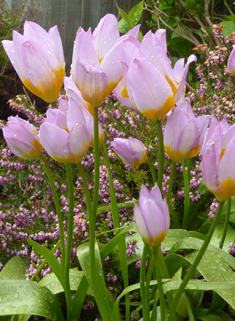
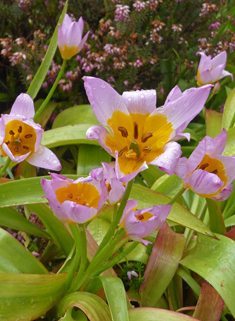
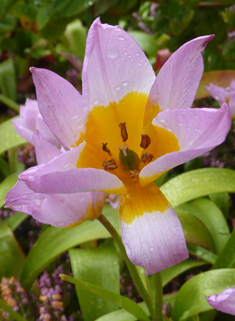
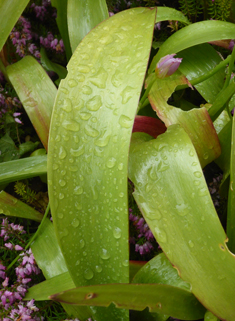
Cretan Tulip Tulipa saxatilisIntroduced as a garden plant from Crete. Recorded from Tresco in 1996 but not reported since. Flowers April to May. Grows to 15-45cm in height with narrow, light-green leaves. Flowers pink with a yellow centre and narrow tepals.
 |
 |
 |
 |
| |
|
|
|