Buglosses, Comfreys and Allies
What are they?
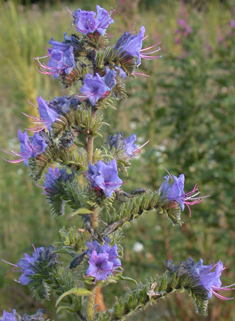
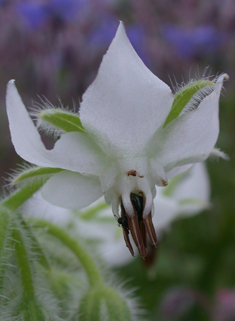
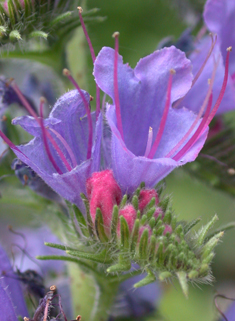
These plants are members of the borage family (Boraginaceae) and, though a little variable in appearance, their common feature is the cluster of rather long stamens that often projects beyond the length of the petals from the centre of the flower. The borage family contains a large number of familiar species that are grown as garden oramentals, as well as plants grown traditionally for herbal or medicinal use. They have flowers with five petals that are fused into a tube at the base but which are free at the mouth of the flower and the stems are often rather bristly with stiff hairs.
Where are they found?
Most of the plants here are likely to be found as garden escapes or throw-outs in grassy places and on rough ground. Borage is still occasionally grown as a crop, from where odd plants may self seed the following year along field edges.
Identification
Most of the species are fairly straightforward to identify based on their flowers and leaf shape. Some of the Viper's-bugloss species are rather similar and attention should be paid to the flower structure, especially the stamens.
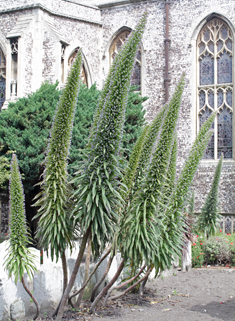
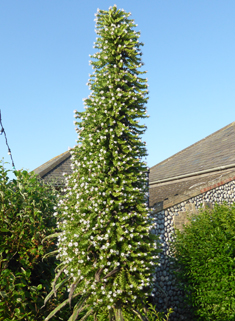
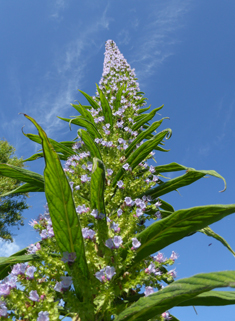
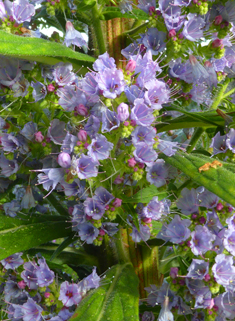
La Palma Giant Viper's-bugloss Echium pininana
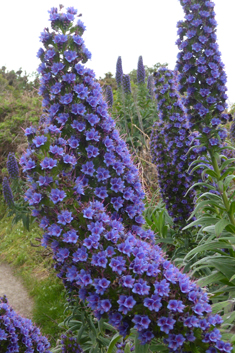
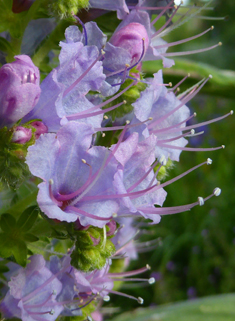
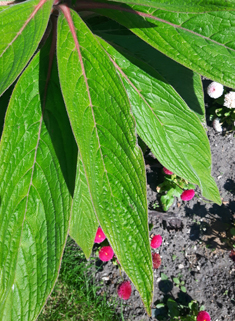
Introduced as a garden ornamental from La Palma, Canary Islands. More recently has spread beyond gardens through self-seeding and survives well due to milder winters. Increasingly found in urban and suburban environments. Flowers May to June. Begins with a rosette of large, stiffly bristly leaves, the stem gradually hardening and eventually reaching up to five metres in height when in flower. Flower pink in bud opening pale blue and fading to whitish.
 |
 |
 |
 |
| |
|
|
|
 |
 |
 |
|
| |
|
|
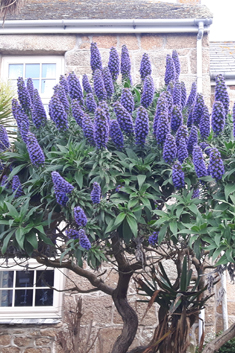
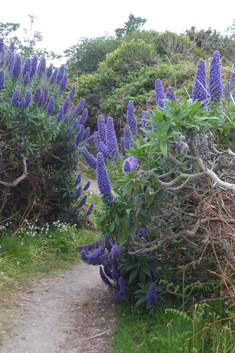
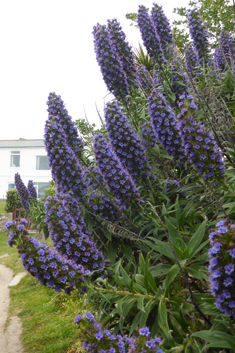
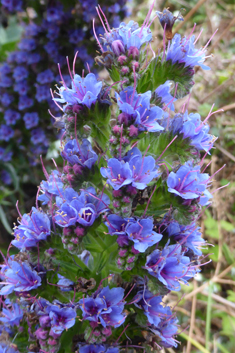
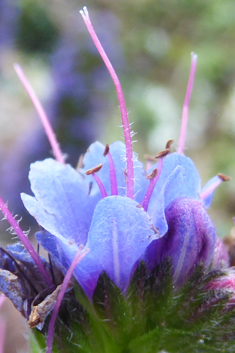
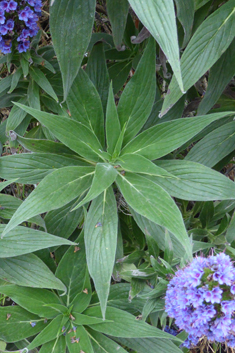
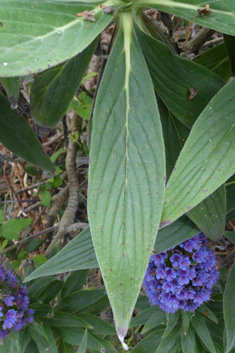
Pride-of-Madeira Echium candicans
Introduced as a garden ornamental from Madeira. A shrubby, spreading species with leaves to 25cm in length and flowers rich blue (white forms may be cultivated).
 |
 |
 |
|
| |
|
|
|
 |
 |
 |
 |
| |
|
|
|
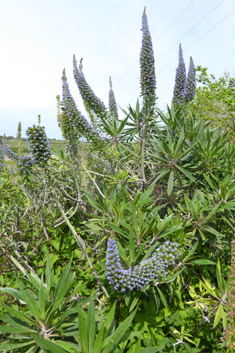
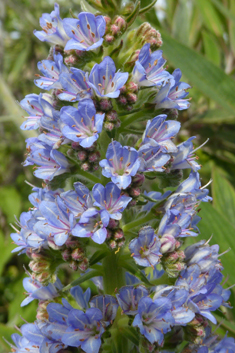
Webb's Viper's-bugloss Echium webbii
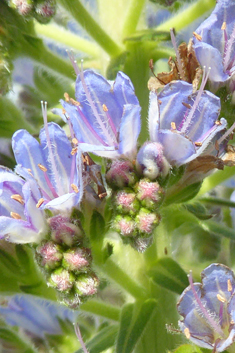
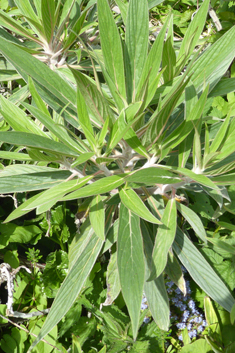
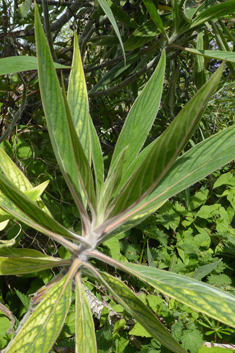
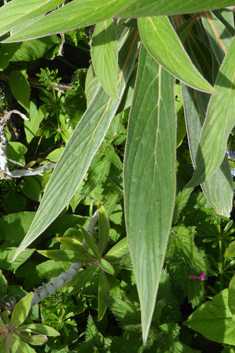
Introduced as a garden ornamental from La Palma, Canary Islands. Flowers May to June. Overall smaller than La Palma Giant Viper's-bugloss or Pride-of-Madeira, to 1.5m in height and with leaves to 12cm in length. Flower spikes pale blue. Some named, cultivated varieties may vary in flower colour and be taller in growth.
 |
 |
 |
| |
|
|
 |
 |
 |
| |
|
|
Scillonian Viper's-bugloss Echium x scilloniensis
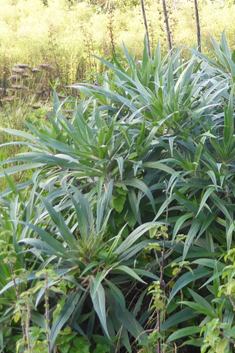
(Echium pininana x E. webbii) An artifical hybrid, raised at Tresco Abbey Gardens. Flowers May to June. Intermediate between the parents, being lower and bushy like Webb's Viper's-bugloss but with taller, longer flower spikes. There appears to be no readily available information on how to identify this hybrid from its parents.
 |
| |
Common Viper's-bugloss Echium vulgare
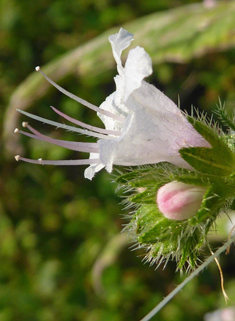
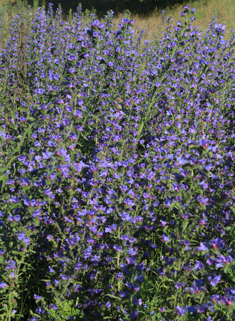
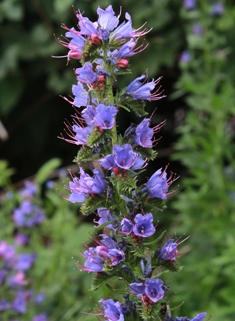
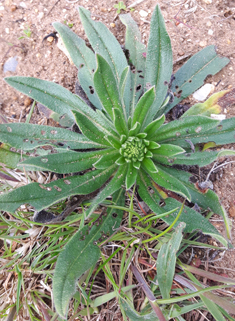
Native on dry, sandy soils in coastal areas but rare with most records from Gugh. Flowers June to September. Forms bristly leaf rosettes in the first year. In the second year, flower spikes grow to nearly a metre in height, covered in blue flowers that open from red buds. Outside of flowers uniformly hairy, not just on the margins and veins; usually 3-5 stamens extending beyond the petal mouth. Occasionally plants may be pink or white.
 |
 |
|
 |
| |
|
|
|
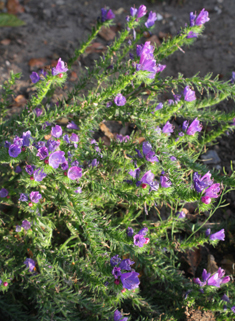
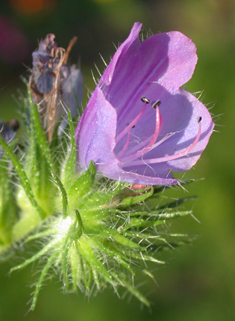
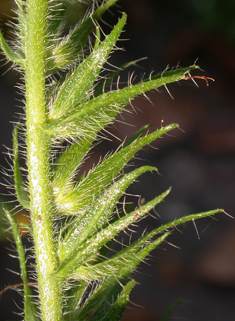
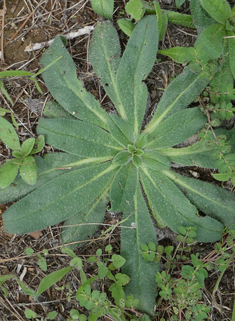
Purple Viper's-bugloss Echium plantagineum
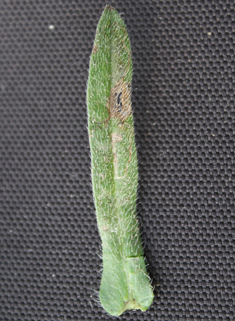
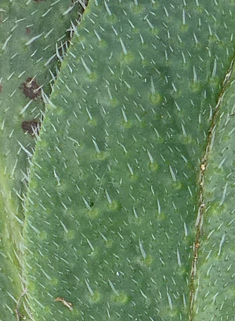
Introduced and occasionally recorded on St Mary's, St Martins and Tresco but not fully established. Flowers May to August. Outside of flowers hairy only on the margins and veins; usually only 2 stamens extending beyond the petal mouth. Very similar to Common Viper's-bugloss and best told apart by the flower detail, but also usually lower and more branched with smaller leaves.
 |
 |
 |
 |
| |
|
|
|
 |
 |
||
| |
|
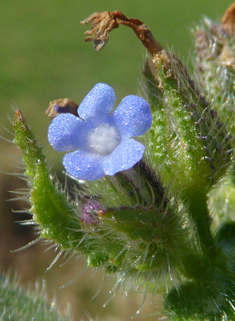
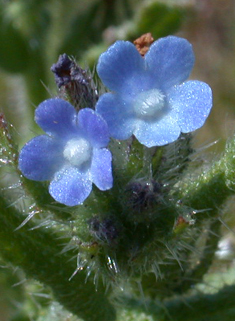
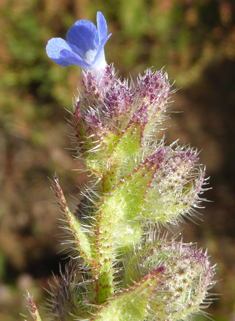
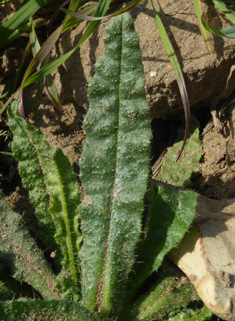
Field Bugloss Lycopsis arvensis
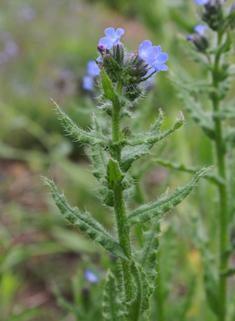
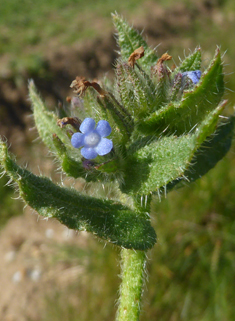
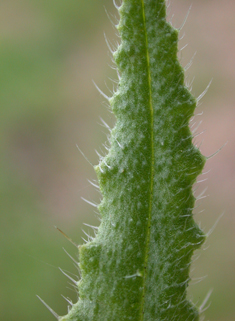
Introduced and now widespread on lighter, sandier soils in cultivated ground. Flowers mostly May to September. Flowers are small and clustered towards the top of the stems. The whole plant is bristly hairy.
 |
 |
 |
 |
| |
|
|
|
 |
 |
 |
|
| |
|
|
Green Alkanet Pentaglottis sempervirens
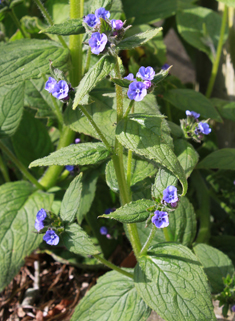
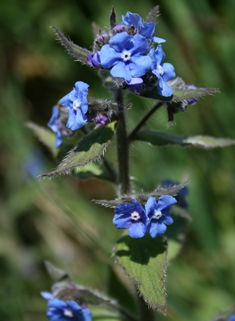
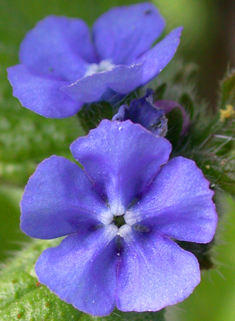
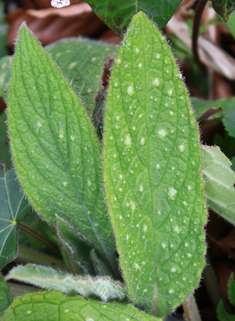
Introduced to the UK from mainland Europe for producing a red dye and perhaps also as a garden ornamental. Rare on the islands and only recorded from Tresco. Flowers April to July. Similar to other members of the family but regularly grows to a metre in height and has roughly bristly leaves and stems, the leaves often bearing whitish spots.
 |
 |
 |
 |
| |
|
|
|
Large Blue Alkanet Anchusa azurea
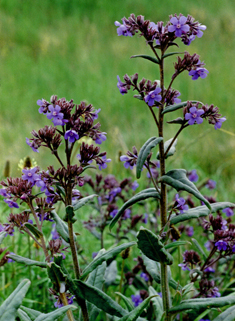
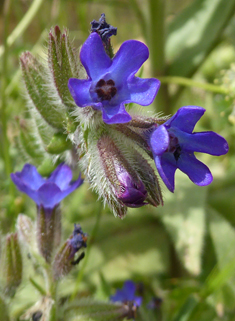
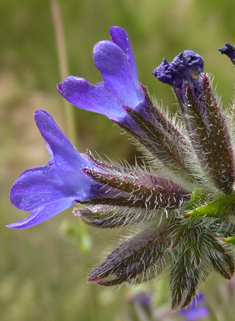
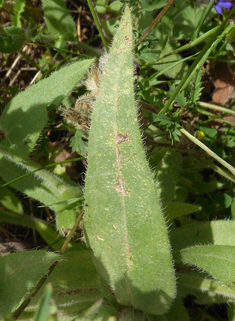
(Azure Alkanet) Introduced from mainland Europe as a garden ornamental and recorded on Tresco in th 1960s. Flowers June to September. An upright plant to 150cm in height but often much less. Flowers deep blue with the calyx tube divided almost to the base. Can be difficult to tell from Common Alkanet without measuring the seeds, which are typically more than 5mm across.
 |
 |
 |
 |
| |
|
|
|
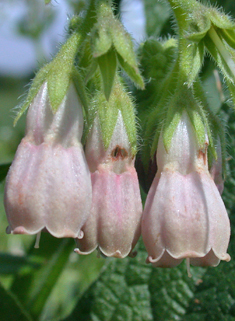
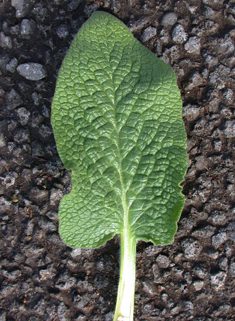
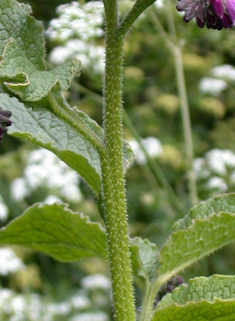
Russian Comfrey Symphytum x uplandicum
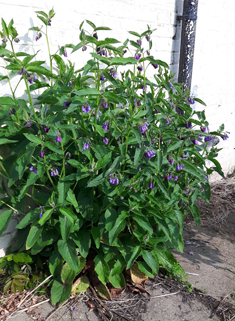
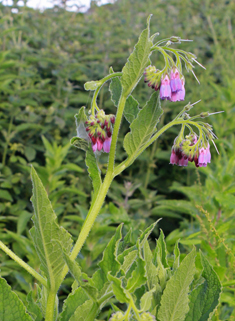
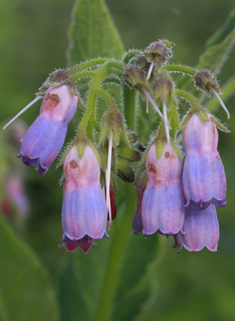
Introduced from mainland Europe. An occasional garden escape on St Mary's and Tresco. Flowers May to July. Our tallest species, growing to 200cm in height with leaves up to 30cm in length. A hybrid between Symphytum asperum and S. officinale and highly variable in flower colour, from pale pink to various shades of blue washed with red to produce mauve tones. Leaves unwinged at the base or with very short wings running into the stem.
 |
 |
 |
 |
| |
|
|
|
 |
 |
||
| |
|
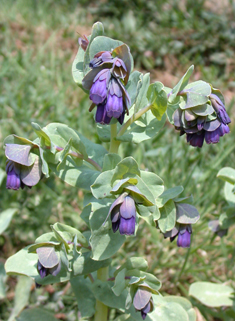
Greater Honeywort Cerinthe major
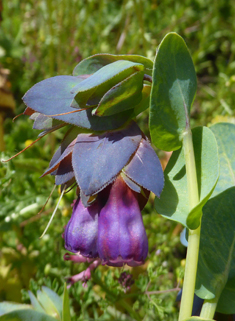
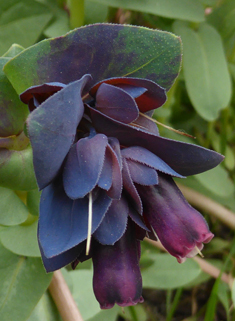
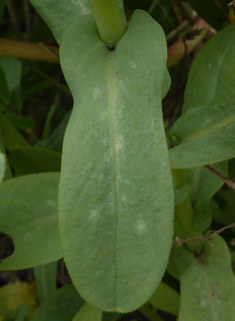
Introduced from mainland Europe. Recorded as a garden escape and recorded from Tresco and Bryher. Flowers April to June. Stems to 60cm in height. Flowers dark purple and similar in shape to those of the comfreys, but partially hidden among purple, leaf-like bracts. Rather similar to the comfreys but an annual plant and completely hairless.
 |
 |
 |
 |
| |
|
|
|
Common Borage Borago officinalis
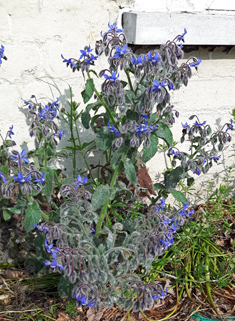
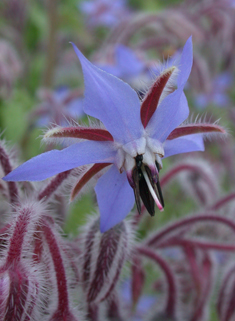
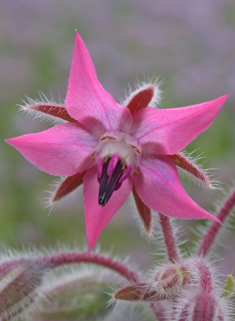
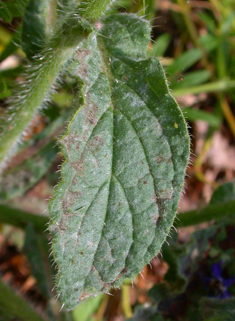
Introduced from southern Europe and now established on the inhabited islands as a garden escape on patches of rough ground and roadsides. Flowers June to August. Easily recognised by its bristly leaves and distinctive flowers like no other species that is likely in the region. Flowers usually blue but occasionally pink or white.
 |
 |
 |
 |
| |
|
|
|
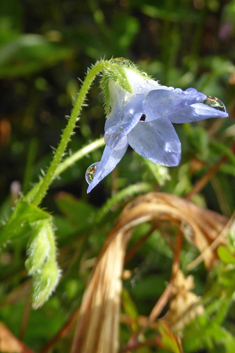
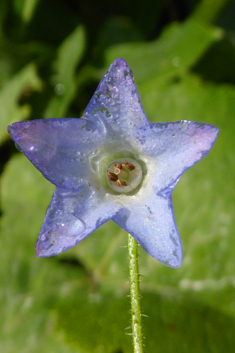
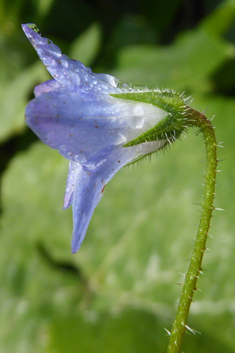
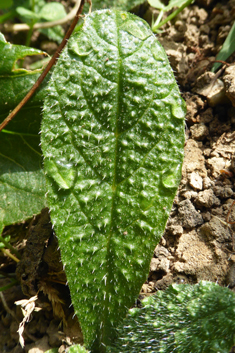
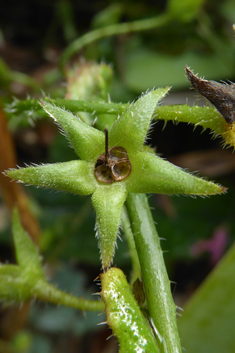
Slender Borage Borago pygmaea
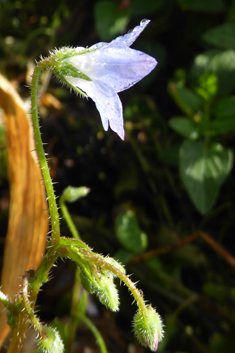
Introduced from the Mediterranean Region and recorded as a garden escape on St Mary's in the 1990s. Flowers June to August. A small, annual species that could be mistaken for a bellflower but for its typically borage-like, bristly leaves and stems.
 |
 |
 |
 |
| |
|
|
|
 |
 |
||
| |
|
Waterleaf Family - Hydrophyllaceae
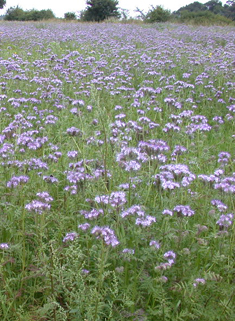
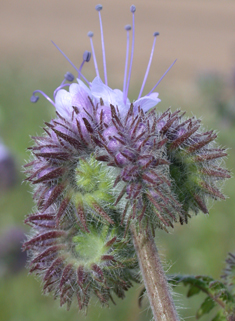
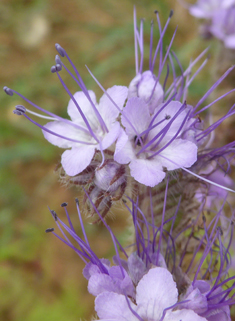
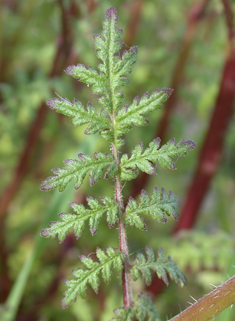
Tansy-leaved Phacelia Phacelia tanacetifoliaIntroduced from North America. Sometimes grown as an agricultural crop and odd plants are occasionally found on roadsides and disturbed ground where seed may have been spilt. Flowers June to September. Brilliant purple-blue flowers in 'scorpion-tail' heads, above finely-cut leaves.
 |
 |
 |
 |
| |
|
|
|