Bindweeds
What are they?
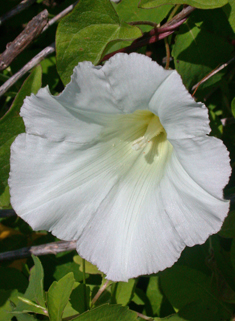
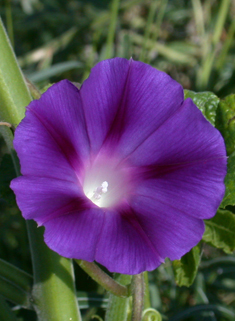
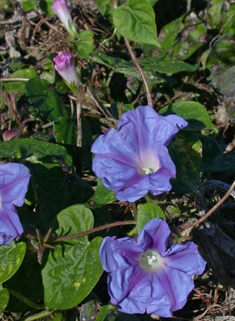
The bindweeds form the bulk of the family Convolvulaceae. They are attractive plants with their showy, bell-shaped flowers, but several species have a reputation for being deep-rooted and very persistent weeds of gardens and agricultural land. The flowers consist of five petals, fused together to form a cone of thin, rather fragile petals. Most plants are climbers with twining stems, or trail across the ground, climbing when they find something to support them.
Where are they found?
Bindweeds are prolific growers and are most frequent on heavier, richer soils. The group is more or less easily divided into a handful of common and widespread species that are found in a wide range of habitats, plus a few species that are garden escapes and likely only to be found on rough ground or roadsides in urban areas.
Identification
A few species can be identified by their distinctive leaves, combined with their typical bindweed flowers. Others are less easy to tell apart and identification requires a look at the details of the flowers and their stems. The flowers have five sepals, but these are generally hidden beneath two, leaf-like bracts that surround the base of the flower. In the larger Calystegia species, the detail of these bracts separates the species, together with the presence or absence of hairs on the flower stalk. Note that all of the white species can also occur in pink, so flower colour alone should not be used for identification.
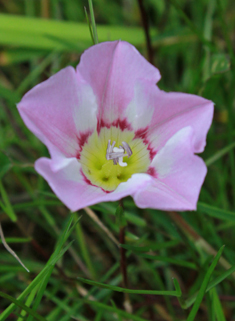
Field Bindweed Convolvulus arvensis
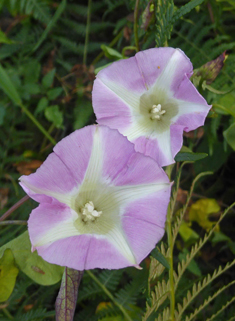
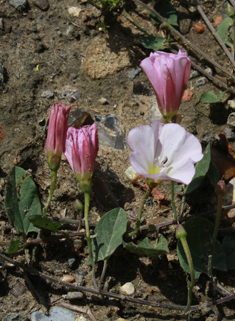
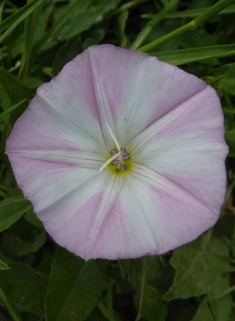
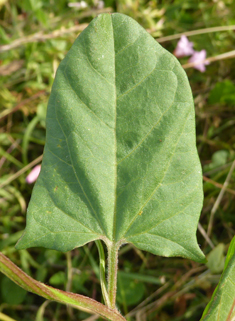
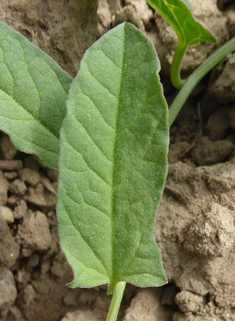
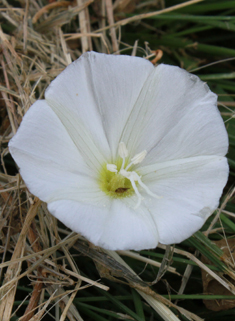
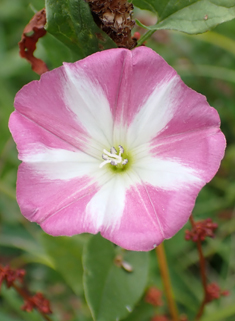
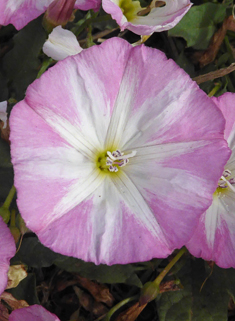
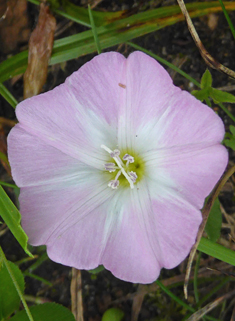
Native. A widespread and common plant on the inhabited islands. Flowers mostly June to August but sometimes also outside of this period. Smaller than the Calystegia bindweeds and more likely to be creeping on open ground rather than climbing. Ten different colour forms of the flowers have been described, based on the amount of pink or white and the presence or absence of purple spots at the centre (three are illustrated here).
 |
 |
 |
 |
| |
|
|
|
 |
 |
 |
 |
| |
|
|
|
 |
|||
| |
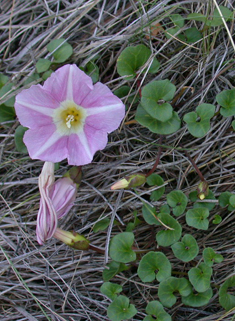
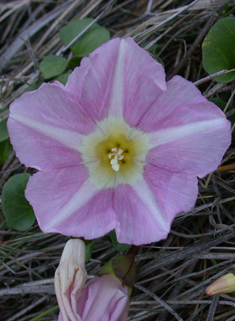
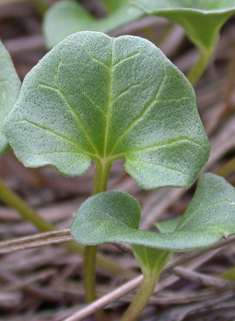
Sea Bindweed Calystegia soldanella
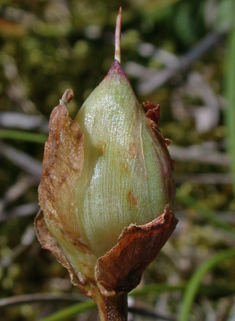
Native and widespread in coastal sand dunes. Flowers June to August. Trails along the ground, often through Marram-grass clumps. Flowers rich, deep pink. Leaves kidney-shaped and slightly fleshy or succulent.
 |
 |
 |
 |
| |
|
|
|
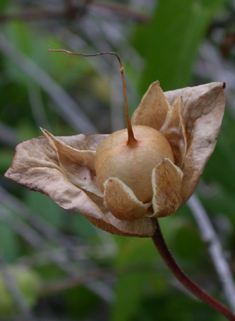
Hedge Bindweed Calystegia sepium
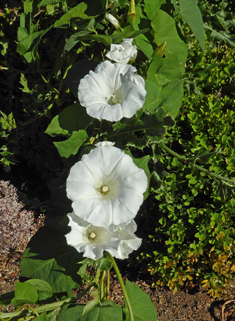
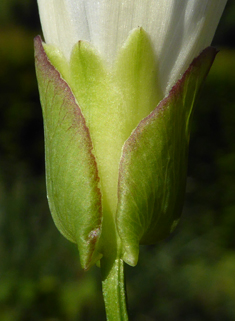
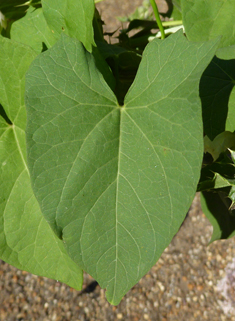
Native. Widespread on the inhabited islands. Flowers mostly late July to September. Best told from Large Bindweed by the flower bracts, which are smaller, leaving a gap that clearly reveals the sepals beneath them. The flower stalk is hairless.
 |
|
|
 |
| |
|
|
|
 |
 |
||
| |
|
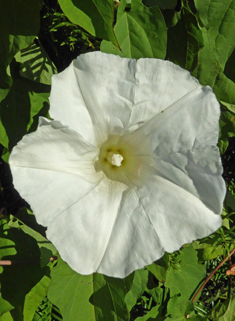
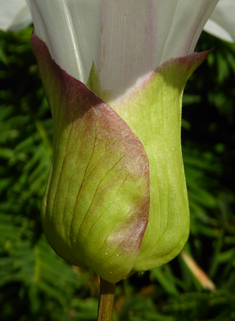
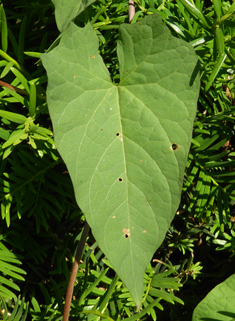
Large Bindweed Calystegia silvatica
Originally introduced as a garden plant but strong-growing and difficult to control. Now widespread on the inhabited islands. Flowers mostly late July to September. Best told from Hedge Bindweed by the flower bracts, which broadly overlap each other, leaving the sepals almost completely hidden beneath them. The flower stalk is hairless.
 |
 |
 |
| |
|
|
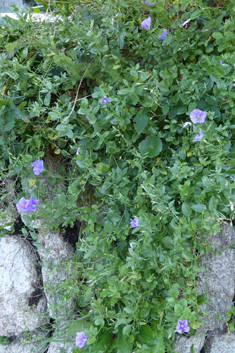
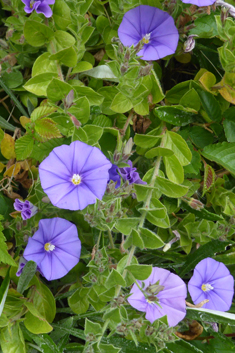
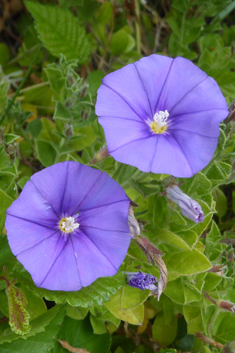
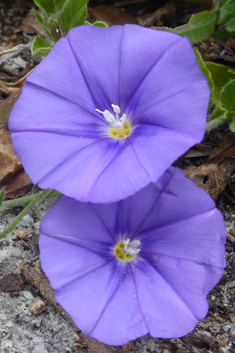
Ground Blue Convolvulus Convolvulus sabatius subsp. Convolvulus mauritanicus
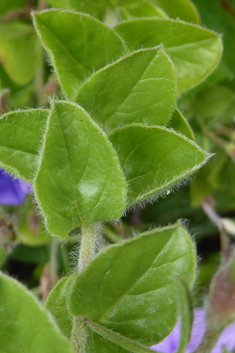
Native to the Mediterranean Region and introduced as a garden ornamental. Flowers mostly May to June. A trailing plant rather than a climber with downy leaves.
 |
 |
 |
 |
| |
|
|
|
 |
|||
| |
Common Morning-glory Ipomoea purpurea
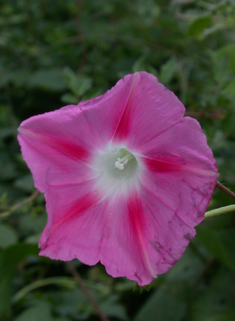
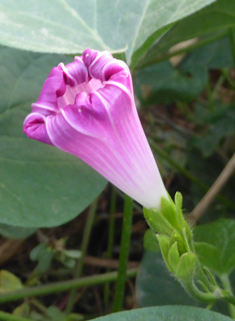
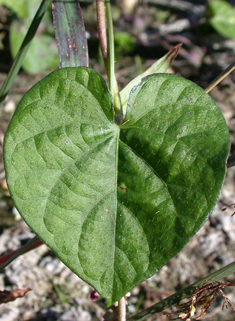
Introduced from the Americas as a garden ornamental and recorded from St Agnes. Flowers July to August. A twining, annual, climber with flowers that open at night, remaining open into the day before closing by mid-morning. Closed flowers with rolled tops are thus more likely to be seen later in the day. Leaves broadly heart-shaped. Flowers deep bluish-purple, white or deep pink.
| |
 |
 |
 |
| |
|
|
|
Common Dodder Cuscuta epithymum
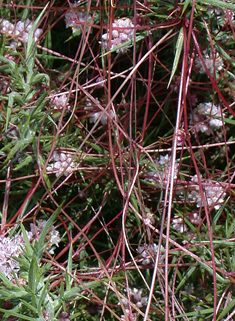
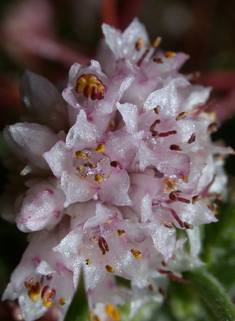
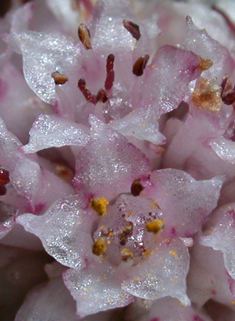
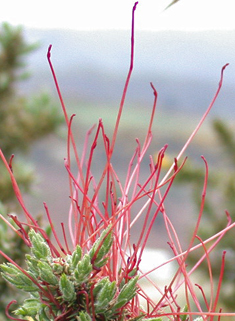
Native. Rare and confined to St Martins. Flowers July to September. Leafless stems reddish; flowers pale pink with a five-lobed corolla, in rounded clusters along the stringy stems.
A leafless, parasitic plant that grows on Gorse.
 |
 |
 |
 |
| |
|
|
|