Water-crowfoots
What are they?
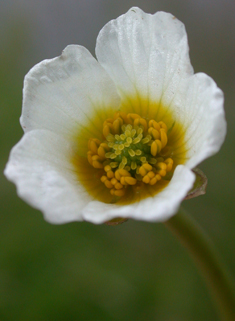
These attractive plants are essentially white-flowered buttercups and are placed in the same genus (Ranunculus) though as a separate subgenus (Batracium) of that large group of plants. They share many of the characteristics of buttercups, including five petals and multiple stamens and carpels in the centre of the flowers.
Where are they found?
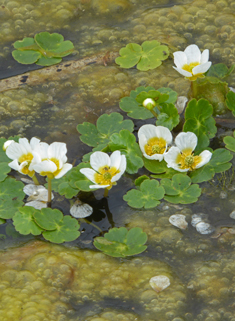
Water-crowfoots are plants of watery or muddy places. They often grow as aquatics in open water but will also thrive on wet, bare mud.
Identification
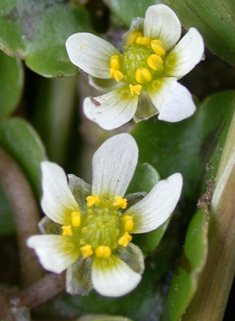
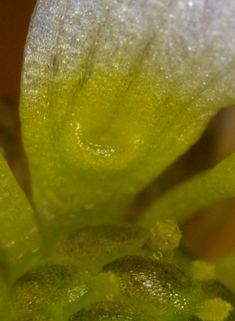
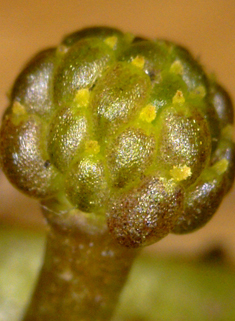
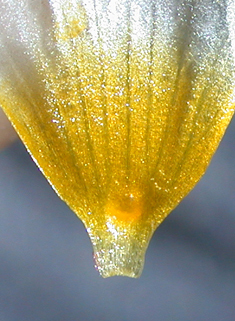
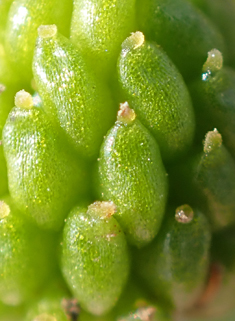
Although recognising a water-crowfoot is easy, putting a name to species can be difficult because there is much variation in the appearance of the plants according to their growing conditions. It is important to note the following features: the shape of the nectar pit on the yellow base of the petal; presence or absence of either broad, floating leaves and/or finely-cut submerged leaves; hairiness of the green carpels in the centre of the flower (these swell to become the fruits); sepal detail. Note that the nectar pit is a small area at the base of each petal that produces a small blob of nectar to attract pollinating insects. This pit has a raised edge which can be seen with a x10 hand lens and the raised edge may be either semi-circular, circular or narrowed at one end and somewhat pear-shaped.
Ivy-leaved Crowfoot Ranunculus hederaceus
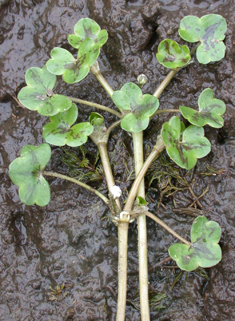
Native. Rare on St Mary's close to more or less permanent waterways. Flowers mostly late May to August. Leaves three-lobed, but not deeply so and rather resembling ivy leaves. Petals well-spaced (not overlapping), with semi-circular nectar pit. Sepals not reflexed, carpels and fruits hairless.
| |
|
 |
 |
| |
|
|
|
Brackish Water-crowfoot Ranunculus baudotii
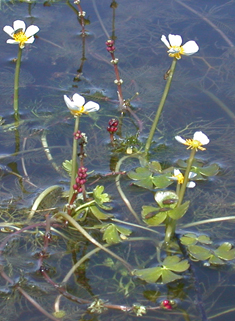
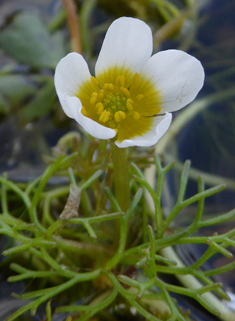
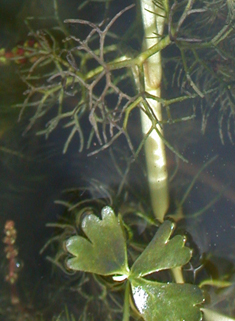
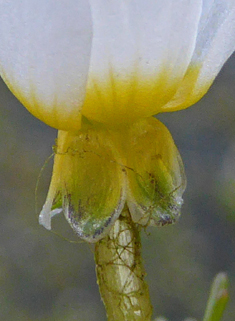
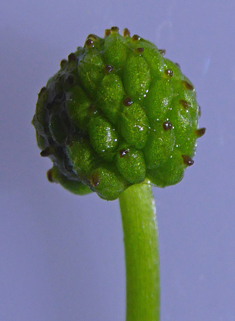
Native. Persistent in permanent pools on the larger islands, typically preferring water with a little salty influence. Flowers mostly late May to August. Plants may have both broad, floating leaves and deeply cut, submerged leaves, or may have only submerged leaves. Floating leaves are divided more than half way into usually three lobes; submerged leaves stiff with segments strongly divergent. Flowers with reflexed, bluish-tinged sepals; petals with semi-circular nectar pit. Immature fruits hairless, the fruiting body becoming taller and more oval than other species as the fruits mature.
 |
 |
 |
 |
| |
|
|
|
 |
 |
 |
| |
|
|