Asphodel Family
Asphodel Family - Asphodelaceae
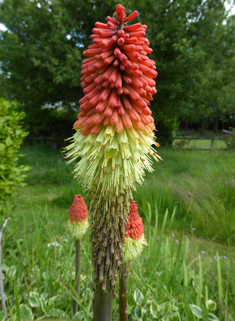
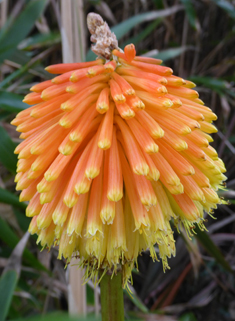
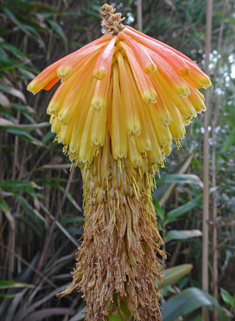
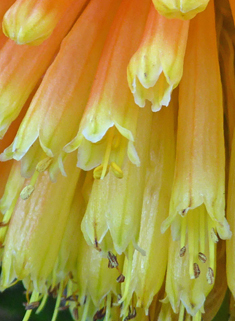
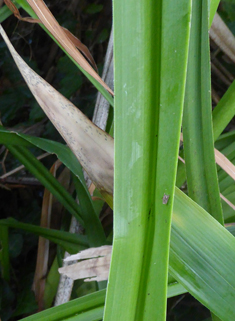
Common Red-hot-poker Kniphofia uvariaIntroduced as a garden ornamental from South Africa. Flowers July to September. Typically a plant to 1.2m in height, bearing spikes of orange-red flowers with stamens that only just protrude from the open flowers. Each flower has a tiny bract at its base which is rather rounded and 3-9mm in length.
Note: The pictures of the two Kniphofia species are transposed in the New Flora of the Isles of Scilly, so it is unclear whether the maps are also transposed - thus the distribution of records for the two species is currently unclear.
 |
 |
 |
 |
| |
|
|
|
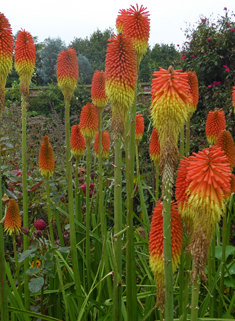
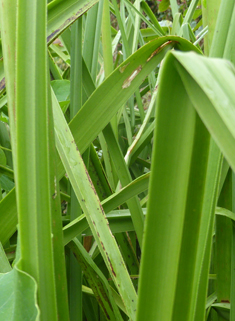
Greater Red-hot-poker Kniphofia x praecox
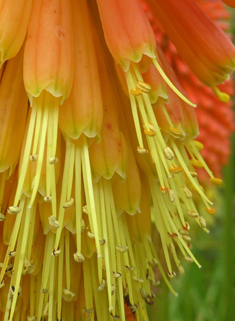
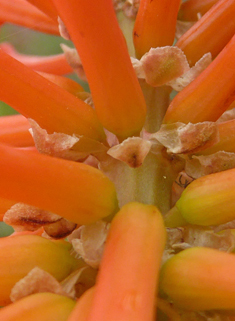
Introduced as a garden ornamental from South Africa. Flowers July to September. Typically a plant to 2m in height, bearing spikes of orange-red flowers that turn yellow as they mature. The stamens distinctly protrude from the open flowers by 4-15mm almost as soon as the flowers open. Each flower has a bract at its base which is usually tapered towards the tip and 8-12mm in length.
Note: The pictures of the two Kniphofia species are transposed in the New Flora of the Isles of Scilly, so it is unclear whether the maps are also transposed - thus the distribution of records for the two species is currently unclear.
 |
|
 |
 |
| |
|
|
|
 |
 |
||
| |
|
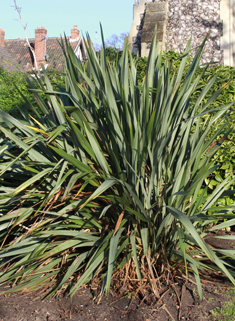
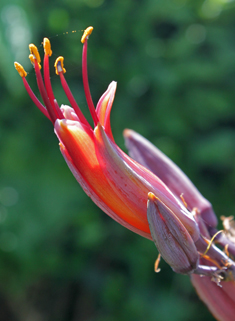
New Zealand Flax Phormium tenax
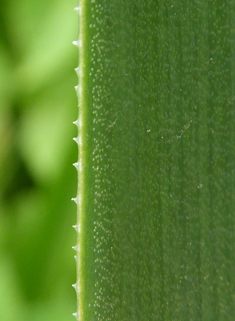
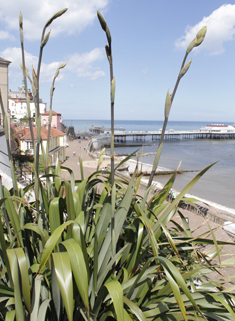
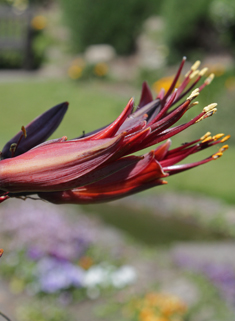
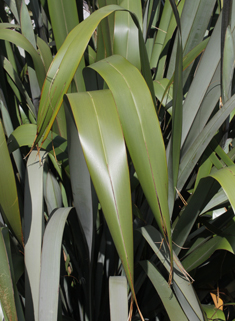
Introduced from New Zealand as a garden ornamental and quite widely planted on the inhabited islands. Flowers June to August. Full grown plants may form large clumps to 3m in height and 2m across. Leaves 1-3m long and 5-12cm wide, typically blue-green in colour and rather stiff. Flowers dark red, the three inner tepals with slightly recurved tips.
| |
 |
|
 |
| |
|
|
|
 |
 |
||
| |
|
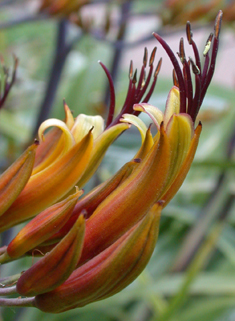
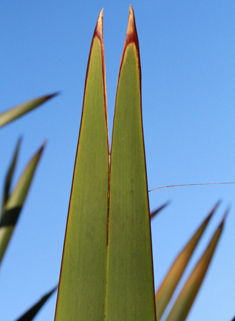
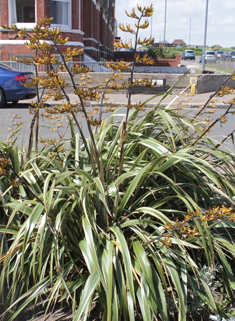
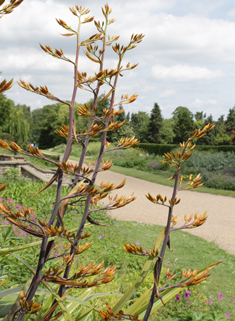
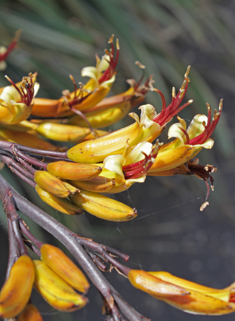
Lesser New Zealand Flax Phormium colensoi
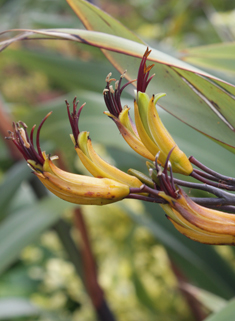
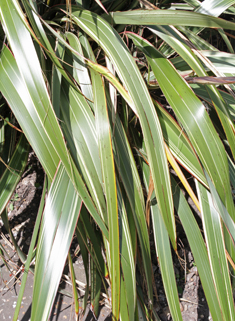
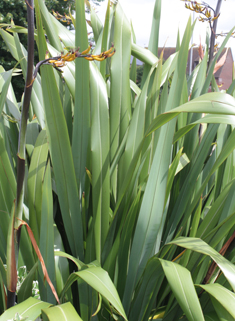
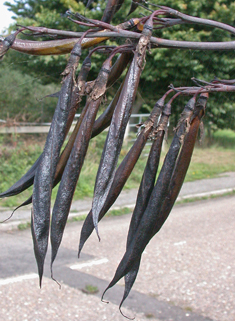
Introduced from New Zealand as a garden ornamental on the inhabited islands but generally uncommon. Flowers June to August. Forms clumps to 2m in height (often less) and 2m across. Leaves 1-2m long and 3.5-6.5cm wide, naturally blue-green in colour but more often planted in red, bronze or creamy yellow forms. Flowers yellow-orange with a greenish wash, the three inner tepals with clearly recurved tips.
 |
 |
 |
|
| |
|
|
|
 |
 |
 |
 |
| |
|
|
|