Asparagus Family
Asparagus Family - Asparagaceae
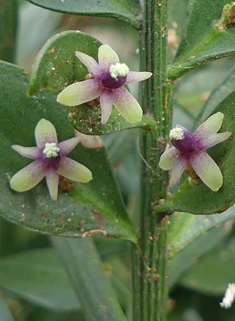
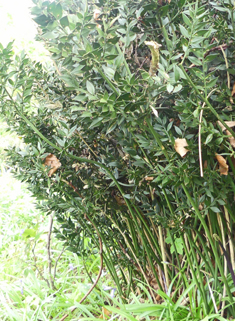
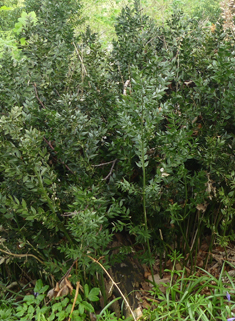
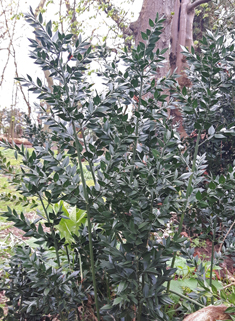
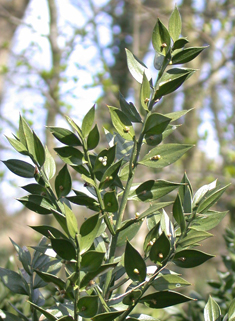
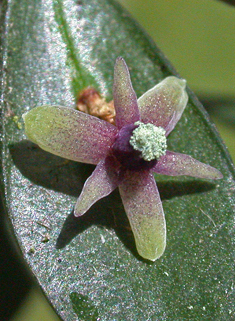
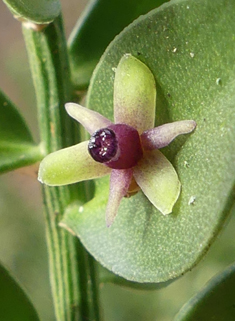
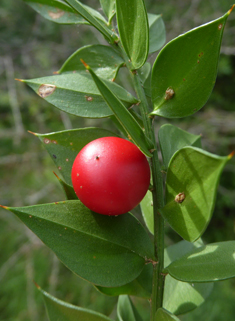
Common Butcher's-broom Ruscus aculeatusRare as a native species on St Martin's and the Eastern Isles and a few plants likely to be of garden origin noted on St Mary's. Flowers January to April with male and female flowers on separate bushes, the female bushes later producing red berries. A distinctive, spiny, evergreen shrub that forms dense thickets of stiff, upright stems. A closer look reveals that the spine-tipped 'leaves' are actually flattened stems, which bear the flowers and berries at their centre.
 |
 |
 |
 |
| |
|
|
|
| |
 |
 |
 |
| |
|
|
|
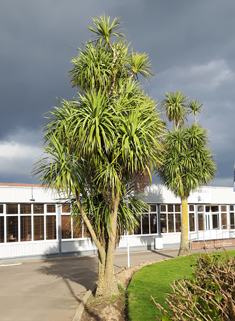
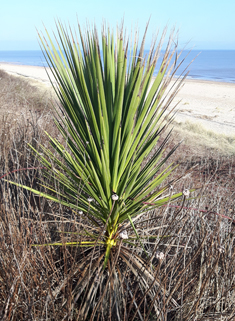
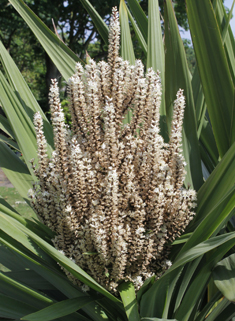
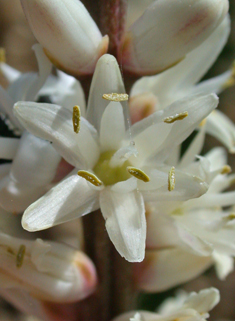
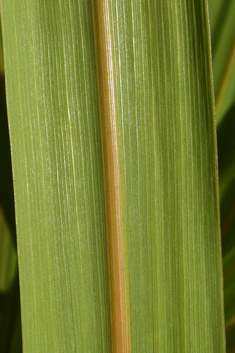
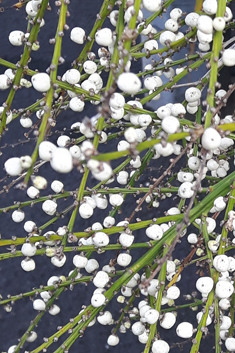
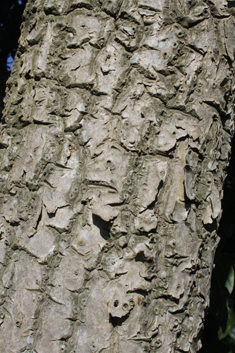
Cabbage-palm Cordyline australis
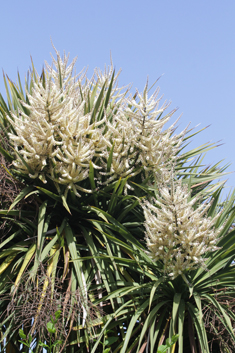
Introduced from New Zealand and popular as a garden ornamental; occasionally planted as a windbreak and sometimes self-seeding. Flowers June to July.
 |
 |
 |
 |
| |
|
|
|
| |
 |
 |
 |
| |
|
|
|
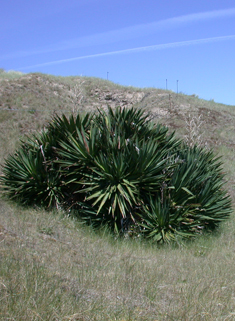
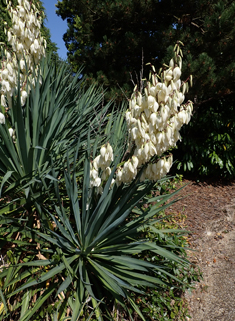
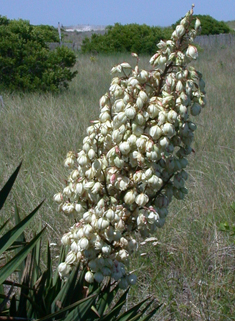
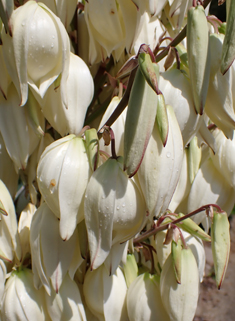
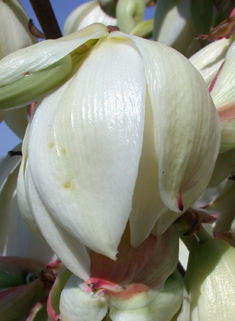
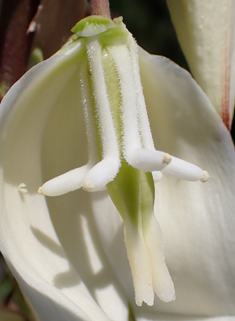
Spanish-dagger Yucca gloriosa
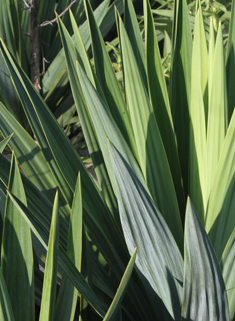
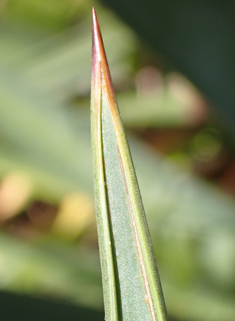
Native to North America and introduced as a garden plant. Scattered plants can be found in the dunes at the southern end of Tresco. Flowers June to July. Forms large clumps of stiff, stout, fleshy leaves with rigid, vicious spines at the tips. Flowers in large, branched heads, each flower rounded in profile.
 |
 |
 |
 |
| |
|
|
|
 |
 |
 |
 |
| |
|
|
|
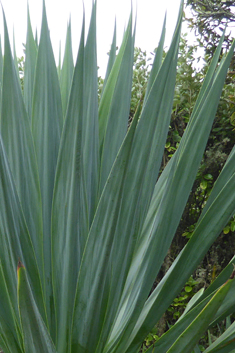
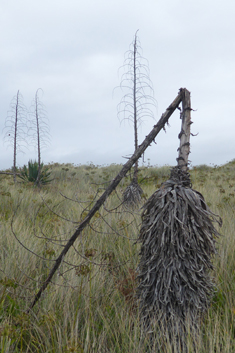
Parmentier's Furcraea Furcraea parmentieri
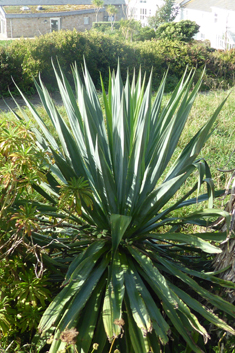
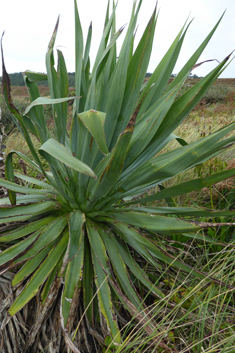
Introduced from Mexico and becoming estabished in coastal dunes on Tresco. Leaves resemble those of some Yucca species but the flower structures are very different. The genus is separated from Agave by the short-tubed flowers, short, thickened stamen filaments and stout-based style.
Note: Tresco plants have variously been identified as this species (in A Flora of Cornwall and on the BSBI website), or as Oaxaca Furcraea F. longaeva (in the New Flora) with both species being named Weeping Furcraea in various sources. Based on identification notes on the two species below, translated from the important paper by Garcia-Mendoza (Bol. Soc. Bot. México 66:113-129 (2000)), Tresco plants do appear to be Parmentier's Furcraea:
Furcraea parmentieri is easily recognized by its short, glaucous leaves with a rough underside and a width/length ratio of 1: (8-)12-15 (-18); the inflorescence is narrowly pyramidal with hanging primary and secondary branches, a short peduncle, pubescent branchlets and flowers, and leafy bulbils with glaucous leaflets.
Furcraea longaeva is distinguished by its large, linear-lanceolate, succulent, dark green leaves, which have a width-to-length ratio of 1:9-11; non-bulb-bearing inflorescences with tertiary and quaternary branches.
 |
 |
 |
 |
| |
|
|
|
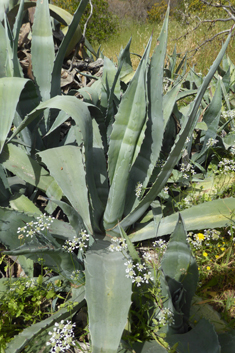
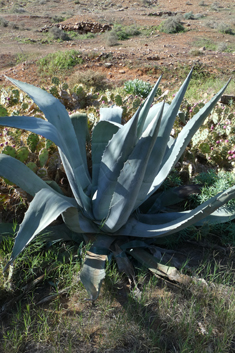
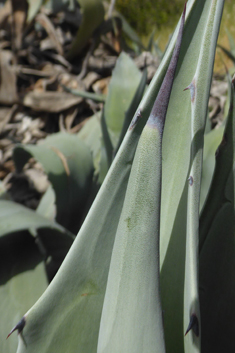
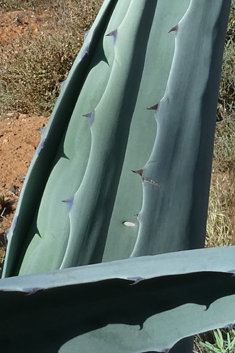
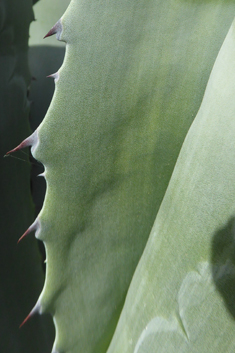
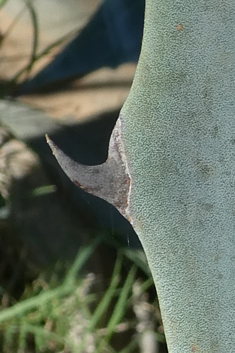
Centuryplant Agave americana
Native to the southern USA and Mexico and planted as a garden ornamental. Records of plants persisting from original plantings have been made from St Mary's, St Agnes and Tresco.
 |
 |
 |
 |
| |
|
|
|
 |
 |
||
| |
|
Common Star-of-Bethlehem Ornithogalum umbellatum
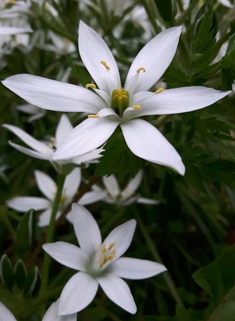
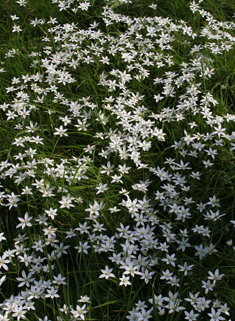
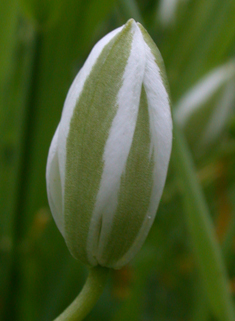
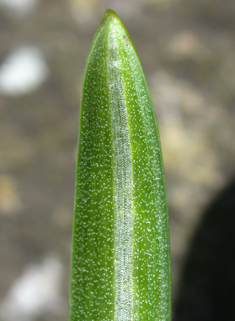
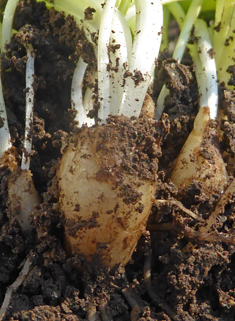
Recorded a handful of times where escpaed from cultivation on St Mary's, St Agnes and St Martin's. Flowers April to June. Flowers brilliant white with a green stripe on the reverse, in flat-topped clusters. Grass-like leaves with a silver stripe down the centre, like those of crocus species, but with a hand lens, they show a mass of silvery spots across the width of the leaf. Subspecies campestre has tapered bulbs, up to 35 leaves per bulb and up to 12 flowers on a spike. Subspecies umbellatum has rounded bulbs, up to 10 leaves per bulb and up to 20 flowers on a spike.
 |
|
 |
 |
| |
|
|
|
 |
|||
| subspecies campestre |
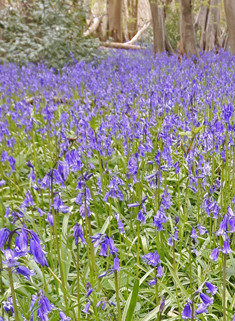
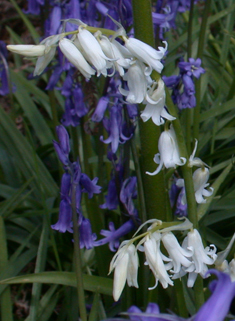
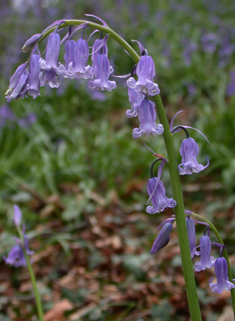
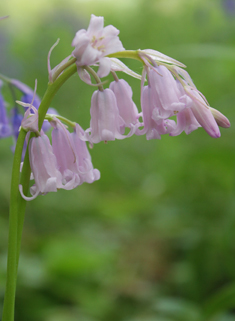
Common Bluebell Hyacinthoides non-scripta
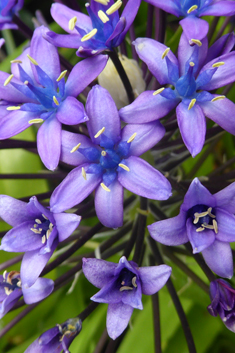
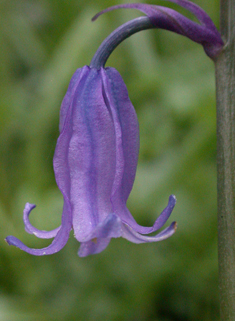
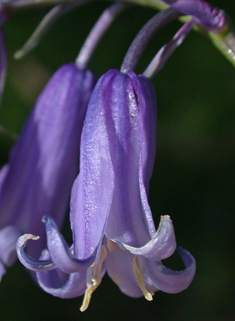
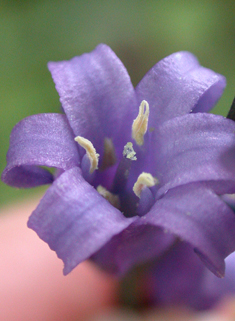
Native and found commonly on all of the larger islands and many of the smaller isles, wherever there is turfy habitats to colonise. Flowers April to May. Flowers pendant and forming a one-sided spike when fully open; open flowers are broadly tubular or very narrowly bell-shaped with more or less parallel sides and with the tepal tips strongly curling back on themselves. Anthers cream-coloured, the stamens variable in length with three short and three long. Deep, violet-blue and heavily scented, but may rarely be paler blue, pink or white, such plants usually being found as isolated individuals within large colonies of deep blue ones. Leaves relatively narrow, 7-15mm wide.
 |
 |
 |
 |
| |
|
|
|
 |
 |
 |
|
| |
|
|
Hybrid Bluebell Hyacinthoides x massartiana
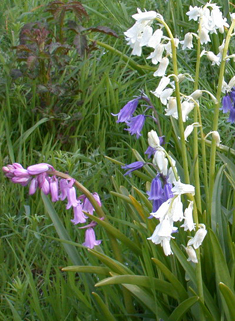
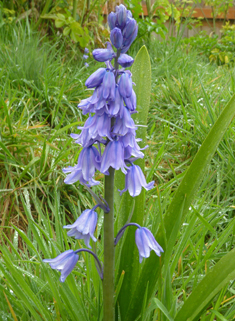
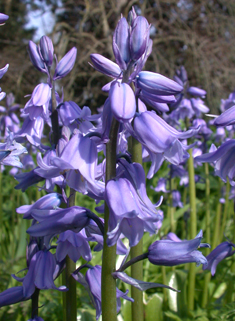
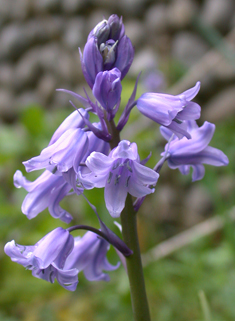
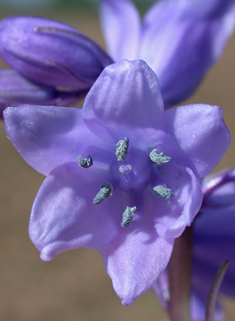
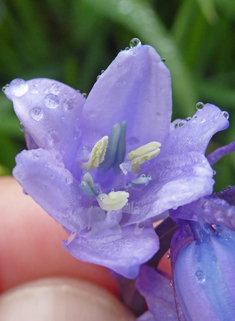
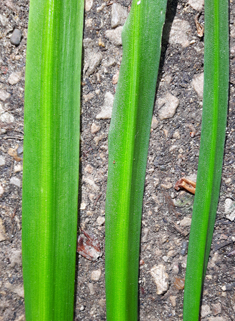
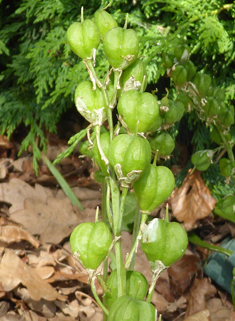
Introduced as a garden plant and commonly found in grassy places and roadsides. In urban environments virtually all bluebells found are likely to be this hybrid. Widely sold by the horticultural trade as 'Spanish Bluebells' and even sometimes as native bluebells. Flowers April to May. Flowers pendant, semi-pendant or more or less facing outward at 90 degrees to the main stem; carried around all sides of the stem in an upright spike; open flowers 10-20mm in diameter, broadly to narrowly bell-shaped with the tepal tips curling outwards, but very variable and can closely resemble either parent. Anthers whitish or with a bluish tint, the stamens generally variable in length. Leaves generally intermediate in size between the parents, 10-30mm wide, but there is a certain amount of overlap. Pale to bright blue, pink or white. Because this hybrid is fertile, it can backcross with the parents and produce a complete range of intermediates. Almost all records of so-called 'Spanish Bluebell' throughout the UK are of this hybrid.
 |
 |
 |
 |
| |
|
|
|
 |
 |
 |
 |
| |
|
|
|
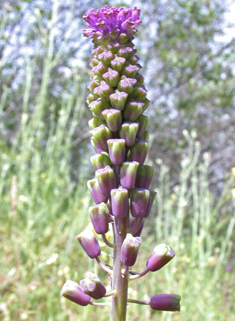
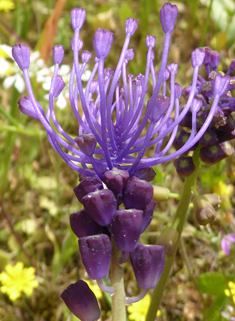
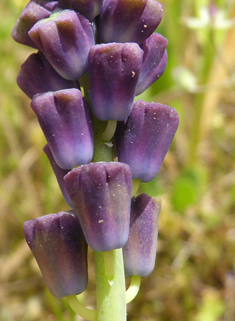
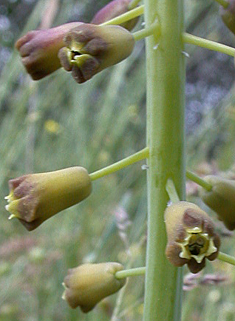
Common Tassel-hyacinth Muscari comosum
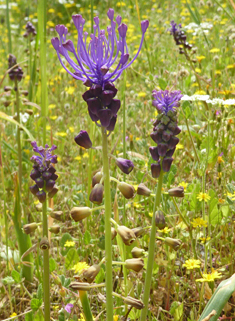
A rare garden escape, recorded several times from St Martin's. Flowers April to May. Lower (fertile) flowers purple in bud, becoming olive as they open, with a 'tassel' of bright purple, sterile flowers at the top of the spike. Flower spikes are compact at first but gradually elongate as the flowers mature and may reach 30cm in length.
 |
 |
 |
 |
| |
|
|
|
 |
 |
 |
 |
| |
|
|
|
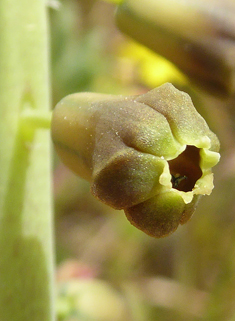
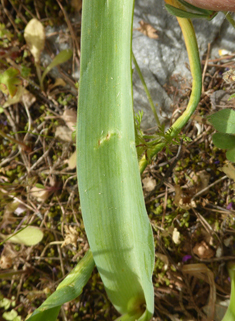
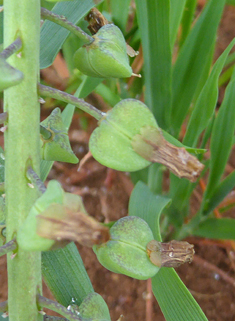
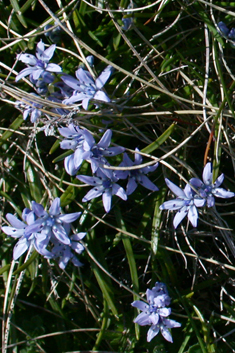
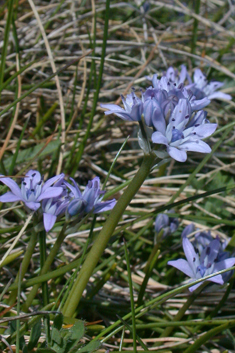
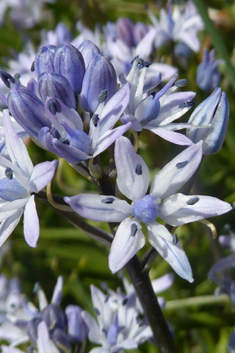
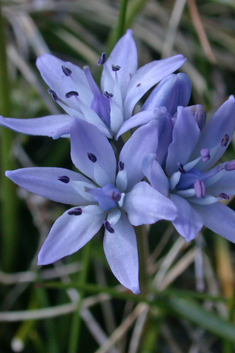
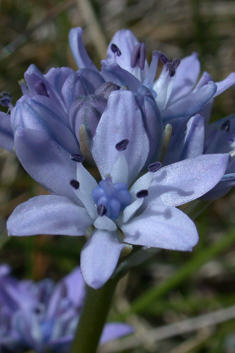
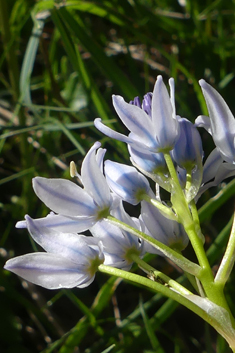
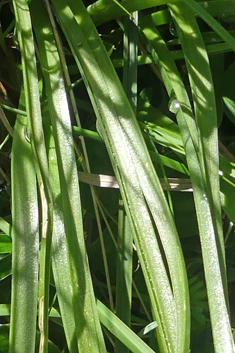
Spring Squill Scilla verna
Native in short coastal turf on Bryher and in smaller numbers on St Mary's. Flowers April to May.
 |
 |
 |
|
| |
|
|
|
 |
 |
 |
 |
| |
|
|
|
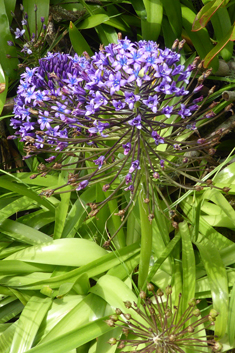
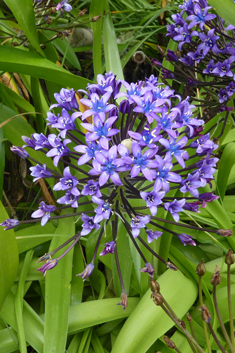
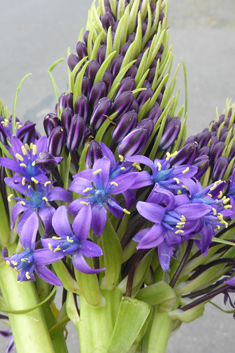
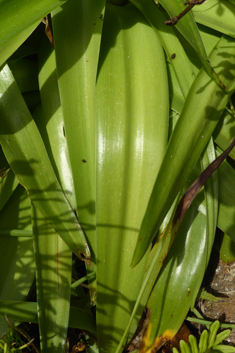
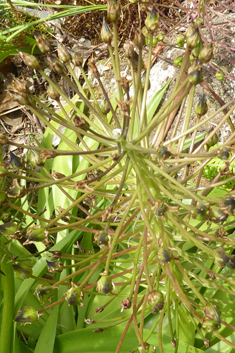
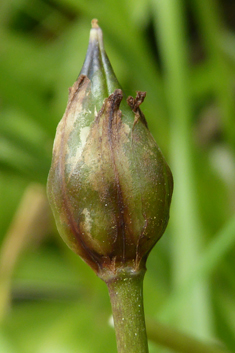
Portuguese Squill Scilla peruviana
Native to the western and central Mediterranean region. Grown for the cut flower trade and once recorded as an escape from cultivation on St Mary's. Flowers April to May.
 |
 |
 |
|
| |
|
|
|
 |
 |
 |
|
| |
|
|