The Aralia Family
What are they?
This is a remarkably varied family of plants with a large number of species found in the tropical regions of the world. Members of the Araliaceae vary from evergreen trees, through herbaceous plants to tiny, creeping plants of wetlands, but tend to be typified by their small, five-parted flowers that are carried in many-branched umbels. In this last respect, they often resemble members of the carrot family (Apiaceae) but mostly differ in that the flowers are followed by berries rather than dry seeds. The pennyworts are currently placed in this family but seem to form a link between the Araliaceae and the Apiaceae.
Where are they found?
Members of the Araliaceae occur both as introduced, garden ornamentals and as native plants and therefore are found in a wide variety of habitats.
Identification
The species covered here a relatively easy to identify based on the overall appearance of their flowers and leaves. However, care should be taken with the ivies since there are other species in cultivation that might turn up and details of the leaf hairs may then be important.
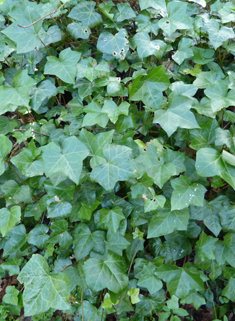
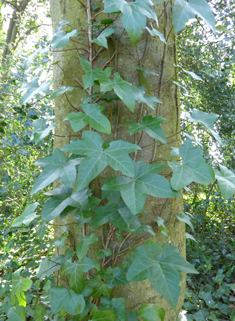
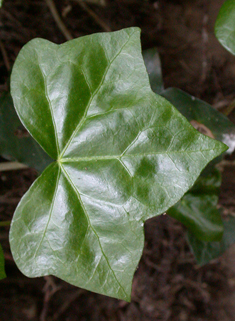
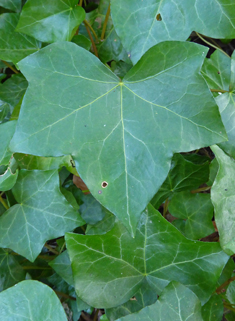
Atlantic Ivy Hedera hibernica
Native. Common and widespread across most of the islands. Flowers September to November. Leaf shape variable and may be quite deeply lobed on climbing stems, with flowering shoots producing unlobed leaves. Critical examination may sometimes be possible to separate this species from Common Ivy. Magnification of the star-shaped hairs should reveal that all of the arms of the hairs sit flush with the leaf surface (at least some of those of Common Ivy tend to stand up proud of the leaf surface).
 |
 |
 |
 |
| |
|
|
|
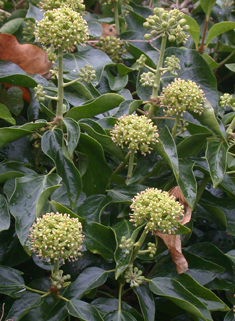
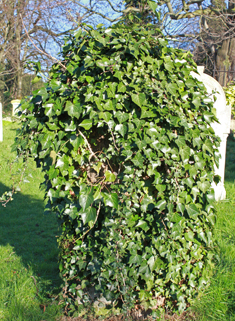
Common Ivy Hedera helix
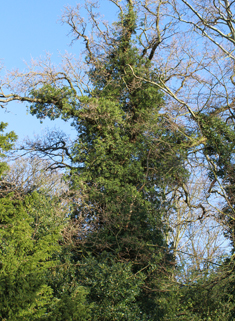
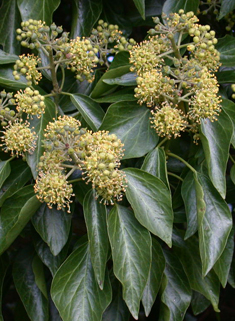
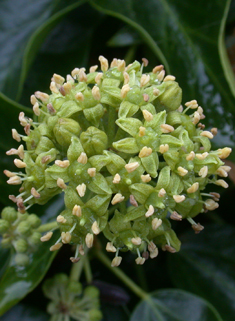
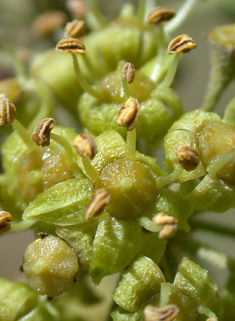
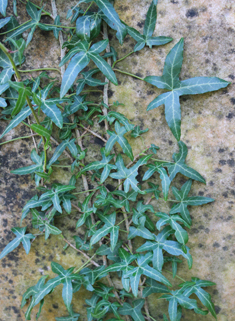
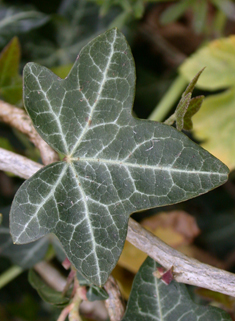
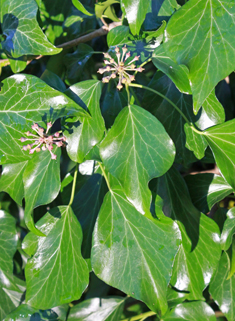
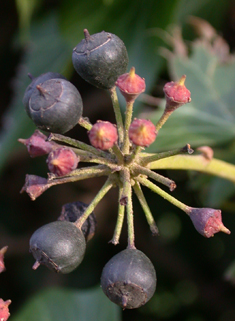
Introduced as a garden plant. Flowers September to November. Leaf shape is highly variable from deeply cut into finger-like lobes to the 'classic', five-lobed ivy leaf on climbing or trailing stems. Once a plant overtops the object supporting it and is exposed to full sun, it switches to producing flowering shoots. These shoots spread out into a bushy cluster and produce unlobed, rhombic leaves. Cultivated plants can be highly variable and care should be taken to confirm the identity of any possible Common Ivy plants by checking minute details of the hairs (see under Atlantic Ivy).
 |
 |
 |
 |
| |
|
|
|
 |
 |
 |
 |
| |
|
|
|
Marsh Pennywort Hydrocotyle vulgaris
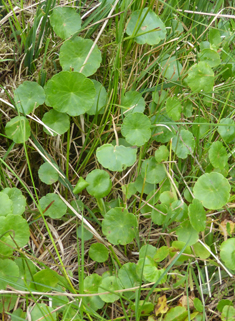
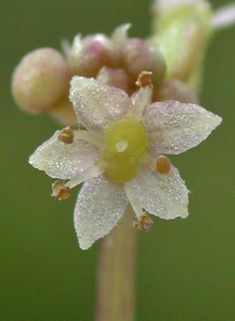
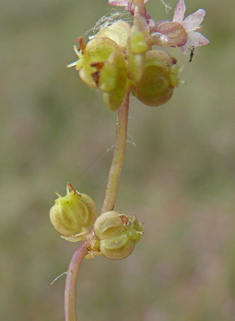
Native. A plant of wet places and suitably damp grassland. Flowers June to July. A small, trailing or creeping plant that is often well hidden beneath taller vegetation. Leaves 1-3cm across. Flowers tiny, about 3mm across, appearing on short spikes with 1-3 whorls of flowers and usually hidden beneath the leaves.
 |
 |
 |
 |
| |
|
|
|
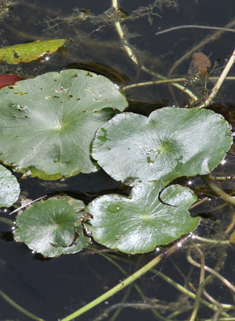
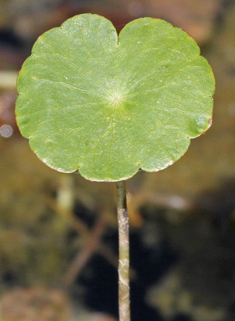
Floating Pennywort Hydrocotyle ranunculoides
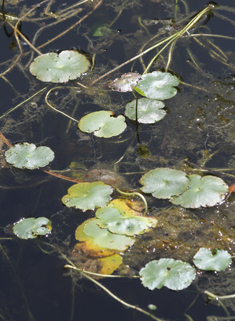
Introduced to the UK from North America as an aquatic plant for garden ponds. Rapidly takes over small ponds, resulting in the pond-owners removing it and dumping it into natural waterways, where it has the potential to do great harm to a balanced ecosystem. Has been recorded once on St Mary's but has since been removed. Flowers June to July. Stems may be free-floating on open water and grow very rapidly, but typically do not flower. Stems on marginal mud root at the nodes and are typically the stems that produce flowers. Leaves are larger than those of our native species, growing to around 8cm across.
 |
 |
 |
| |
|
|
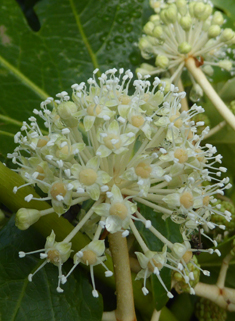
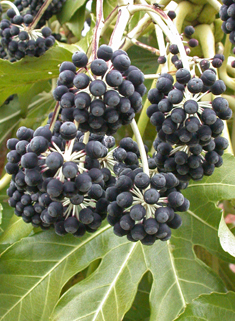
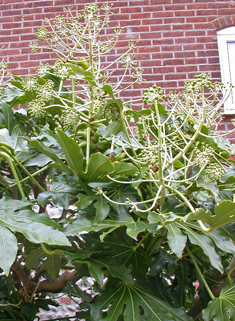
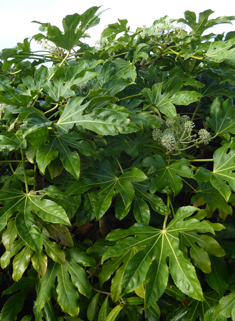
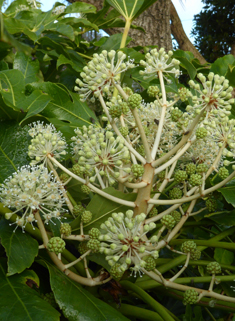
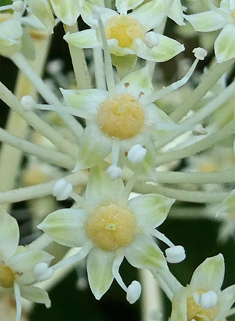
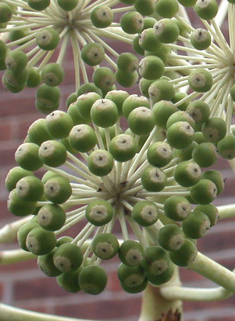
Japanese Fatsia Fatsia japonica
(False Castor-oil-plant) Introduced from Eastern Asia as a garden ornamental and has been recorded a handful of times away from obvious garden locations. Flowers October to December. An evergreen shrub to 5m in height but often much less. The thick, leathery, evergreen leaves are distinctive and rather like those of the Castor-oil-plant, with which it is often confused, but the flowers and fruits are very different.
Note that the photo labelled as Fatsia japonica in The New Flora is misidentified and actually shows Tetrapanax papyrifer.
 |
 |
 |
 |
| |
|
|
|
| |
 |
 |
|
| |
|
|
|