The Dewplant Family
What are they?
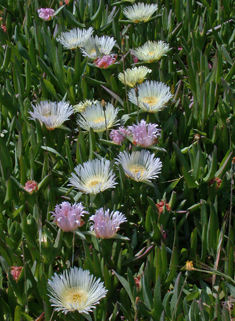
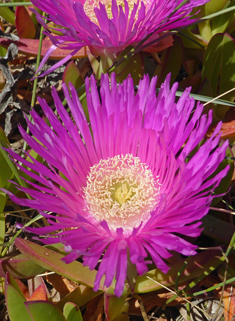
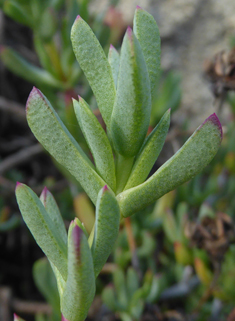
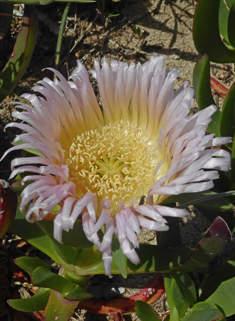
This is a large and diverse family of plants that can be recognised by their fleshy leaves, often creeping habit and typically large, daisy-like flowers. Most species are frost-tender, so the family is most common in tropical or warm-temperate parts of the world, especially in the Southern Hemisphere. Some of the larger species in this family have aquired a reputation for being highly invasive, especially in the Mediterranean region and milder south-western corner of the UK. Plants spread rapidly, trailing across the ground and rooting at the nodes. Their dense growth smothers other plants and large sums of money are being spent on eradicating them.
Where are they found?
Popular as very floriferous garden plants, occurring widely on walls along roadsides but also on coastal rocks and cliffs in some areas.
Identification
The flowers bear a superficial resemblance to those of the daisy family, but they differ in being large, solitary flowers rather than being constructed from a tight cluster of many, smaller flowers. The outside of the flowers are fleshy and do not have the rows of green bracts that are typical of the daisy family. The flowers are all rather similar and identification is largely based on leaf size and shape.
Note: A number of the species in this family were introduced into the Isles of Scilly long before some of the species were clearly identified to species. In particular, members of the genus Lampranthus are very difficult to tell apart and even the authority publication on the family (Hartmann, 2017) states that many species are so poorly known that an accurate taxonomy cannot yet even be established to the species level. The problem is compounded by the horticultural industry selling m isidentified plants and by the internet, where many pictures are clearly misidentified. It is hoped that, over time, careful study of the islands' plants may provide more clarity over time.
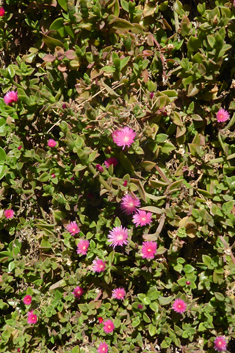
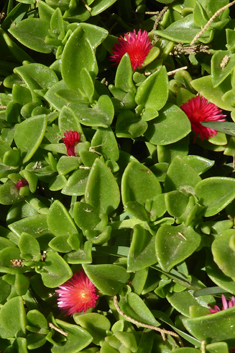
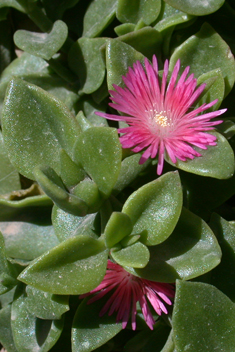
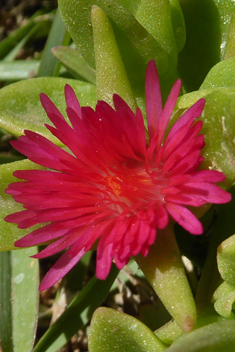
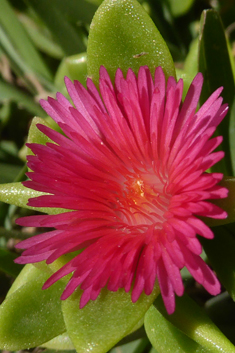
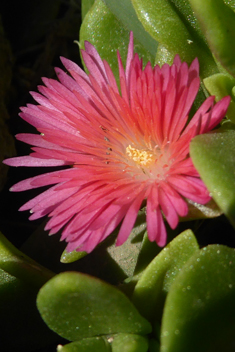
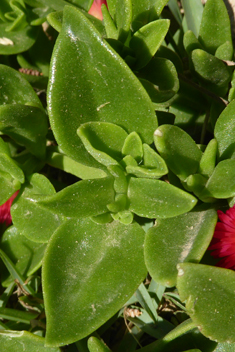
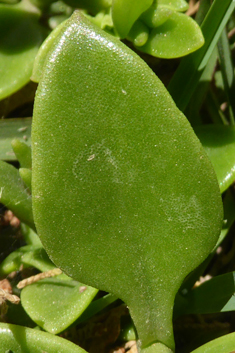
Heart-leaved Iceplant Mesembryanthemum cordifolium
(Aptenia cordifolia) Introduced from South Africa as a garden ornamental and quite widely grown on walls.
 |
 |
 |
 |
| |
|
|
|
 |
 |
 |
 |
| |
|
|
|
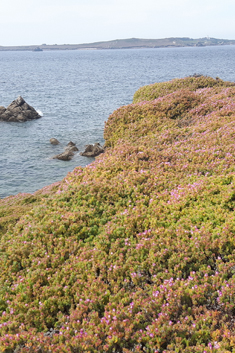
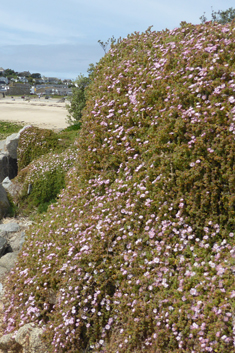
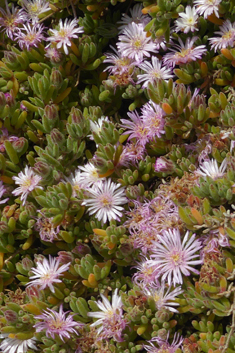
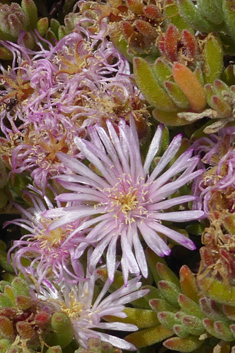
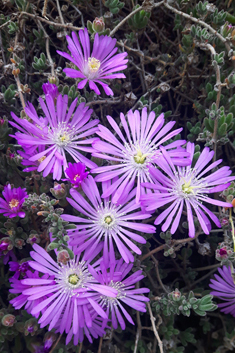
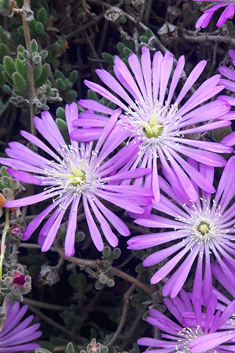
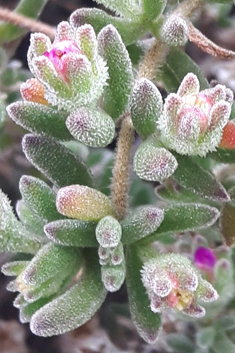
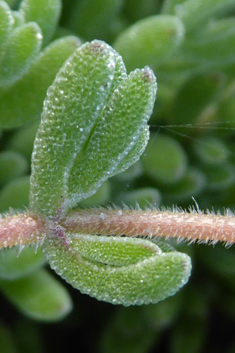
Pale Dewplant Drosanthemum floribundum
Introduced from South Africa as a garden ornamental. Widespread where planted or escaped from cultivation and can become invasive. Leaves in pairs, 6-30mm long, covered in translucent papillae. Flowers solitary, 18-27mm across, white in bud, opening pink and becoming more lilac with age.
 |
 |
 |
 |
| |
|
|
|
 |
 |
 |
 |
| |
|
|
|
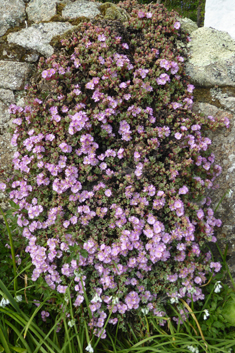
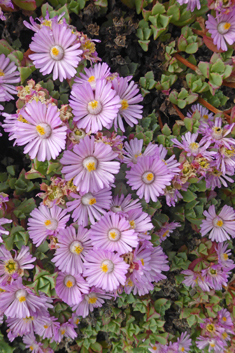
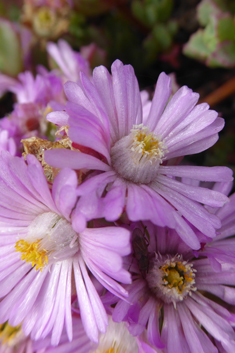
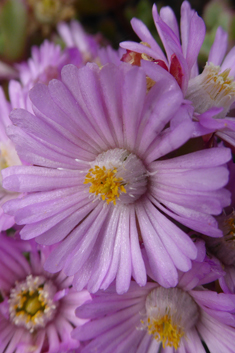
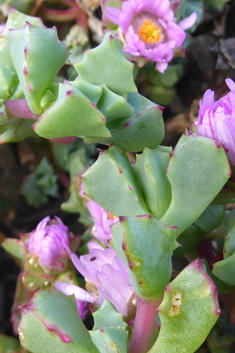
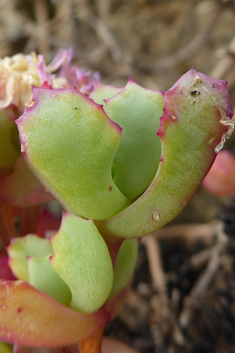
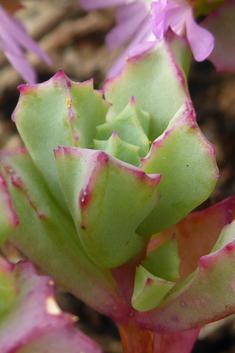
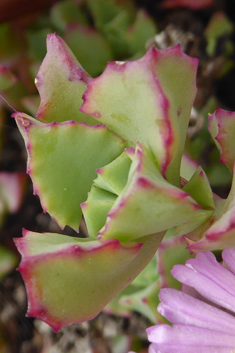
Deltoid-leaved Dewplant Oscularia deltoides
Introduced from South Africa as a garden ornamental. Widespread where planted or escaped from cultivation. Leaves in pairs, 6-18mm long, Broadly three-sided with stout teeth on the margins. Flowers 1-3 together, 12-18mm across, pale purplish-pink.
 |
 |
 |
 |
| |
|
|
|
 |
 |
 |
 |
| |
|
|
|
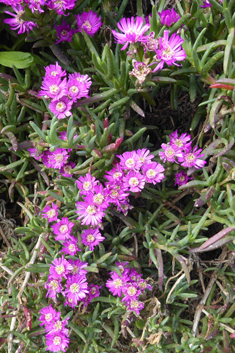
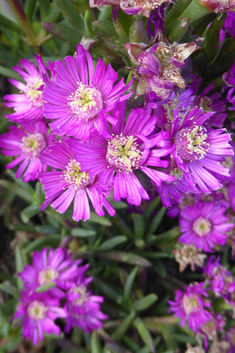
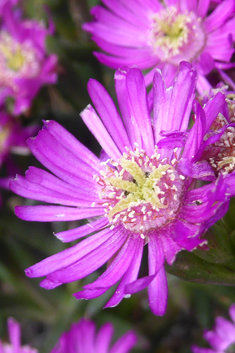
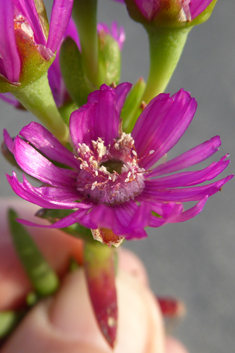
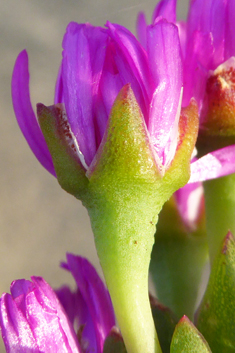
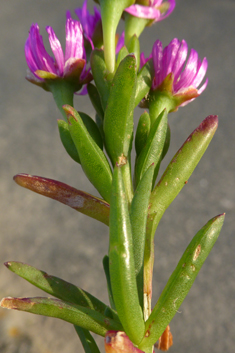
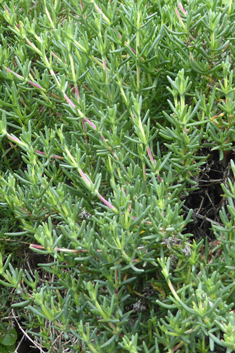
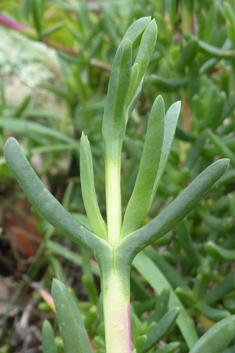
Shrubby Dewplant Ruschia caroli
Introduced from South Africa as a garden ornamental. Recorded from St Mary's and Tresco where planted or escaped from cultivation. Leaves in pairs, 15-70mm long, blue-green, enclosed in a brown sheath at the base. Flowers 1-4 together in clusters, 10-30mm across, rich purplish-pink, sometimes paler. Differs from the Lampranthus species in the stigmas which are long-acute at the apex, rather than plumose.
 |
 |
 |
 |
| |
|
|
|
 |
 |
 |
 |
| |
|
|
|
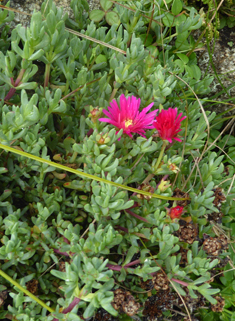
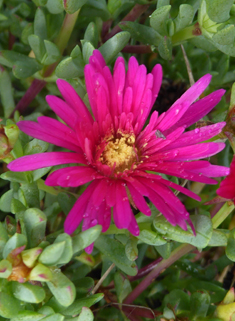
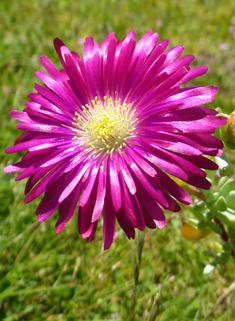
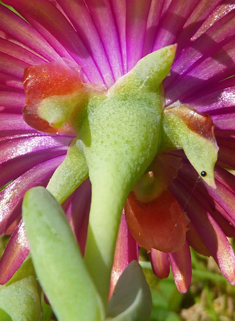
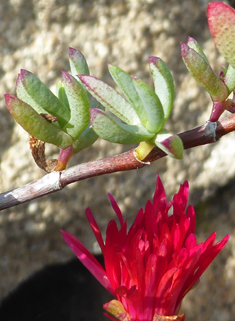
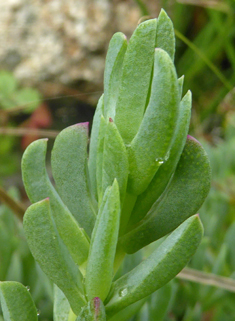
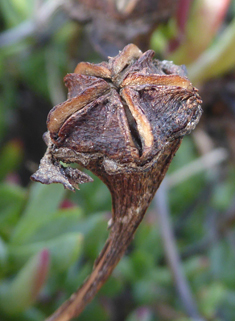
Sickle-leaved Dewplant Lampranthus falciformis
Introduced from South Africa as a garden ornamental. Recorded from St Mary's, Tresco and St Martin's but distribution unclear due to confusion with other species. Flowers mostly May to July. A low, spreading sub-shrub, with stems to 80cm long. Leaves 6-13cm long, glaucous and waxy, distinctly falcate in shape, with a flattened upper side and roundly curved towards the tip on the underside. Flowers 3.5-4.5cm across, typically bright mauve-pink but may be other shades in cultivated forms.
 |
 |
 |
 |
| |
|
|
|
 |
|
 |
 |
| |
|
|
|
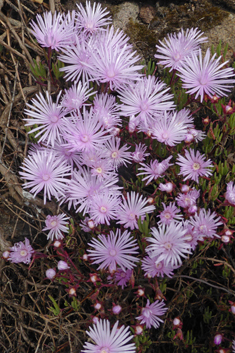
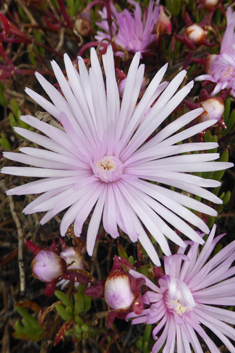
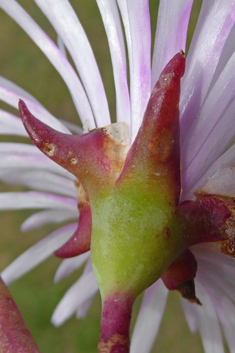
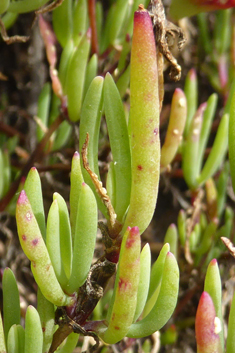
Rosy Dewplant Lampranthus multiradiatus
(Lampranthus roseus) Introduced from South Africa as a garden ornamental. Recorded from St Mary's and Tresco but distribution unclear due to confusion with other species. A shrub with stems to 20-30cm in height. Flowers mostly May to July. Leaves 10-16cm long, glaucous and waxy, mostly triangular in cross-section. Flowers 1-3 together, 2-5cm across, very pale pink, sometimes lightly salmon or lilac-tinted.
Often confused with the true Lampranthus roseus, which differs in having translucent dots on the leaves. It is poorly known in South Africa and may not be in cultivation.
 |
 |
 |
 |
| |
|
|
|
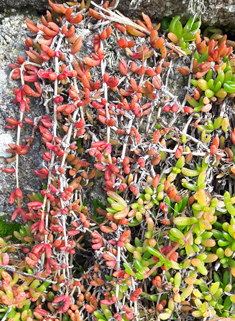
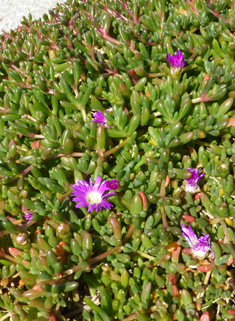
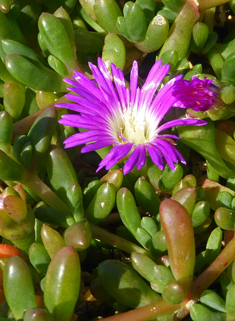
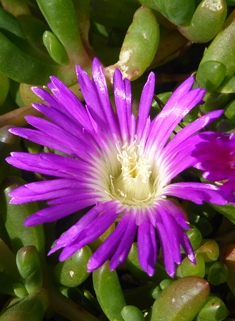
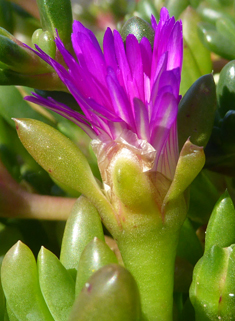
Purple Dewplant Disphyma crassifolium
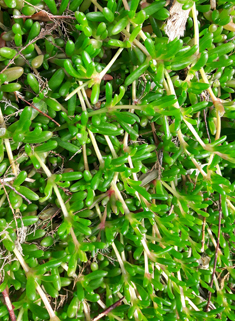
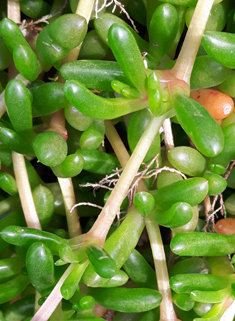
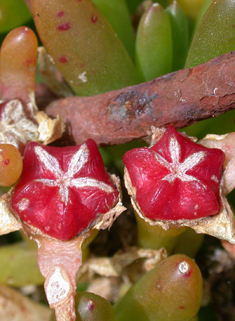
Introduced from South Africa as a garden ornamental. Well established at coastal sites on St Mary's, Bryher and Tresco as well as on Round Island. Flowers mostly May to June. Leaves up to 4.2cm long, rounded and looking like emerald green jelly beans - older leaves turn rich red in colour. Flowers 3-5cm across, petals purple with white bases.
 |
 |
 |
 |
| |
|
|
|
 |
 |
 |
 |
| |
|
|
|
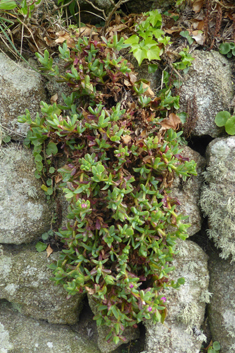
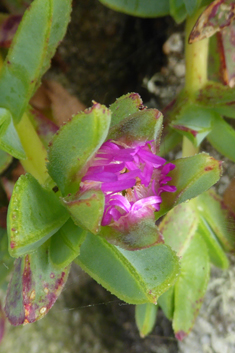
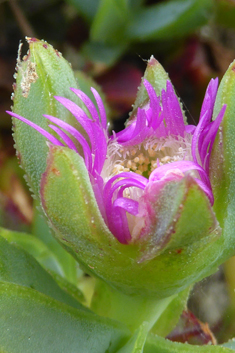
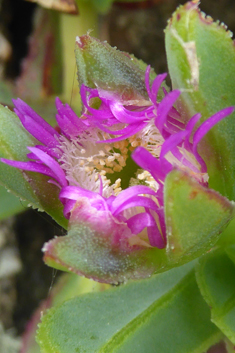
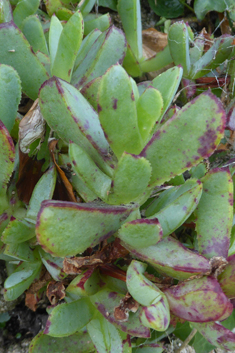
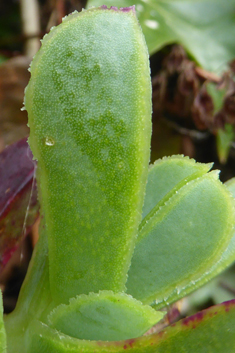
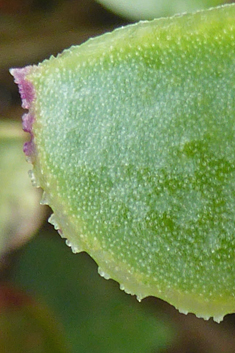
Lesser Sea-fig Erepsia heteropetala
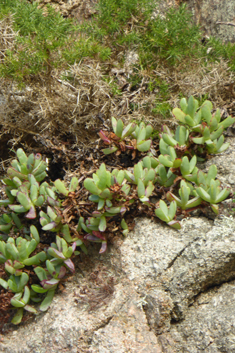
Introduced from South Africa as a garden ornamental. Very much rarer than most of the other members of this family on this page and only occasionally seen as a garden plant. Has been established for a long time on Buzza Hill, St Mary's. Flowers mostly May to June. Leaves 1.6-3.6cm long, strongly falcate or boat-shaped with translucent dots and rough, irregular teeth along one edge. Flowers 1-1.5cm across, bright pink, constricted by the stout sepals and often barely opening.
 |
 |
 |
 |
| |
|
|
|
 |
 |
 |
 |
| |
|
|
|
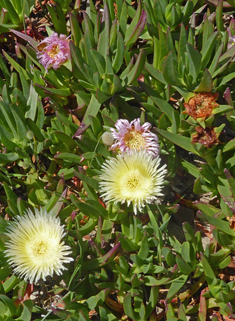
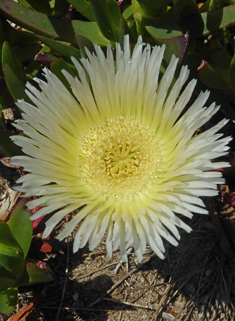
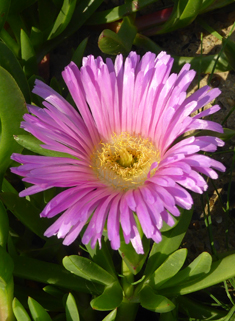
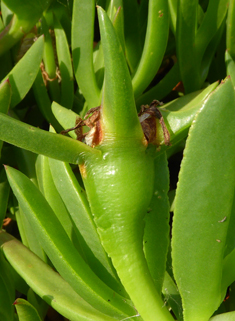
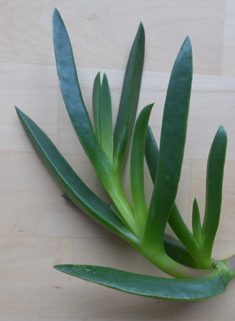
Hottentot-fig Carpobrotus edulis
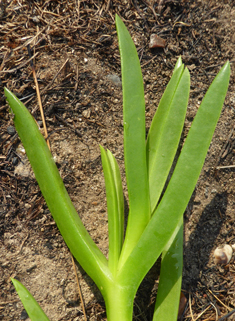
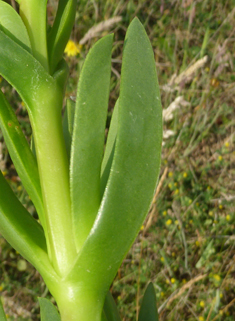
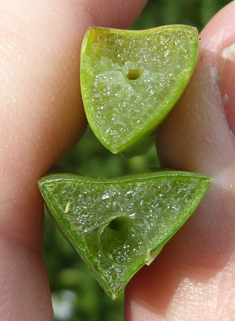
Introduced from South Africa as a garden ornamental. Frequent throughout many of the islands, especially the larger, inhabited ones. Can become highly invasive in coasta locations. Flowers mostly May to August. Leaves up to 14cm long, more or less parallel-sided for much of their length and narrowing to a tapered point at the tip (though beware of leaves on short sideshoots which can be more curved). When seen in cross-section, the leaves are more or less equal in width and depth. Flowers 4.5-10cm across, creamy yellow or bright pink.
 |
 |
 |
 |
| |
|
|
|
 |
 |
 |
 |
| |
|
|
|
Sally-my-handsome Carpobrotus acinaciformis
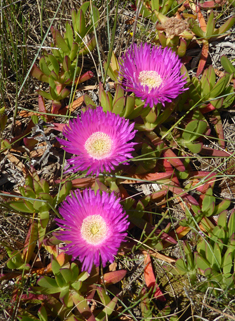
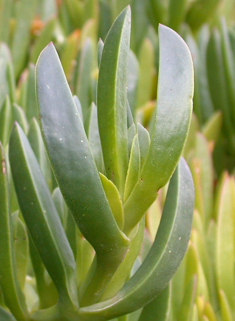
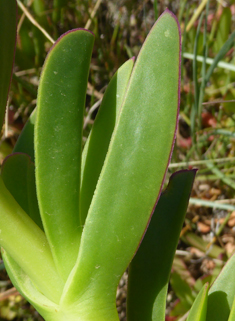
Introduced from South Africa as a garden ornamental. Much less common than Hottentot-fig but scattered around the inhabited islands, especially on St Martin's.. Flowers mostly May to August. Leaves up to 10cm long, less parallel-sided and more curved than those of Hottentot-fig and more broadly curved towards the tip. When seen in cross-section, the leaves are deeper than wide. Flowers 7-10cm across, bright carmine pink.
 |
|
 |
 |
| |
|
|
|
| |
|||
| |
Angular Sea-fig Carpobrotus glaucescens
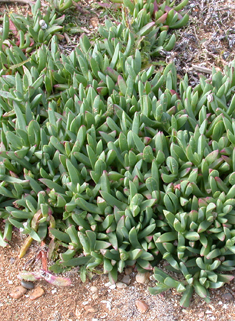
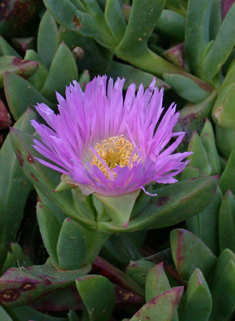
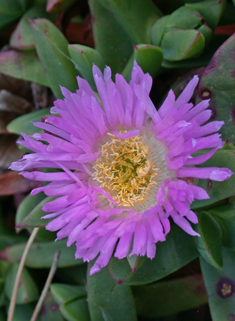
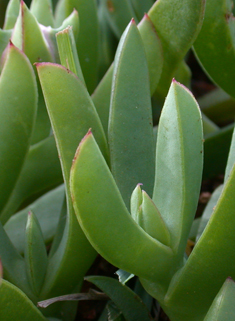
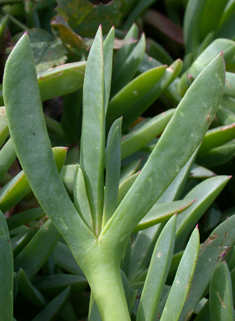
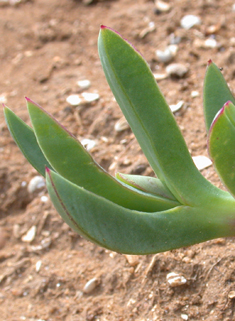
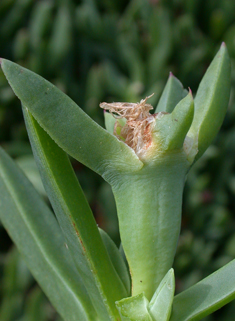
Introduced from Eastern Australia as a garden ornamental. Uncommon and only recorded from St Mary's and Tresco. Similar to C. acinaciformis but smaller in all of its parts. Flowers mostly May to July. Leaves up to 7cm long, more or less evenly curved and finely-pointed at the tip. Flowers 3.5-6cm across, bright pink to purple.
 |
 |
 |
|
| |
|
|
|
 |
 |
 |
 |
| |
|
|
|
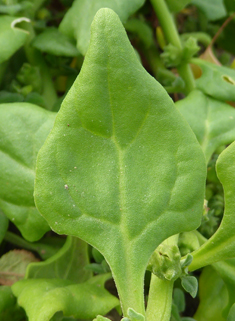
New Zealand Spinach Tetragonia tetragonioides
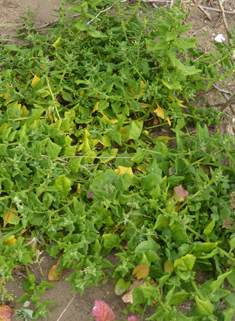
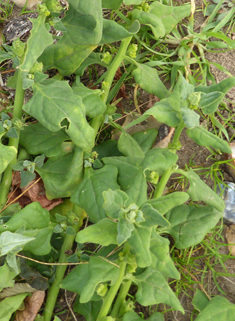
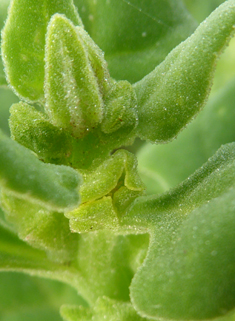
Introduced from the Far East as a culinary vegetable and recorded a few times but not persisting outside of cultivation. Flowers June to September or until first frosts. A variable plant which may be prostrate or up to a metre in height. The whole plant is succulent, with fleshy leaves and stems, the outer surface have a strangely crystalline appearance, especially on the young growths. Flowers are solitary, petalless and difficult to spot in the leaf axils towards the tips of the shoots. Seed capsules are hardened, knobbly lumps about 5mm across.
 |
 |
 |
 |
| |
|
|
|