Bents
What are they?
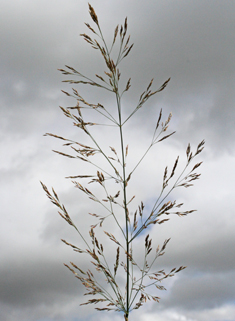
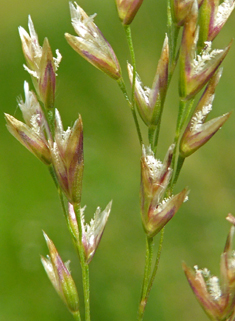
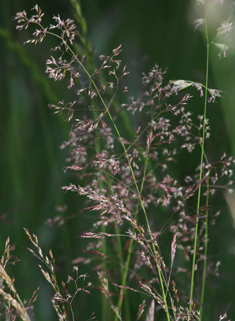
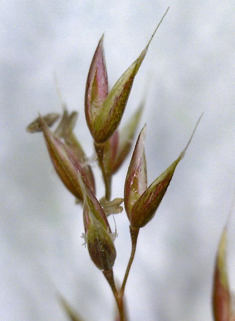
The bents are an abundant and very important group of grasses, both in natural/semi-natural habitats and in highly human-influenced landscapes. Most species typically have rather slender leaves and very open, graceful flower spikes with very small florets arranged at the ends of long, slender branchlets.
Where are they found?
Bents and similar species occupy a wide range of habitats and can be particularly abundant on acidic soils and in wetlands. They are also widely used as lawn and turf grasses due to their fine leaves, which produce surfaces suitable for high quality 'show lawns' and bowling greens. Soil acidity and whether the soil tends to be dry or wet can often be helpful in species determination, but the distribution of some of the Agrostis species is poorly known due to difficulties in telling these very similar species apart.
Identification
Click here for help with some of the terminology used on the grass pages. The bents can be a difficult group to identify to species and plants in full flower are often the most useful for this purpose. Features to check include the presence or absence of an awn in the flowers and whether the flower spikes remain broadly open or close up after the flowers are finished. Check also whether plants form tufted clumps or have creeping vegetative growths. It can be further useful to determine whether the creeping growths consist of stems (stolons) or roots (rhizomes).
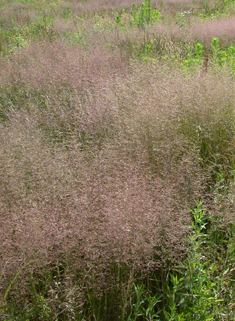
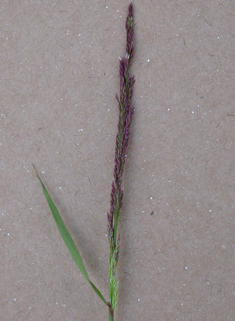
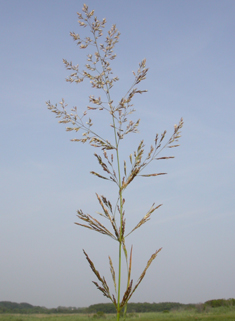
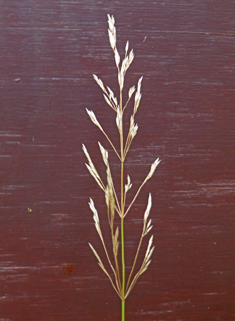
Creeping Bent Agrostis stolonifera
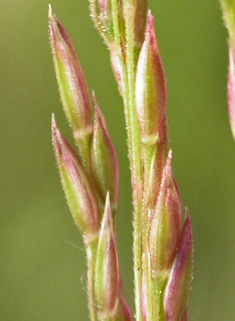
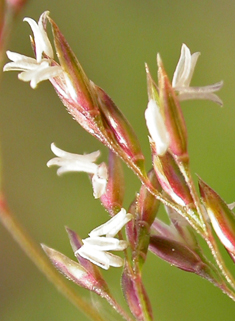
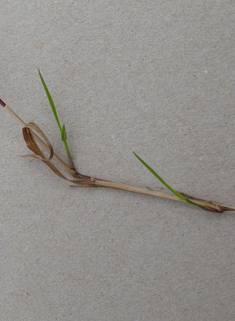
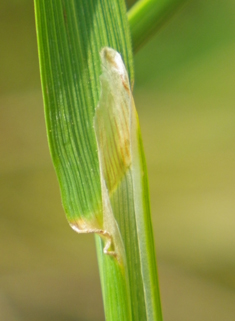
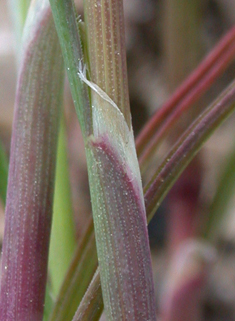
A native perennial which occcurs as a native in all types of damp habitats and on heavier soils and which is also widely used as a tough, turf grass in amenity areas. Flowers July to August. Plants to 80cm in height and forming dense, creeping mats by way of leafy stolons that root from the nodes. Leaf blades 0.5-5mm wide, hairless, finely pointed at the tip, rolled when young but eventually flat. Leaf sheaths rounded, smooth. Leaf ligule 1-6mm in length, membranous, medium to long. Flower spike very narrow when young, open and spreading at anthesis then closing again at fruiting. Spikelets tiny, 2-3mm, clustered towards the tips of very fine branchlets with a single floret in each spikelet. Lemmas not awned.
 |
 |
 |
 |
| |
|
|
|
 |
 |
 |
 |
| |
|
|
|
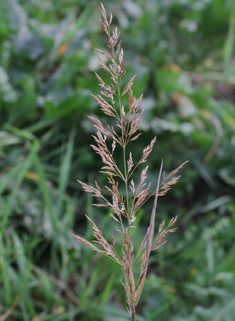
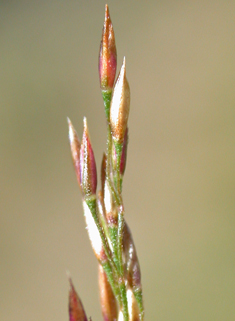
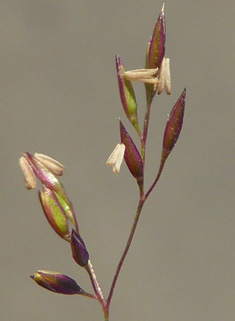
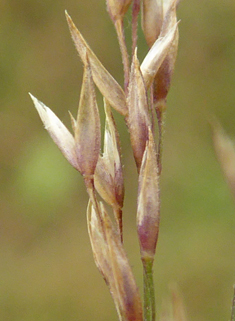
Black Bent Agrostis gigantea
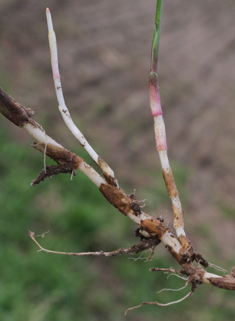
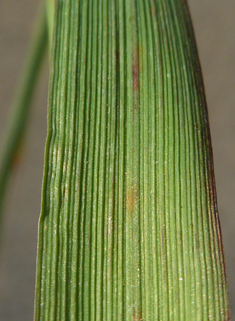
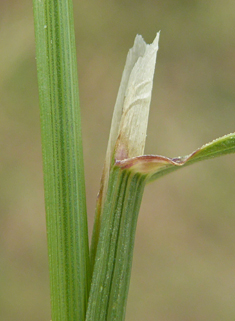
A rather uncommon non-native species that is occasionally recorded from cultivated ground on the inhabited islands. Flowers June to August. Plants 40-120cm in height, tufted and producing long, creeping rhizomes. Leaf blades 2-8mm wide, hairless, finely pointed at the tip, rolled when young but eventually flat. Leaf sheaths rounded, smooth or rough. Leaf ligule membranous, 1.5-12mm in length, relatively long. Flower spike narrow when young but soon open and spreading at anthesis. Spikelets tiny, 2-3mm, clustered towards the tips of very fine branchlets with a single floret in each spikelet. Lemmas not awned.
 |
|
 |
 |
| |
|
|
|
 |
 |
 |
 |
| |
|
|
|
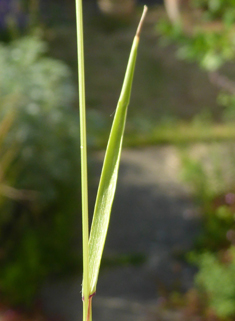
Common Bent Agrostis capillaris
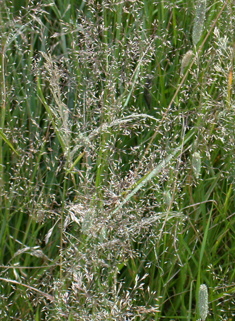
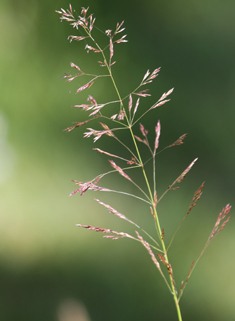
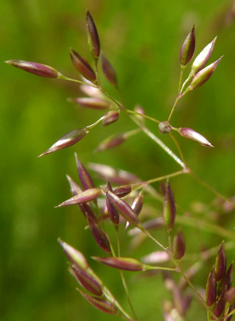
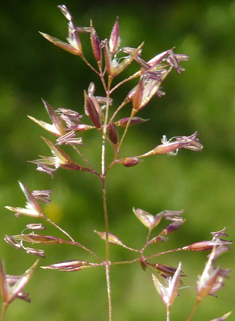
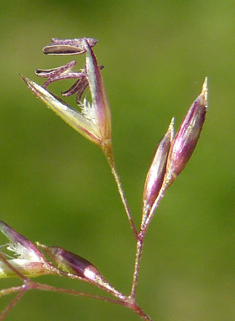
A very common native perennial found in most grassy places throughout most of the islands. Flowers June to August. Plants 10-70cm in height and spreading by short rhizomes to form slightly tufted patches. Leaf blades 1-5mm wide, hairless, finely pointed at the tip. Leaf sheaths rounded, smooth. Leaf ligule membranous, 0.5-2mm in length, short compared with those of Creeping Bent. Flower spike very narrow when young, open and spreading at anthesis and remaining open at fruiting. Spikelets tiny, 2-3.5mm, clustered towards the tips of very fine branchlets with a single floret in each spikelet. Lemmas not awned. Spikelets may be green (especially in shade) but are more often purplish.
 |
 |
|
 |
| |
|
|
|
 |
 |
 |
 |
| |
|
|
|
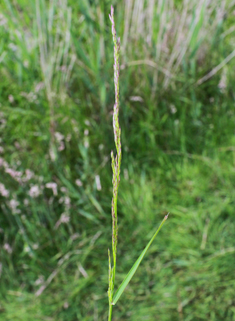
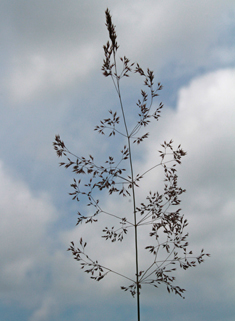
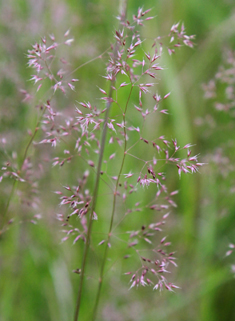
Velvet Bent Agrostis canina
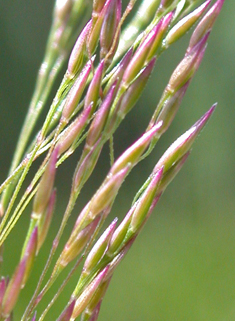
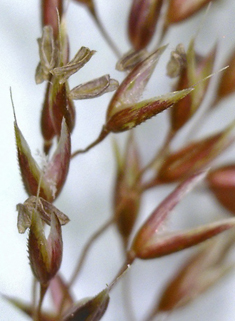
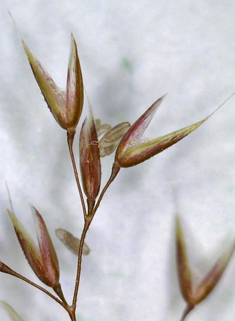
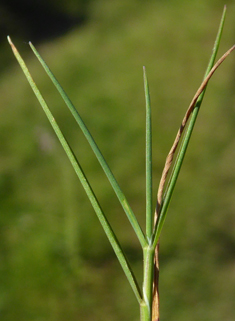
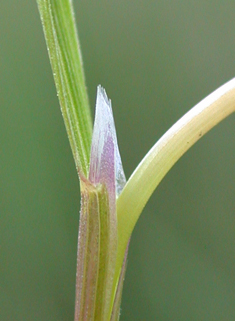
A native perennial, thinly scattered across damp ground on the inhabited islands. Flowers June to August. Plants 10-60cm in height and spreading by stolons which root at the nodes to form tufted patches. Leaf blades 1-3mm wide, hairless, finely pointed at the tip, flat or spike-like. Leaf sheaths rounded, typically rough towards the top. Leaf ligule membranous, 1-4mm long, acute at apex. Flower spike open and spreading at anthesis and contracting at fruiting. Spikelets tiny, 1.6-3mm, clustered towards the tips of very fine branchlets with a single floret in each spikelet. Lemmas may or may not be awned.
 |
 |
 |
 |
| |
|
|
|
 |
 |
 |
 |
| |
|
|
|
Brown Bent Agrostis vinealis
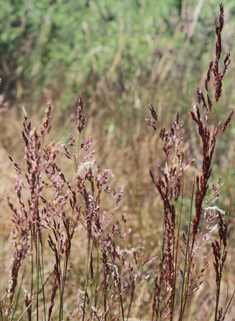
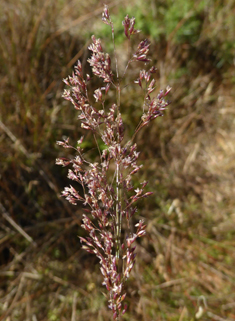
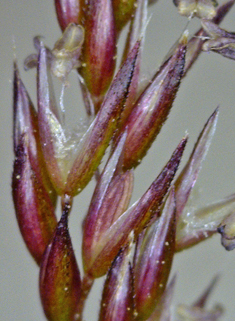
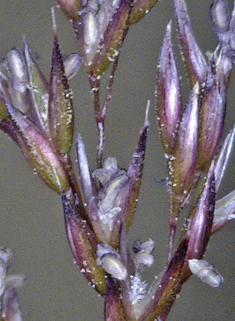
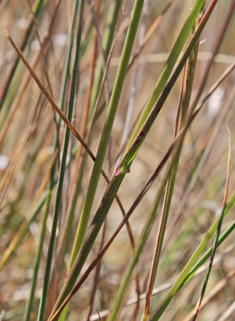
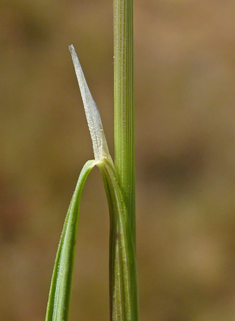
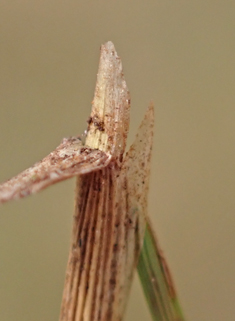
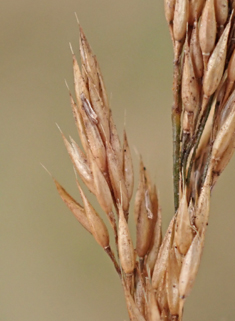
A native perennial typically found in dry places on acidic soils and most frequent in heathy places, but also found on cultivated ground. Thinly scattered on the larger islands, though not recorded from St Martin's. Flowers June to August. Plants 10-60cm in height and spreading by slender, scaly rhizomes to form tufted patches. Leaf blades 1-5mm wide, hairless, finely pointed at the tip, flat or bristle-like. Leaf sheaths rounded, typically rough towards the top. Leaf ligule membranous, 1-5mm long. Flower spike generally narrower and less open at anthesis than other bents. Spikelets tiny, 2-2.3mm, clustered towards the tips of very fine branchlets with a single floret in each spikelet. Lemmas usually awned but occasionally unawned.
 |
 |
 |
 |
| |
|
|
|
 |
 |
 |
 |
| |
|
|
|
Silver Hair-grass Aira caryophyllea
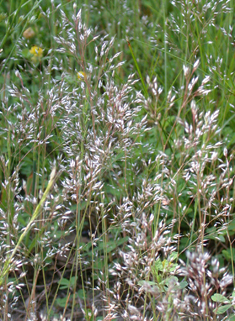
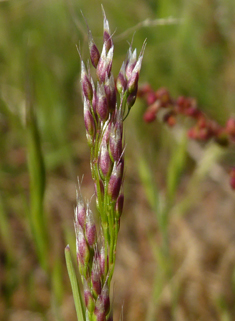
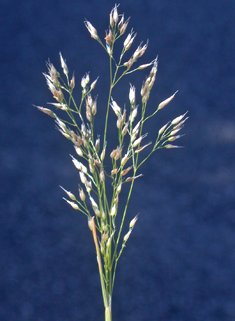
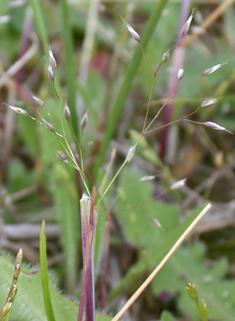
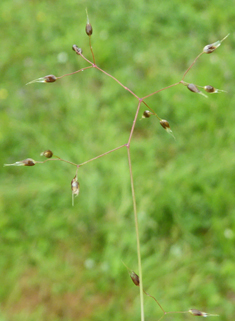
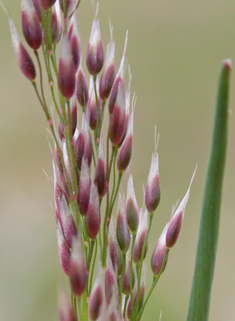
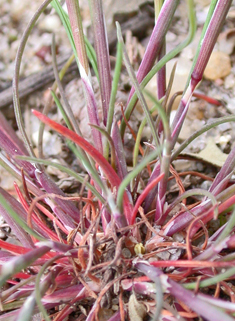
A native annual, widespread on a wide range of dry and sandy or acidic soils. Flowers May to July. Plants 3-30cm in height, more typically at the lower end of the size range in dry habitats. Leaves 0.3-0.4mm wide, greyish-green, thread-like and inrolled and soony reddening in dry conditions. Leaf sheaths rounded. Ligule membranous, up to 5mm long, jagged at the tip. Flower spike compact at first, but fully open and wide-spreading at anthesis, 1-12cm in length. Spikelets 2.2-3.5mm, each with 2 florets. Glumes relatively large, 2.2-3.5mm, enclosing the florets. Lemmas awned from the back. A tiny grass that typically grows in small, scattered colonies, but can be easily overlooked due to its small size.
 |
 |
 |
 |
| |
|
|
|
 |
 |
 |
 |
| |
|
|
|